
 Ezer Weizman (1924-2005), the nephew of Israel’s first president, Chaim Weizmann, was born in Tel Aviv and raised in Haifa. In his youth, he joined the Haifa Aviation Club and was flying planes by age 16. At 18, in the midst of World War II, he enlisted in the British Royal Air Force and served in Africa and India. After the war, Weizman lived in London and studied aeronautics. It was there that he joined the Zionist paramilitary group, Irgun. Weizman returned to Israel to fight in the Independence War. He was one of Israel’s very first fighter pilots, co-founded its air force, and participated in the first air force mission. He continued working for the army after the war, and in 1958 became the commander of the Israeli Air Force. He modernized the IAF, personally trained its pilots, and transformed it into the powerful and feared juggernaut that it is today. In 1967, Weizman was the IDF’s chief of military operations, and helped persuade the Israeli government to launch a preemptive strike against its aggressors. He directed the surprise attack on Arab air forces on the first day of the Six-Day War, totally destroying their air power and thus securing Israel’s lightning victory. (It has been said that the Six-Day War was won by the Israeli air force in the first six hours!) In 1969, Weizman – now a major general and deputy chief of staff – retired from the military and joined the Gahal political party (the precursor of Likud). He served as a Minister of Transportation and later as Defense Minister. He oversaw the development of Israel’s Lavi fighter jet, and the critical 1978 campaign in Lebanon (Operation Litani). Meanwhile, Weizman also became an important peace negotiator. He spoke Arabic fluently, and grew close to Egyptian president Anwar Sadat, who went so far as to call Weizman his “younger brother”. Not surprisingly, Weizman played a key role in Israel’s 1979 peace treaty with Egypt. He later founded his own party, Yachad, and sat on the Knesset between 1984 and 1992, serving as Minister for Arab Affairs and Minister of Science and Technology. A year after leaving the Knesset, Weizman was elected Israel’s seventh president. By this point, he had built a reputation as a dove, and worked hard to promote peace. He was credited with making the office of president more relevant in Israeli society, and was praised for his warmth and concern for all of Israel’s citizens, including Arabs and Druze. After being reelected to a second term, Weizman resigned as president in 2000, and passed away five years later. He has been voted the 9th greatest Israeli of all time.
Words of the Week
There are free men with the spirit of a slave, and slaves whose spirit is full of freedom. He who is true to his inner self is a free man, while he whose entire life is merely a stage for what is good and beautiful in the eyes of others, is a slave.
– Rabbi Avraham Itzhak Kook
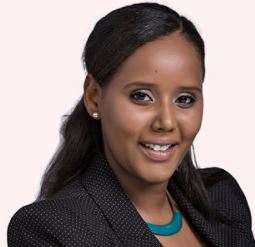 Pnina Tamano-Shata (b. 1981) was born in Wuzaba, Ethiopia, the granddaughter of a renowned Ethiopian rabbi. When she was three years old, her family fled Ethiopia due to civil war and famine. Israeli Hercules planes rescued her family in Sudan and brought them to Israel in a secret mission known as Operation Moses, which brought 8000 Ethiopian Jews back to their ancestral home. (Another 14,000 were brought in 1991 through Operation Solomon.) Tamano-Shata and her family spent several years in an immigrant facility before settling in Petah Tikva. From age 11, she worked to support her struggling family, and in high school was placed in the gifted program. After completing her military service, Tamano-Shata enrolled in law school. She was the president of the school’s Ethiopian Student Union, and was a noted social justice activist. After graduating, she became a reporter for Israel’s Channel 1. Five years later, she was covering a protest by Ethiopians in Israel and instead of reporting with the bias that her bosses asked for, joined the protesters herself. This inspired her to quit the media and enter politics. She joined the Yesh Atid party. When the party won a surprising 19 seats in the 2013 elections, Tamano-Shata became a Member of Knesset. This made her the first Ethiopian woman to hold a Knesset seat. She worked tirelessly for equality and affordable housing in Israel. Although she lost her seat in the 2015 elections, Tamano-Shata is still a vocal activist, role model, and an important leader for the 150,000 Ethiopian Jews in Israel.
 Chaim Gedaliah Rickover (1900-1986) was born in Poland. When he was six years old his family fled to the United States to escape the Russian pogroms that had killed over 3000 Jews in Eastern Europe. The family settled in Chicago, where Rickover started working at just nine years of age for three cents an hour. He excelled academically, and after graduating from high school with honours, was nominated by a Jewish congressman to the US Naval Academy. Rickover distinguished himself while serving on a destroyer ship and was among the youngest people to ever be promoted to an officer. He went back to school and earned a Master’s in electrical engineering before doing further studies at Columbia. At 29, he decided to serve on a submarine, and was soon in command of one. His translation of the German Das Unterseeboot became the textbook of the US Submarine Service. Throughout World War II, Rickover repaired electrical systems on US Navy ships, for which he earned the Legion of Merit. Following the war, he applied to join the Manhattan Project’s new program to develop nuclear power plants. He was soon the deputy manager of the division developing nuclear-powered navy ships. Rickover saw that the greatest potential was for nuclear submarines, and ultimately succeeded in persuading the Secretary of the Navy to endorse building one. Rickover led its development, and played a central role in designing a nuclear reactor fit for submarines. His vision came to life in 1954 with the launch of the famous USS Nautilus. It put him on the cover of TIME Magazine that year. By 1958, Rickover was vice admiral of the Navy, and awarded a Congressional Gold Medal. His program would go on to produce over 200 nuclear-powered submarines, and 23 aircraft carriers and cruisers. Incredibly, none of these has ever had a meltdown – a feat credited to Rickover’s insistence on safety and obsessive attention to detail. (The Soviet Navy suffered at least 14 meltdowns in the same time period!) Rickover became known as the “Father of the Nuclear Navy”. He was the longest serving officer in US naval history, with 63 years of service under 13 presidents. A four-star admiral, his 61 civilian awards included a Presidential Medal of Freedom and two Congressional Gold Medals (an extremely rare feat). He was also awarded 15 honourary degrees, and made an honourary Commander of the Order of the British Empire. Rickover stated that he was not proud of his work, and saw it as a “necessary evil” to protect his country. He once said he wished “nuclear power had never been discovered” and hoped that the nuclear fleet would be dismantled.