Jewish Pirates!
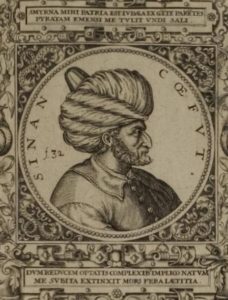 Sinan Reis (c. 1492-1546) was born to a Sephardic family that was expelled from Spain during the Expulsion of 1492 and settled in the Ottoman city of Smyrna. At the time, many Jews became pirates, attacking Spanish vessels both for revenge and to reclaim some of their confiscated wealth. Sinan joined the Barbary corsair pirates that sailed under the Ottoman flag. He became the right-hand man of the well-known pirate and Ottoman admiral Hayreddin Barbarossa. The two fought and won many battles against the Spanish and the Holy Roman Empire. The most famous was the Battle of Preveza in 1538. Barbarossa took Sinan’s military advice, leading to a magnificent Ottoman victory. Two years later, Sinan’s young son was captured at sea and forcibly baptized. The Christians refused to release him to the “infidels”, so Barbarossa led a fleet to bombard the Italian city of Piombino until Sinan’s son was finally freed. Barbarossa later dedicated his memoirs to Sinan, who was often referred to as Sinan Reis or Rayyis, Arabic for “chief”. Historical records from England describe him as “the famous Jewish pirate”, while the governor of Portuguese India at the time called him “the Great Jew”. Sinan went on to become Supreme Naval Commander of the Ottoman fleet.
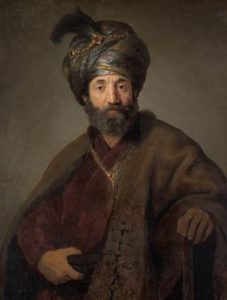
Scholars believe Rembrandt’s famous painting ‘Man in Oriental Costume’ is a portrait of Samuel Pallache.
Samuel Pallache (c. 1550-1615) was also born to a Sephardic family, one that had fled Spain long before the Expulsion and settled in Morocco. His father and uncle were renowned rabbis, and Pallache became a rabbi, too. He also engaged heavily in commerce, and often took his merchant ships to the Netherlands, where other members of the Pallache family lived. When the Dutch made an alliance with Morocco against the Spanish in 1608, the Moroccan sultan appointed Pallache as his envoy to the Dutch. Two years later, Pallache negotiated a free trade agreement between the Dutch and the Moroccans, possibly the first such treaty ever made between a European and non-European state. Around the same time, the Dutch prince Maurice made Pallache a privateer (a pirate for hire). Pallache’s merchant fleet became a pirate fleet, and for the next several years his job was to capture Spanish and Portuguese vessels. In 1614, a storm diverted his ship to England, where he was arrested at the request of the Spanish. Prince Maurice got him released, and Pallache returned to Amsterdam where he lived out the rest of his life. Records show that he was a co-founder of Amsterdam’s illustrious Jewish community. His son was one of Amsterdam’s greatest rabbis, and a teacher of (former Jews of the Week) Menashe ben Israel and Isaac Aboab da Fonseca. Another descendant is the renowned Rabbi Haim Palachi.
Words of the Week
I like the impossible because there’s less competition.
– Walt Disney
 Dalya Attar (b. 1990) was born in Baltimore to a religious Sephardic family of Iranian and Moroccan heritage. She studied at a Bais Yaakov school, and always knew she wanted to be a lawyer. Among her inspirations are