Category Archives: Writers & Thinkers

Jews in the Wonderful World of Literature, Thought, and Scholarship

Jew of the Week: Ray Kurzweil

“Revolutionary Who Made America”
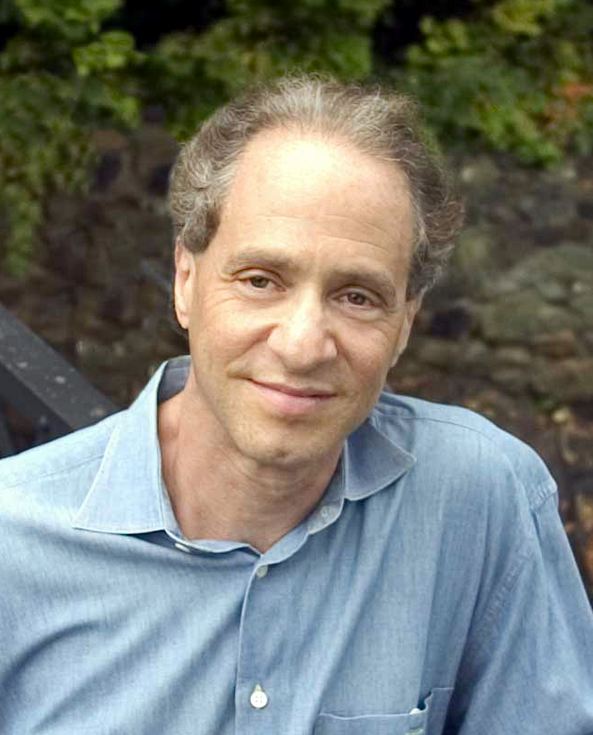
Ray Kurzweil

Ray Kurzweil

Raymond Kurzweil (b. 1948) was born in New York to Austrian-Jewish parents who escaped Europe before the start of World War II. He was fascinated by science-fiction from a young age and by age 5, decided that he wanted to be an inventor. He was already designing and building computers by 12, and developed a theory for the neocortex of the brain by 14. The following year he wrote his first computer program, and a couple years later won the International Science Fair for creating a computer that could compose music. While studying at MIT, he created a program that matches high school students with colleges, and sold it for the equivalent of about $700,000 in today’s value. In 1974, Kurzweil created a scanner that could read most fonts, then used the technology to create a reading machine for the blind. At the behest of Stevie Wonder, Kurzweil then turned to improving music technology, inventing a new generation of synthesizers whose quality was indistinguishable from that of live instruments. Kurzweil went on to develop one of the first speech recognition systems, followed by devices that assist people with learning disabilities, blindness, ADD, and dyslexia. He published his first book in 1990, followed by six more to date, mostly about the future of technology, as well as nutrition and health. Five of the books have been bestsellers. Many of his predictions about the future have already come true. Kurzweil has won a great number of awards, and has been inducted into the National Inventors Hall of Fame, while being described as one of the “revolutionaries who made America”. He now works full-time for Google, developing machine learning and language processing. When he dies, Kurzweil intends to have his body cryogenically frozen and stored until a future time when technology might resurrect him.

Words of the Week

If you drop gold and books, pick up first the books, and then the gold.
– Sefer Hasidim

Jew of the Week: Dr. Malka Schaps

Dr. Schaps

Dr. Schaps

Mary Elizabeth Kramer was born in Ohio and grew up attending church and Christian Sunday school. By high school, she was drawn to atheism and secularism, but ultimately found no solace in those philosophies either. While in university majoring in mathematics, she found herself exploring various religions. Studying in Germany one semester, she had an inexplicable yearning to attend a Passover seder, and there met an Australian rabbi with whom she continued learning, eventually undergoing a proper Orthodox Jewish conversion (and taking the name Malka). Back in college, she met her future husband – David Schaps – and both went on to earn PhDs at Harvard. The new couple then moved to Israel to teach, had two kids and two foster children. Malka Schaps joined Bar-Ilan University’s Department of Exact Sciences, researching advanced quantum spin representations, in addition to founding and running a financial math program. Meanwhile, Schaps has written a handful of popular, best-selling novels under the pen name “Rachel Pomerantz”. Despite being deeply involved in the scientific community, her faith has only strengthened, and she has said, “I always point out that the study of mathematics shares something in common with Judaism. They both seek to discern a greater order of things and the objective truth.” Recently, she was elected to be Dean of the Department of Exact Sciences at Bar-Ilan, making her the first Orthodox woman in the world to hold such a post. Schaps lives with her family in Bnei Brak.


Words of the Week

Why was the Torah given in the desert? For if it were given in the Land of Israel, the residents of the Land of Israel would say, “It is ours”; and if it were given in some other place, the residents of that place would say, “It is ours.” Therefore it was given in the wilderness, so that anyone who wishes to acquire it may acquire it.
– Mechilta D’Rashbi

Jew of the Week: Moses Maimonides

Maimonides

Moshe ben Maimon (1138-1204), known in the Jewish world as the Rambam (his initials) and to the rest of the world as Moses Maimonides, was born in Cordoba, Spain, the son of a famed rabbi. In 1148, the Almohads conquered Cordoba and began persecuting the Jews. Maimonides’ family fled and remained on the move across Spain for 10 years before settling in Morocco. There, Maimonides studied at the University of al-Karaouine, focusing on the field of medicine. At the same time, he composed his famous commentary on the Mishnah – the central text of Jewish oral laws. Along with his two sons, he then traveled to the Holy Land, despite the danger of the ongoing Crusades. After visiting the holy sites and praying at the Temple Mount, he journeyed to Egypt and settled there, continuing his work and studies at the local yeshiva. During this time, he played a central role in saving a community of Jews taken captive by King Amalric I. In 1171, Maimonides was appointed president of the Egyptian Jewish community. When his brother’s merchant ship sank in the Indian Ocean, Maimonides lost all of his wealth and started working as a physician. Having studied both Greek and Arabic medicine, and being well-versed in folk healing and mysticism, Maimonides quickly became the top doctor in the world and was soon hired by the legendary Sultan Saladin. Even after Saladin’s death, Maimonides remained the royal family’s physician, and rejected offers by a handful of European kings. He wrote a number of healing manuals that were influential for many future generations (and still studied today). He also composed several religious and philosophical works, including the famous Guide for the Perplexed and Treatise on Logic. His Mishneh Torah remains one of the central compilations of Jewish law to this day. He also set forth Judaism’s 13 Principles of Faith. Scholars are puzzled at how he was able to accomplish so much: his typical day included a visit to the Sultan’s Palace before returning home to a long line of patients that lasted into the night. He would rarely take any breaks, and ended his day hungry and spent. Even on Shabbat he had little rest, dealing with life-or-death situations that trumped the sanctity of observing the Sabbath. Many believe that he passed away because of this difficult lifestyle. Maimonides writes that he wished he had more time to pray, study, and grow closer to God, but his obligation to care for the masses superseded all these. He passed away on December 12th (809 years tomorrow) to great sorrow, and true to his nature, had demanded the humblest of funerals. He remains highly respected in Spain and across the Middle East, the Arab world (as Abu Musa bin Maymun) and the medical community. Countless institutions continue to bear his name, and he is a central hero for modern Jews as a man who was both pious and worldly, bridging the gaps between Torah and science, Jewish wisdom and secular philosophy.


Words of the Week

Gems from Moses Maimonides:

“Do not consider it proof just because it is written in books, for a liar who will deceive with his tongue will not hesitate to do the same with his pen.”

“Give a man a fish and you feed him for a day; teach a man to fish and you feed him for a lifetime.”

“No disease that can be treated by diet should be treated with any other means.”

“One who wishes to attain human perfection must therefore first study Logic, next the various branches of Mathematics in their proper order, then Physics, and lastly Metaphysics.”

“One should see the world, and see himself as a scale with an equal balance of good and evil. When he does one good deed the scale is tipped to the good – he and the world is saved. When he does one evil deed the scale is tipped to the bad – he and the world is destroyed.”