Category Archives: Writers & Thinkers

Jews in the Wonderful World of Literature, Thought, and Scholarship

Jews of the Week: Nathan, Benzion and Yoni Netanyahu

Nathan Mileikowsky (1879-1935) was born in what is now Belarus to an Orthodox Jewish family descended from the great Vilna Gaon. When he was ten, he joined the famous Volozhin yeshiva and after eight years of diligent study was ordained as a rabbi. During this time he became drawn to Zionism and soon dedicated his time to the Zionist cause. He traveled across Europe, Russia, and later the United States to raise support for Zionism – becoming one of the world’s most popular Zionist speakers – as well as to raise money for the Jewish National Fund. In 1920, Mileikowsky made aliyah to Israel. He headed a school in Rosh Pina, promoted settlement of the Galilee, and wrote articles for the Hebrew press – often under the pen name “Netanyahu”. He continued to tour globally, at one point giving over 700 lectures in under 9 months, and publishing some of these talks in a popular book. Towards the end of his life, Mileikowsky settled in Herzliya and established a farm.
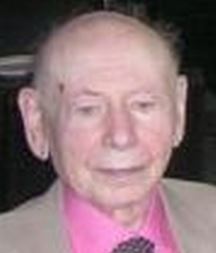
Benzion Netanyahu

Benzion Netanyahu

His son, Benzion Mileikowsky (1910-2012), was born in Warsaw while Nathan was head of its Hebrew Gymnasium. Growing up in Israel, he adopted his father’s pen name “Netanyahu”. Benzion studied at the Hebrew University in Jerusalem, taking on a more hard-line approach to Zionism. He became editor of a number of Zionist newspapers, and later the chief editor of the Encyclopaedia Hebraica. In 1940, Benzion moved to New York to build American support for the Jewish state, serving as executive director of an American Zionist group. Later on, he became a professor of Judaic studies and medieval history at Cornell University. Benzion published five books on Jewish history, and edited a number of others. His three sons are: Iddo, a doctor and author; Benjamin, Israel’s longest-serving prime minister; and Yoni, the eldest son.

Last known photograph of Yoni Netanyahu

Last known photograph of Yoni Netanyahu

Yonatan “Yoni” Netanyahu (1946-1976) was born in New York, went to high school in Pennsylvania, and studied at Harvard. He first enlisted in the IDF in 1964, and fought in the Six-Day War, getting wounded while rescuing a soldier behind enemy lines. A few years later, he joined Israel’s special forces unit, Sayeret Matkal, and by 1972 became its deputy commander. For his heroic service during the 1973 Yom Kippur War he was awarded a distinguished medal. In 1976, now commander of Sayeret Matkal, Yoni led Operation Entebbe, successfully rescuing over 100 Israeli hostages held in Uganda. Sadly, Yoni was the mission’s sole casualty, and passed away during the flight back home. In 1980, his personal letters were published, and were described as a “remarkable work of literature”. Both a film and play have recently been made about his life.

Words of the Week

God treats a person the same way they treat their children.
– Rabbi Shlomo of Karlin
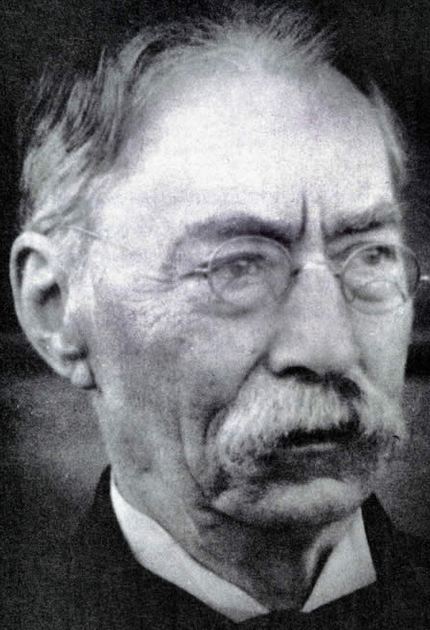
Jew of the Week: Samuel Ullman

Samuel Ullman (Photo Credit: likesuccess.com)

Samuel Ullman (Photo Credit: likesuccess.com)

Shmuel Ullman (1840-1924) was born in Hechingen, Germany. Due to persecutions of Jews in the region, his family fled to the US in 1850, settling in Mississippi. Ullman spent much of his youth working in his father’s butcher shop. The Civil War broke out when Ullman was just 21, and as a citizen of Mississippi, the young man served in the Confederate Army. Following the war, Ullman got married and started a dry goods business. He became active in his town’s political and religious life, often devoting his time to the needs of the community. He then moved to Alabama and started a new hardware business. Together with his wife, they founded a hospital for the needy. Ullman also served on the Board of Education, was a key civil rights activist, and fought tirelessly to bring equal education for African-American children. His efforts led to the first free public school for blacks. At the same time, he served as the president and unofficial rabbi of Temple Emanu-El in Birmingham. When he finally retired, Ullman devoted his time to writing. The most famous of his essays and poems is titled “Youth”. It was the favourite poem of American General and World War II hero Douglas MacArthur, who credited the poem with getting him through the horrors of the war. MacArthur had it framed and hanging in his Tokyo office, and introduced the poem (and its poet) to the Japanese. Many Japanese, too, were given hope by those words, ultimately making Ullman one of the most popular poets in Japan – even moreso than in America! It was the same poem that inspired Konosuki Matsushita to start a business despite his advanced age, giving birth to Panasonic. Kim Dae Jung often quoted the poem in his successful campaign to become President of South Korea, as did Robert F. Kennedy, and countless other noted figures around the world. Seventy years after Ullman’s passing, his home was turned into a museum by the University of Alabama and the Japan-America Society.

Words of the Week

Youth is not a time of life; it is a state of mind…
… Nobody grows old merely by a number of years. We grow old by deserting our ideals…
… Years may wrinkle the skin, but to give up enthusiasm wrinkles the soul…
– Verses from Samuel Ullman’s “Youth”

Jew of the Week: Rabbi Aharon Lichtenstein

In Memory of an Outstanding Rabbi

Rabbi Lichtenstein

Rabbi Lichtenstein

Aharon Lichtenstein (1933-2015) was born in Paris, France. His family fled the War in 1941, settling in the U.S., where Lichtenstein grew up. He went on to study at Yeshiva University, earning both a B.A. and rabbinic ordination, and continued his studies at Harvard, graduating with a Ph.D in Literature. He returned to Yeshiva University as a Talmud teacher, and then served as its dean (Rosh Yeshiva). After several years in that post, he made aliyah to Israel in 1971, and headed another Yeshiva, while quickly becoming a famed scholar and the central leader for Modern Orthodox and Religious Zionist Jews. He soon became one of the world’s top authorities in Halakha (Jewish law), too. Working with the ‘Takana’ organization, Rabbi Lichtenstein helped to combat harassment within the religious world, while also supporting the cause of women and encouraging women’s Torah studies. His support and outreach efforts spread beyond the religious world, encompassing secular communities, and even non-Jewish communities. Rabbi Lichtenstein also wrote a number of highly-acclaimed texts and commentaries. A noted scholar, he could easily quote both Jewish wisdom and secular philosophy. Last year he was awarded Israel’s highest honour – the Israel Prize. Sadly, Rabbi Lichtenstein passed away last week. Upon news of his passing, religious and political leaders from across the spectrum united to eulogize and honour him, including both Ultra-Orthodox and Reform rabbis, as well as conservative and liberal politicians. Israeli Prime Minister Benjamin Netanyahu described him as a “Zionist leader and Torah scholar of unparalleled stature… He loved the Land of Israel, the people of Israel, and the Torah of Israel.”

Words of the Week

God transcends all definitions, including the definition of “existence”.
Maimonides (Rabbi Moshe ben Maimon)