
Godfathers of Bodybuilding
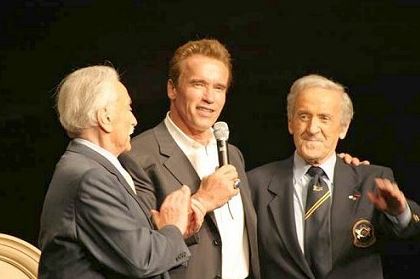
Weider Brothers with Arnold Schwarznegger (Credit: ibffpro.com)
Joseph (1920-2013) and Benjamin (1923-2008) Weider were born to a Polish-Jewish immigrant family in Montreal. Constantly bullied while growing up, they began exercising and lifting weights in their teenage years, making their own equipment out of old car wheels and axles. As their muscles grew, their adversaries disappeared, and the boys’ self-esteem shot up. They decided to share their new passion with others. At 18, Joe started a bodybuilding magazine called Your Physique. By 1943, the magazine had become popular across Canada. A few years later (following Ben’s return from World War II service) the brothers organized the first “Mr. Canada” contest. Ben then went on a mission around the world to spread the art of bodybuilding, after which the brothers established the International Federation of Bodybuilders. By 1952, their magazine had 25 million readers around the globe. Unfortunately, the sport slowly lost popularity, and by the 1960s, the Weiders were looking for a fresh start. They created a new competition, Mr. Olympia, but it initially didn’t bring the success they hoped for. The brothers moved to California, now with a new magazine, Muscle Builder. While in Europe, they met a young bodybuilder, and decided that he would be the image of their new brand. The brothers brought him to California, settled him in, trained him, taught him about business and media, and eventually turned him into one of Hollywood’s greatest: Arnold Schwarzenegger. (In 2006, then-Governor Schwarznegger presented the brothers with a Lifetime Achievement award, and in his speech thanked them for inspiring him, bringing him to America, and skyrocketing his career.) Ultimately, the Weiders would run several more magazines – including Men’s Fitness and a women’s health magazine called Shape – as well as produce their own health products, vitamins, and supplements (Weider Nutrition is considered the first sports nutrition company). From the start, they warned millions of their readers about the dangers of tobacco and alcohol, and refused to publish ads for these products in their magazines. Not surprisingly, the Weiders are credited with bringing greater awareness of healthy living and exercise to the masses. The brothers were also praised for breaking down barriers and allowing blacks, Hispanics, and women into their competitions at a time when it was still considered taboo. Surprisingly, Ben is also a noted historian, specializing in Napoleonic times, and co-writing several books on the subject. He has been awarded the Order of Canada, the French Legion of Honour, and was even nominated for a Nobel Peace Prize. Meanwhile, Joe wrote a couple of books on bodybuilding, and was voted Publisher of the Year in 1983. Along the way, the brothers never abandoned their connection to Judaism, often corresponding with the Lubavitcher Rebbe, and donating generously to Chabad organizations, among many others.
Words of the Week
It is not enough to be busy; so are the ants. The question is: What are we busy about?
– Henry David Thoreau
