
Category Archives: Business & Finance

Jews in the World of Business and Finance

Jew of the Week: Edward Sonshine

Ed Sonshine - Outstanding CEO of the Year

Ed Sonshine – Outstanding CEO of the Year

Edward Sonshine was born to Holocaust survivors in a displacement camp in Germany. When he was two years old, the family moved to Canada where Sonshine studied to become a real estate lawyer. After 15 years working as a lawyer, he realized that he knew far more about real estate than his clients and wanted to get into the business. However, it was the early 1990s, Canada’s real estate market was in a terrible slump, and Sonshine was in deep debt. Nonetheless, he founded RioCan in 1993, and over 20 years developed it into Canada’s largest real estate investment trust. It now has $14 billion in assets, investing in some 350 commercial properties across North America, including malls, supermarkets, office buildings, and movie theatres. Over the years, Sonshine has become famous for his solid business ethic, as well as active community involvement, and charity work. For these reasons, he was awarded Canada’s Outstanding CEO of 2013. He credits his wife of 45 years for being responsible for much of his success, as well as his tough upbringing as both a Jew and an immigrant, all of which ensured that he worked hard. “I spent the first three or four years,” he describes, “going around knocking on a lot of doors explaining to people what a REIT [Real Estate Investment Trust] was… I was just looking at making a living. I was worried about bringing home groceries.”

Words of the Week

Money is fire: it can destroy and annihilate, or illuminate and warm, depending on how it is used.
– Rabbi Elimelech of Lizhensk

Jew of the Week: Paul Reichmann

Paul Reichmann

Paul Reichmann

Moshe Yosef “Paul” Reichmann (1930-2013) was born in Vienna to Hungarian Orthodox Jewish parents. By a miracle, the family escaped Austria right before the Nazi takeover of the country, then fled from Hungary to Paris to Morocco. At the end of World War II, Reichmann studied in yeshivas in England and Israel before returning to Morocco and working as a shirt salesman. Shortly after, he moved to Toronto to open a new branch of his brother’s tile company, Olympia. By 1964, he built a separate property development company called Olympia & York. In 1976, the company built First Canada Place – what was then Canada’s tallest building (and the tallest bank office tower in the world). The company would expand to New York and Tokyo, London and Israel, becoming the world’s largest property developer. Reichmann’s vision of magnificent buildings adorning the skyline prompted Prince Charles to comment: “Do they have to be so tall?” Despite the tremendous success, Reichmann never abandoned his Orthodox roots, maintaining his prayer and study regimen, and having his company cease all operations on Shabbat and holidays. He used a great part of his fortune to finance synagogues, yeshivas, and charitable institutions around the world. In 1992 he lost the bulk of his wealth when Olympia & York went bankrupt in the midst of a large economic recession (and a failed project for London’s Canary Wharf – considered one of the largest development projects in history). He managed to rebuild a sizable portion of his wealth over the next two decades, and continued donating millions of dollars every year to good causes. Very private and shunning luxury, Reichmann was famous for his business integrity. He would seal multi-million dollar deals with a handshake, and never failed to keep his word. Sadly, the man who touched so many lives passed away earlier this week. Click here to read more about one of the greatest philanthropists of the century, and watch a video here.

Words of the Week

Abraham was told that his descendants will be like the dust of the earth [Genesis 13:17], and as the stars of heaven [Genesis 15:5]. So it is with Israel: When they fall, they will fall as low as the dust; when they rise, they will rise as high as the stars.
– Midrash Pesikta Zutrati

Jew of the Week: Dona Gracia Mendes

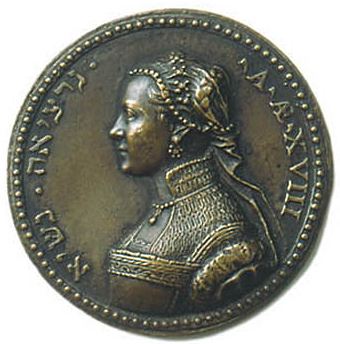
Commemorative Coin of Dona Gracia Mendes

Commemorative Medal of Dona Gracia Mendes

Hanna ‘Gracia’ Nasi (1510-1569) was born in Lisbon, Portugal to a family of conversos – aka Marranos, Jews who were forcibly converted to Christianity – and named Beatriz de Luna Miquez. She married Francisco Mendes Benveniste, a wealthy spice trader and banker. When she was only 28, Gracia’s husband passed away, leaving the business to her and his brother. Gracia thus joined her brother-in-law in Antwerp (then part of the Spanish Netherlands). From there, she organized an escape network for Jews to flee Spain and Portugal from the Inquisition, smuggling them in spice ships, providing them with money and documents to make their way to the Ottoman Empire where Jews were still welcome. This saved the lives of countless Jews, who nicknamed her ‘Our Angel’. Shortly after, her brother-in-law died as well, leaving Gracia alone at the helm of the massive Mendes financial empire, dealing with the likes of European kings, the Sultan of Turkey, and several Popes. At the time, she was possibly the most powerful woman in the world. After a series of political intrigues, which included an unjust imprisonment and several attempts to seize her wealth, Gracia settled in Istanbul, where she was now free to return to her religion. She built and financed dozens of synagogues and yeshivas across the Ottoman Empire. In 1558, the Sultan granted her a lease for the desolate town of Tiberias in Israel. Gracia began rebuilding the town, allowing Jewish refugees to settle there, with the vision of reestablishing a Jewish homeland in Israel. Many historians consider this the earliest modern Zionist attempt. Today, Donna Gracia has become a feminist icon, and is celebrated as a hero around the world. Both Philadelphia and New York City host a ‘Dona Gracia Day’, and the Turkish government has sponsored exhibits in her honour. There is a museum exploring her life in Tiberias, and the ‘La Senora’ synagogue of Istanbul, named after her, still stands to this day. Dona Gracia is the aunt of past Jew of the Week Joseph Nasi


Words of the Week

One of the greatest tragedies of intellectual human experience is that we study Bible stories when we are 55 in the same manner as we studied them when we were 5.
– Rabbi Yaakov Kamenetsky