Category Archives: Arts & Entertainment

Jews in the World of Art & Entertainment

Jew of the Week: Jack Kirby

The King of Comics

Jack Kirby (Credit: Susan Skaar)

Jacob Kurtzberg (1917-1994) was born in Manhattan to poor Jewish immigrants from Austria. He loved to draw as a child, and taught himself art techniques by studying comic strips and political cartoons in newspapers. He was rejected by the Alliance Art School (a branch of the Educational Alliance in Manhattan that was created by wealthy Jews to assist and integrate poor Eastern European Jewish immigrants), and quit Brooklyn’s Pratt Institute after a week. At 19, he started working on newspaper comic strips, first under the pseudonym Jack Curtiss. For a time he worked on Popeye cartoons, then switched to comic books. He worked on many productions over the next few years, and published under a variety of pen names, finally settling on Jack Kirby. Soon, Kirby teamed up with Joe Simon, and the two were hired by Timely Comics, later renamed Marvel Comics. Simon and Kirby’s first creation was Captain America. The comic was a huge success, but Marvel didn’t pay a good wage so they moved over to DC Comics. There, they produced a number of hits, selling over a million copies each month. During World War II, Kirby was drafted to the army and fought in Normandy. In the winter, he had severe frostbite and military doctors nearly amputated both of his legs. He was able to recover, and was awarded a number of medals, including the Bronze Star. Returning to America after the war, Kirby reunited with Simon and the two worked on a number of projects, including a stretch making popular romance comics that sold several million copies a month. At one point, they ran their own comics company. Eventually, the partnership soured and the two parted ways. Kirby eventually returned to Marvel. Partnering with Stan Lee, the two went on to revolutionize comics and usher in its “Silver Age”. Their first creation was the Fantastic Four, followed by more famous figures like the Hulk, Thor, Iron Man, Galactus, Silver Surfer, Black Panther, and the X-Men. In 1963, they combined some of these heroes to create The Avengers. Many of these characters have since been adapted to the big screen, making the Marvel Cinematic Universe the highest-grossing film franchise of all time. (The latest – and for now, final – installment of The Avengers, Endgame, opens this week and is expected to break nearly all movie records.) Kirby has been credited with being “the single most influential figure in the turnaround in Marvel’s fortunes from the time he rejoined the company.” He helped make comic book characters and their stories deeper and richer, more vibrant and alive, and more meaningful for readers young and old. Kirby also pioneered a number of new art techniques, including his famous “Kirby Krackle” energy fields. In 1970, he moved back to work for DC Comics, then came back to Marvel in 1976. During this time, he created The Eternals (rumoured to be the next big Marvel film series). Through the 1980s and until his last days, Kirby continued to create characters and draw comics. He was involved in a number of cartoons and film animations, too. Kirby felt like he never got the credit he deserved, and spent a great deal of time fighting for the rights to his own work. At the end, he only got about 2000 pages of the 13,000 pages he drew for Marvel alone. Nonetheless, the impact he had on the comic books industry, and on the world of art and film in general is immeasurable. Many artists, writers, and filmmakers point to him as their main inspiration. Kirby has been called “the King of Comics” and “one of the chief architects of the American imagination.”

How the “Splitting of the Sea” Can Change Your Life

Words of the Week

The best way to find yourself is to lose yourself in the service of others.
– Gandhi
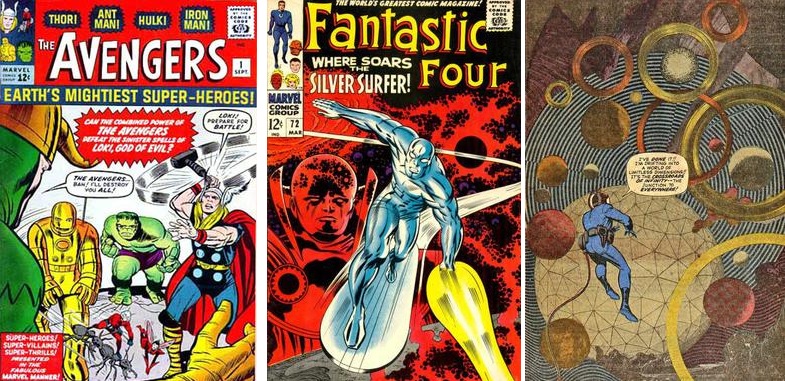
The first issue of The Avengers (September 1963); cover of Fantastic Four #72 (March 1968), showing characteristic “Kirby Krackles” in the background; a page from Fantastic Four #61 (June 1966) illustrated by Jack Kirby.

Jews of the Week: Mathilde and Arthur Krim

A Couple that Transformed the World

Mathilde Krim

Mathilde Galland (1926-2018) was born in Italy to Christian parents of Swiss and Italian heritage. While studying in medical school at the University of Geneva, she met an Israeli and converted to Judaism to marry him. She became passionate about her new faith, and the Zionist dream, working tirelessly to help Israeli fighters (especially the Irgun) acquire weapons and funds. After receiving her PhD in biology in 1953, the young family settled in Israel, and Mathilde became a researcher at the Weizmann Institute. During this time, she made important discoveries about viruses and cancer, and was part of the team that first developed a way to determine the gender of an embryo. Mathilde moved to New York after getting divorced, and joined a research team at Cornell University.

Arthur Krim

During this time, she met Arthur B. Krim (1910-1994), the son of Russian-Jewish immigrants. Krim graduated from Columbia Law School in 1932 at the top of his class, and worked at a law firm until the outbreak of World War II. He served for the War Department doing critical military work, attaining the rank of lieutenant colonel. After the war, Krim launched a film studio start-up, Eagle-Lion Films. When it tanked, he became a manager at United Artists, and was given three years to turn a profit. He did it in six months, and went on to head United Artists for over two decades (producing hit films like Dr. No, which brought James Bond to America, and West Side Story, which won a record 10 Oscars). Krim and his partners made United Artists the largest movie producer in the world by 1967. Krim would later co-found Orion Pictures (Amadeus, Dances with Wolves). All in all, Krim was a film studio exec for 46 years – possibly the longest in Hollywood history – produced and distributed over 1000 films, and was called “the smartest man ever to work in the movie industry.” Aside from movies, Krim was an important member of the Democratic Party, and served as its finance chairman. He was a personal advisor to three presidents: Kennedy, Johnson, and Carter.

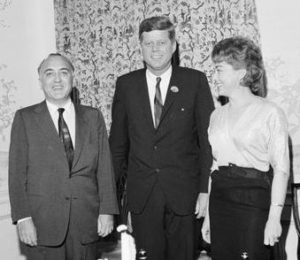
Arthur and Mathilde Krim with President John F. Kennedy

Mathilde and Arthur Krim were famous for their extensive philanthropy and the huge role they played in the civil rights movement, as well as in ending apartheid in South Africa and Zimbabwe, and advancing human rights all over the world. Mathilde continued to work as a researcher throughout her life, and ran the interferon lab at Sloan-Kettering Institute for Cancer Research between 1981 and 1985. During this time, she was one of the first to identify the grave dangers of HIV-AIDS, and did important research to understand the pathology of the disease. In 1983, she founded the AIDS Medical Foundation, and then co-founded the American Foundation for AIDS Research. Aside from her own research work, the Krims donated millions of dollars to the cause. In addition to 16 honourary doctorates, she was awarded the Presidential Medal of Freedom in 2000, the highest civilian honour in America. Her husband had previously received the Presidential Medal of Freedom in 1969.

When is Mashiach Coming?

Words of the Week

Every Hebrew should look upon his Faith as a temple extending over every land to prove the immutability of God and the unity of His purposes.
– Grace Aguilar

Jew of the Week: Gene Colan

The Man Behind Captain Marvel

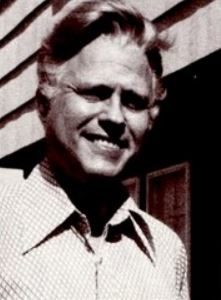
Gene “the Dean” Colan

Eugene Jules Colan (1926-2011) was born in The Bronx to a Jewish family that had changed their last name from “Cohen”. He started drawing when he was just three years old, and spent most of his time afterwards either drawing or reading comics. At 18, he got his first summer job drawing comics. Colan enlisted in the US Army shortly after, and was posted to the Philippines. During his service there, he sent his artwork to the Manila Times, and won an award for it. In 1946, he returned to New York and showed a sample of his work to Timely Comics, later renamed Marvel Comics. Stan Lee hired him on the spot, giving him a job as a “staff penciler” for $60 a week. Colan’s first feature cover was an issue of Captain America. Unfortunately, the comics industry went downhill, and Colan was let go. He did freelance work wherever he could, including at DC Comics, but eventually left the industry. He worked a menial job as an educational illustrator, struggled financially, and went through a difficult divorce. Thankfully things turned around a couple of years later when his second wife inspired him to go back into comics. Colan returned to Marvel during its “Silver Age”, taking over the story line of Iron Man, and introducing his first superhero, Sub-Mariner. He then took on Captain America, Doctor Strange, and Daredevil. In 1967, he and Stan Lee created a popular new character, Captain Marvel, and two years later, they introduced Falcon, the first African-American comic book hero. That same year, Colan and Arnold Drake co-created Guardians of the Galaxy. Throughout the 70s, Colan worked on perhaps his greatest project, the hugely popular 70-issue The Tomb of Dracula. In this run, he created (together with Marv Wolfman) the vampire-slayer Blade. Blade went on to become the first successful Marvel character adapted to film with 1998’s Blade, starring Wesley Snipes. The movie is credited with launching the comic book film craze, leading directly to the Marvel Cinematic Universe, now the highest-grossing film franchise of all time. In 1981, Colan signed with DC and took on Batman, becoming his primary illustrator until 1986, and playing a key role in reviving DC Comics. He also worked on Wonder Woman, and designed her new logo. Colan returned to Marvel once more and worked on Black Panther, then Blade, and Daredevil, among others. By this point he was nearly blind, yet somehow, amazingly, still found ways to continue his artwork. His last comic was Captain America #601 in 2009 – done when he was 83 years old! It earned him a prestigious Eisner Award, the “Oscars of comics”. Colan was renowned for his absolutely unique style, once described as “painting with a pencil”. Along with many other awards, Colan was inducted into the Will Eisner Comic Book Hall of Fame. The latest film in the Marvel Cinematic Universe, Captain Marvel, based on the original work of Colan (together with Roy Thomas), opens in theatres this Friday.

14 Facts About the Code of Jewish Law

Words of the Week

A creative man is motivated by the desire to achieve, not by the desire to beat others.
– Ayn Rand

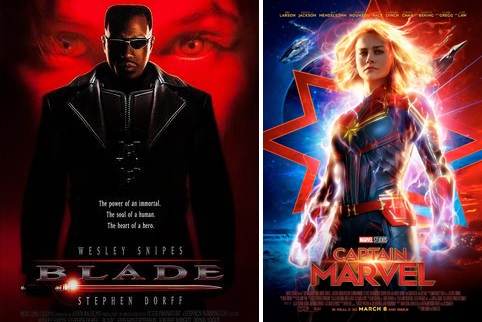
The film that would lead to the Marvel Cinematic Universe, Blade, and the latest film in the MCU, Captain Marvel, are based on characters co-created and first visualized by Gene Colan.

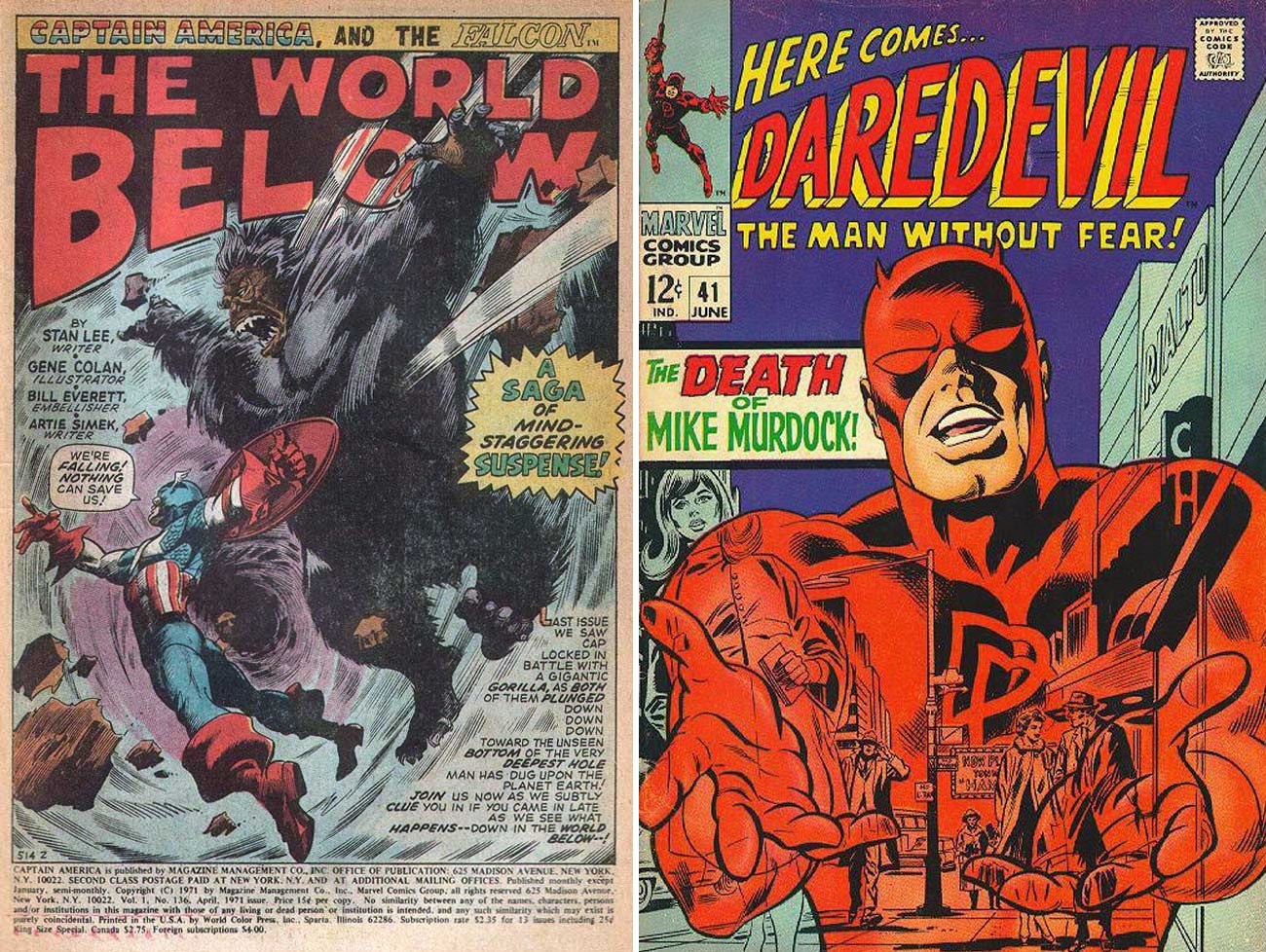
Gene Colan’s cover art for Captain America #136 (1971) and Daredevil #41 (1968). (Credit: TCJ.com)