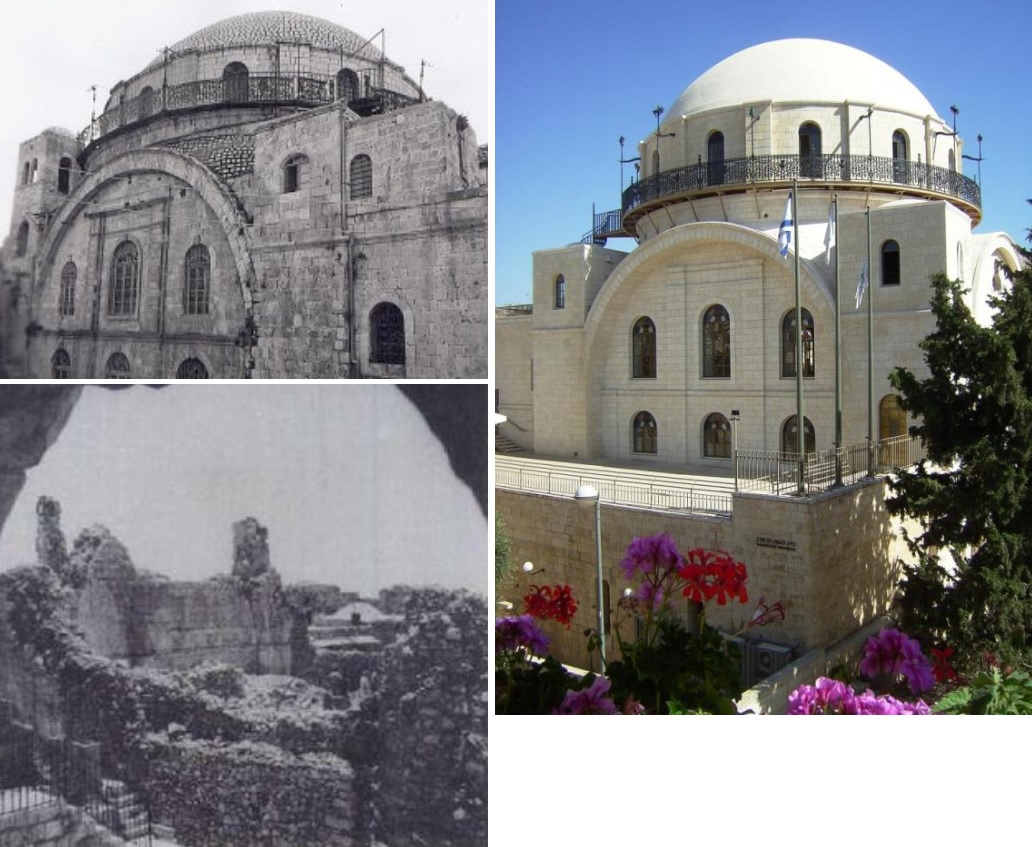
The First Systemiser of Kabbalah

The grave of the Ramak in Tzfat, Israel
Moshe ben Yaakov Cordovero (1522-1570) was born in Tzfat, Israel to a Sephardic family from Cordoba, Spain that fled during the Expulsion of 1492. The family first settled in Portugal before Portugal, too, expelled its Jews. They eventually made it to Israel and settled in Tzfat. By the time he was twenty, young Moshe was already recognized as a great sage and rabbi, a leader of Tzfat’s rapidly-growing Jewish community, and the head of its Portuguese Yeshiva. That same year, he heard a Heavenly voice instruct him to begin the study of the Zohar, the central textbook of Jewish mysticism (Kabbalah). He began studying with his brother-in-law, Rabbi Shlomo Alkabetz (famous for composing Lecha Dodi). Within a few short years, he mastered the entire Zohar—and the rest of Kabbalah with it. In 1548 he completed his magnum opus, Pardes Rimonim, “Pomegranate Orchard”, which organized and integrated all of the vast Kabbalistic wisdom into one cohesive system. He then wrote a 16-volume commentary on the Zohar, and was soon recognized as the world’s preeminent Kabbalist. In 1550, he opened his own mystical school, and attracted rabbis from far and wide to come study with him. Among them was Rabbi Chaim Vital, and many years later, the great Arizal. The latter only arrived in Tzfat on the day that Rabbi Moshe Cordovero—immortalized as the “Ramak”, based on his initials—passed away. The Arizal would go on to create his own Kabbalistic system, which later inspired several more branches, including those of the Baal Shem Tov (founder of Hasidism), and the Ramchal. However, the Ramak will always remain as the first great systemiser of Jewish mysticism. The Ramak wrote several other renowned works, and devised a new system of Jewish meditation, too. He is still ranked among the greatest Jewish mystics of all time. Today is his yahrzeit.
Words of the Week
The pageant of evolution [consists of] a staggeringly improbable series of events, utterly unpredictable and quite unrepeatable… human beings are an improbable and fragile entity… it fills us with amazement that human beings ever evolved at all.
– Stephen J. Gould, world-renowned evolutionary biologist
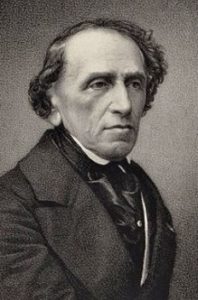 Jacob Liebmann Beer (1791-1864) was born near Berlin, then in the Kingdom of Prussia, to a wealthy, observant Jewish family. His father was the president of Berlin’s Jewish community and ran a large synagogue in his home. His mother received the prestigious Order of Louise from the Prussian queen, and because she was an observant Jew, got a small statue instead of the traditional cross. The Beer children received the best secular education, as well as private tutors in Jewish studies. All three sons became famous: Wilhelm Beer as an astronomer, Michael Beer as writer, and Jacob Beer as a composer. When his beloved grandfather Meyer passed away, Jacob added the name to his own, changing it to Meyerbeer. He also vowed never to abandon the faith of his fathers, while many of his friends “converted” to Christianity to be accepted in society and to take on jobs otherwise barred to them. Meyerbeer was taught music from a young age by some of the best instructors of the time. He performed his first public concert at just age nine. Meyerbeer’s early work involved writing religious music for his father’s synagogue, and his first big production was a ballet-opera called The Fisherman and the Milkman, followed by the musical God and Nature, and the opera Jephtha’s Vow. He wrote beautiful pieces for the piano, clarinet, and full orchestras, and vacillated between composing and playing music himself (which he preferred). Having faced many difficulties in his youth, Meyerbeer founded the Musical Union to support up-and-coming composers. In 1813, he was appointed Court Composer for the Grand Duke of Hesse. Several years later, he felt he had lots more to learn and moved to Italy. There he wrote some of his most renowned operas. By 1824, he had become world-famous, and his 1831 grand opera, Robert le diable, made him the equivalent of a modern-day superstar. The following year, he received the Legion of Honour, the highest award in France. In 1841, he was described as the “German Messiah” who would save the Paris Opera from its death, and shortly after also became director of music for the Prussian royal court. Not surprisingly, his success and wealth drew the ire of his colleagues, and Meyerbeer faced terrible criticism and anti-Semitism (especially from Richard Wagner, once his pupil). Meyerbeer remained graceful nonetheless, and never responded to the attacks on him. He continued to compose popular works until his last day, and has been credited with being “the most frequently performed opera composer” of the 19th century. He inspired the works of later greats like Dvořák, Liszt, and Tchaikovsky. He was also a generous philanthropist, a devoted husband and father to five children, and never broke his vow to die an observant Jew. Meyerbeer remains one of the greatest musicians of all time.