The First Native American Jew on a Supreme Court
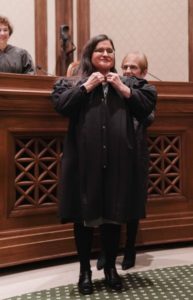
Raquel Montoya-Lewis at her swearing-in ceremony
Raquel Montoya-Lewis (b. 1968) was born in Spain to a Jewish mother from Australia and a Native American father from New Mexico. Because her father worked for the US Air Force, the family travelled a lot when she was young. Yet, they always returned to the Pueblo of Isleta reservation which was their home. Her mother made sure to instill Jewish values and traditions, too. Montoya-Lewis went on to study at the University of New Mexico, and then at the University of Washington School of Law. To gain a deeper understanding of how laws affect societies, she also got a Master’s degree in social work. Although she sought to become a law professor, Montoya-Lewis was invited to preside over a number of trials in Native American communities. Eventually, she became the chief judge of the Lummi nation, Upper Skagit Indian Tribe, and the Nooksack Indian tribe, among others. Meanwhile, she taught law at Western Washington University. In 2015 Montoya-Lewis was appointed to the Superior Court of Whatcom County. After being recognized for her exceptional work, she was recommended for Washington State’s Supreme Court. Last month, Montoya-Lewis was officially sworn in. That makes her the first ever Native American tribal member (and first Native American Jew, of course) to hold such a position, and only the second Native in American history to be a state supreme court judge. At her swearing-in ceremony, she invited both a rabbi and a Native American leader to speak. Montoya-Lewis herself said: “I was raised to remember that I come from those who survived. My ancestors on both sides of my family survived genocide, survived institutional boarding schools, survived attempts to eradicate their cultures, and yet as my father reminded me often, ‘we survived’… I am here because of their resilience, their courage, their intelligence, and their deep commitment to what is just.”
Words of the Week
The fact that religions through the ages have spoken in images, parables, and paradoxes means simply that there are no other ways of grasping the reality to which they refer… But that does not mean that it is not a genuine reality. And splitting this reality into an objective and a subjective side won’t get us very far.
– Niels Bohr, Nobel Prize-winning physicist
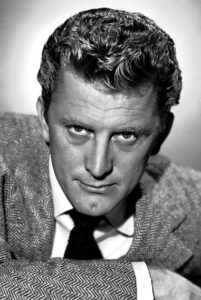
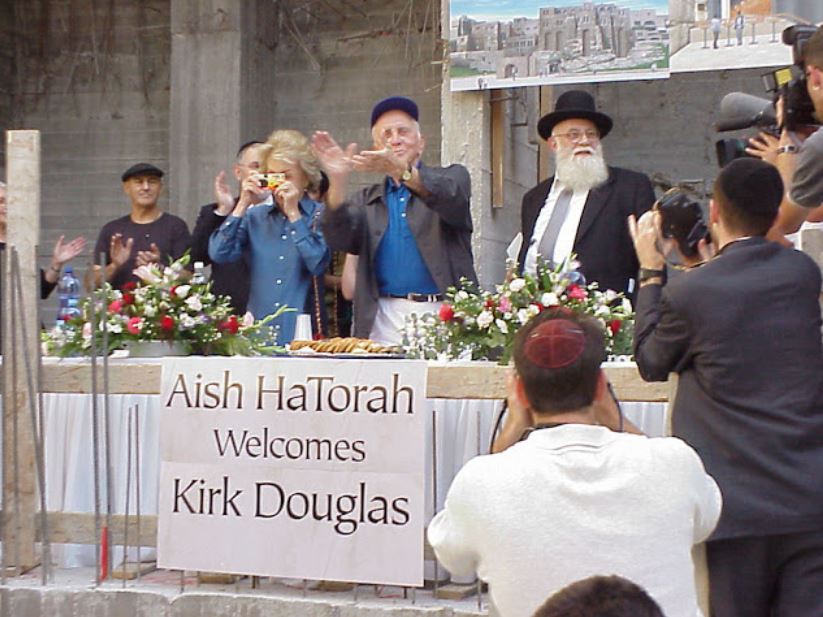
 Alan Stuart Shlomo Veingrad (b. 1963) was born in Brooklyn and grew up in New Jersey and Miami. He went to Hebrew school as a child, then to Miami Sunset High School where he was captain of the football team. Veingrad was also an All-American track and field athlete. He went to what is now Texas A&M University on a sports scholarship. In 1984, he was voted the Lone Star Offensive Lineman of the Year. Despite working out round-the-clock and gaining over 100 pounds he was still considered too small for the NFL and went undrafted in 1985. Still, he was able to sign with the Tampa Buy Buccaneers as an undrafted free agent. The following year he signed with the Green Bay Packers and played on the starting line up as a right offensive tackle. In 1991 he signed with the Dallas Cowboys and was instrumental in helping the team win Super Bowl XXVII in 1993. After earning his championship, Veingrad retired from professional football. Since then, he has worked in real estate and finance, as a motivational speaker, and an