Monthly Archives: May 2016

Jew of the Week: Rabbi Yehuda Glick

Yehuda Glick (Credit: Amitay Salomon)

Yehuda Glick (Credit: Amitay Salomon)

Yehuda Joshua Glick (b. 1965) was born in Brooklyn to an Orthodox Jewish family which made aliyah to Israel when he was nine years old. After completing his rabbinical studies, Glick began working for the Israeli Ministry of Immigrant Absorption. In 2005, after some ten years, he quit the job to protest Israeli withdrawal from Gaza. He then served as executive director of The Temple Institute, an organization working to rebuild the Holy Temple in Jerusalem through peaceful means. Glick is most famous for his activism with regards to permitting Jews to ascend the Temple Mount. This area is the holiest site in the world for the Jewish people, yet entrance to it is severely limited for Jews, and prayer there is currently forbidden to all but Muslims. As chairman of the Temple Mount Heritage Foundation and leader of the HaLiba group, Glick has worked tirelessly to end this racist policy, and to open the Temple Mount for visitation and prayer to people of all faiths. He envisions rebuilding a temple – “a house of prayer for all nations” – next to the Dome of the Rock. For leading prayer groups to the Temple Mount, Glick has been arrested multiple times. In 2013, he went on a hunger strike to protest a ban that forbid him to go to the Temple Mount. After twelve days without food, Glick was permitted to return to the Mount. In 2014, after giving a speech at a Jerusalem conference, an Arab man approached Glick and shot him four times in the chest before driving off on a motorcycle. Glick underwent multiple surgeries, and was unable to communicate or breathe on his own for a couple of weeks. Amazingly, he survived the assassination attempt. Shortly after, he joined the Likud political party, and was placed 33rd on its list. The party won 30 seats, making Glick third in line to become a parliamentarian. Over the past year, three Likud MKs resigned, including Moshe Ya’alon earlier this month. This opened the door for Glick to enter Knesset, which he did two days ago. His calls for peace, prayer, and human rights are truly universal, as he has stood by not only Orthodox Jews, but also Christian groups and Reform Jews (including the Women of the Wall) who aim to pray freely at Jerusalem’s holy sites. He has also spoken frequently about ending the plight of the Palestinians, and bridging gaps between Jews and Muslims. In addition to his own six kids, Glick is the legal guardian of six more children, and two foster children. He has been compared to Gandhi, and described as “earthly, wise, thoughtful, nonviolent, and compassionate.” Last year, he was awarded the Moskowitz Prize for Zionism by the Jewish National Fund.

Words of the Week

If your dreams don’t scare you, they are not big enough.
– Ellen Johnson Sirleaf

Jew of the Week: Lou Lenart

The Man Who Saved Tel-Aviv

Lou Lenart

Lou Lenart

Layos Lenovitz (1921-2015) was born in a rural Hungarian village, the son of farmers. While still a child, his family fled to America to escape persecution. They settled in Pennsylvania, and survived by selling home-made noodles. Growing up, Lenovitz was commonly a victim of anti-Semitic attacks, so he took up bodybuilding to protect himself. This led him to join the Marines at 17. Now going by the name Louis Lenart, he ended up in flight school and became a fighter pilot. During World War II, he served in the Pacific, and participated in a number of key battles, including the Battle of Okinawa – one of the war’s largest. Upon returning home (with the rank of Captain), Lenart learned that many of his relatives, including his grandmother, perished in the Holocaust. In response, he moved to Israel and volunteered with the Sherut Avir, the “air force” of the Haganah – which had no military planes at the time. Lenart helped to secretly smuggle four S-199 fighter planes from Czechoslovakia. Following its declaration of independence, Israel’s Arab neighbours immediately invaded. By the end of May 1948, the Egyptians were nearing Tel-Aviv with a force of 10,000. Lenart was called up to command Israel’s only four fighter planes to stop the Egyptian advance – the very first mission of the newly-created Israeli Air Force. The Egyptians thought Israel had no air force, and were shocked when they were being attacked from above. Thinking that Lenart’s four planes were just the first small foray of a larger attack, the Egyptians retreated in fear. Israel’s most populous city was spared from what could have been a devastating battle, and Lenart was nicknamed “the man who saved Tel-Aviv”. Following the war, Lenart played an important role in Operation Ezra and Nehemiah, which airlifted over 120,000 Iraqi Jewish refugees to safety in Israel. Outside of the military, Lenart was a pilot for El Al. Later in life, he moved to Los Angeles and helped to produce six Hollywood films while at the same time working as the general manager of the San Diego Clippers basketball team (before the team moved to LA). Lenart retired in Israel, where he spent the last years of his life. His story was featured in Nancy Spielberg’s award-winning 2014 film Above and Beyond, and the 2015 A Wing and a Prayer.

Words of the Week

It was the most important moment of my life, and I was born to be there at that precise moment in history… I survived World War II so I could lead this mission.
Lou Lenart, on his mission to save Tel-Aviv during the Independence War

Jew of the Week: Meir Dizengoff

Founder of Tel-Aviv

Meir Dizengoff

Meir Dizengoff

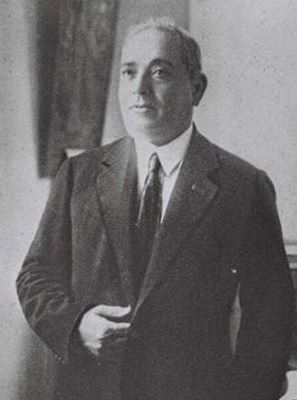
Meir Yankelevich Dizengoff (1861-1936) was born in Bessarabia, a region overlapping parts of modern-day Moldova and Ukraine. After completing his education, he enlisted in the Russian Army, where he served for two years. Dizengoff then settled in Odessa and soon joined a revolutionary group called Narodnaya Volya (“People’s Will”), which sought to overthrow the Tsar and assist the plight of the many impoverished people across the Russian Empire. At the same time, he met several Zionist leaders and joined Hovevei Zion, an organization formed in response to the tragic pogroms of 1881. In 1885, Dizengoff was arrested for his involvement with Narodnaya Volya’s insurgent activities. Upon his release, he moved back to Bessarabia to found a new branch of Hovevei Zion. A couple of years later, Dizengoff enrolled at the University of Paris to study chemical engineering. It was there that he met Edmond James de Rothschild, a member of the French Rothschilds who was an ardent Zionist. Rothschild sent Dizengoff to Israel to set up a bottle-making factory for his family’s wineries. Unfortunately, the factory didn’t do well, and Dizengoff returned to Europe. It wasn’t long before Dizengoff returned once more to the Holy Land, setting up his home in Jaffa in 1905, and starting a development and import company called Geulah. Several years later, Dizengoff joined together with Ahuzat Bayit to purchase a plot of land outside of Jaffa to create a new Jewish community. In 1909, this plot of land was divided among 66 Jewish families, establishing the town of Tel-Aviv. Two years later, Dizengoff became its head of planning, and was instrumental in its quick expansion and development. During World War I, the Ottomans expelled the town’s population, and it may have ceased to exist entirely were it not for the efforts of Dizengoff. In 1922, Tel-Aviv was recognized as a city, and not surprisingly, Dizengoff was elected its first mayor, a post he held until his death. In 1923, Tel-Aviv became the first city in Israel to have electricity. By 1925, its population had swelled to 34,000. Upon the passing of his beloved wife in 1930, Dizengoff donated their family home to the city, requesting that it be turned into a museum. It was there, on the 14th of May in 1948, that the State of Israel declared its independence. Unfortunately, Dizengoff himself didn’t live to see this day. However, he played a critical role both in the founding of Tel-Aviv, and Israel as a whole, and transformed Tel-Aviv from an empty parcel of land to a beautiful city of 150,000 at the time of his passing. To this day, Tel-Aviv’s most important artery is Dizengoff Street, often described as “Israel’s Champs-Élysées”.

Words of the Week

“Thus said God: ‘Behold, I will save My people from the countries of the East, and from the countries of the West; And I will bring them, and they shall dwell in the midst of Jerusalem; and they shall be My people, and I will be their God, in truth and in righteousness.'”
– Zechariah 8:7-8