Tag Archives: World War II

Jew of the Week: Hank Greenberg

The Hebrew Hammer

Hank Greenberg - 'The Hebrew Hammer'

Hank Greenberg – ‘The Hebrew Hammer’

Hyman ‘Henry Benjamin’ Greenberg (1911-1986) was born in New York to a Romanian-Jewish family. As a child, he was faced with many physical challenges, including flat feet, a stutter, and lack of coordination. He worked hard to overcome these issues, becoming his high school’s best all-around athlete, especially in basketball. He preferred baseball though, and after a year of university was signed by the Detroit Tigers. At 19, he became the youngest player ever to make the big leagues. He went on to be a 5-time All-Star and 2-time MVP, still holding the American League record for most RBIs in a single season. Not forgetting his heritage, one of his most famous moments was abstaining from playing a critical game because it was scheduled on Yom Kippur. In the midst of his baseball career, World War II began, and Greenberg was the first player to be drafted to the US Army. He was soon released from the military, but that was two days before the attack on Pearl Harbor. Greenberg thus re-enlisted – the first Major League player to volunteer – and served for 45 months, the longest of any baseball player. He rose to the rank of First Lieutenant in the US Air Force, fighting in China, Burma, and India. At the end of the war he returned to baseball, still in good form and immediately making the All-Star team. He was later sold to the Pittsburgh Pirates, who offered him $80,000 so that he wouldn’t retire, making him the highest-paid player of that time period. After retiring, he turned to management and brought great success to several teams, especially the Cleveland Indians. Perhaps most significantly, Greenberg changed the face of the sport, sponsoring more African-Americans than any other baseball executive. In fact, he befriended and supported Jackie Robinson, the very first African-American player in the major leagues. Having experienced severe racism and anti-Semitism of his own, Greenberg worked hard to make the world of sport open and equal to all. A Hall of Famer, Greenberg is still considered one of the greatest baseball players of all time.


Words of the Week

The entire world is a very narrow bridge, and the most important thing is not to be afraid at all.
– Rabbi Nachman of Breslov
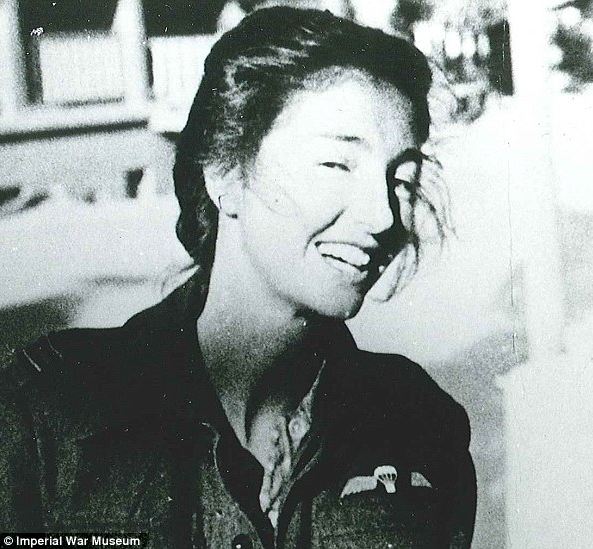
Jew of the Week: Krystyna Skarbek

The Original ‘Bond Girl’

Secret Agent Krystyna Skarbek - the inspiration for James Bond's Vesper Lynd

Secret Agent Krystyna Skarbek – the inspiration for James Bond’s Vesper Lynd

Maria Krystyna Janina Skarbek (1908-1952) was born in Poland to a Catholic father and a Jewish mother from a wealthy family. From a young age, Maria enjoyed horse-back riding, skiing, and extreme physical activities. At 22, her father died and her mother’s family wealth ran out. Skarbek got a job in a Fiat dealership but fell ill from the fumes. To regain her health, she returned to the slopes and spent the majority of her time skiing and hiking. With the outbreak of World War II, Skarbek fled to London and enlisted in the British Army. She found her way into the Secret Intelligence Service and was sent to Hungary for “espionage, reconnaissance and sabotage”. From there she re-entered Poland by hiking across the mountainous border. Skarbek first attempted to save her mother from the Nazis, but her mother refused to leave and was killed in a camp. Skarbek’s main work was to organize the transfer of vital intelligence reports out of Warsaw to the SIS. (One of these correctly revealed Germany’s planned invasion of the USSR, of critical importance to the Allied victory). She also assisted in smuggling weapons and exfiltrating key military personnel. Arrested by the Gestapo in 1941, Skarbek bit her own tongue until it bled, then pretended to have virulent tuberculosis and used the cover to escape her captivity. She made her way through the Balkans to Turkey, then to the SIS headquarters in Egypt. Upon arrival, she was suspected of being a counter-spy secretly working for the Germans! Thankfully, she cleared her name and returned to work. In 1944 she was posted in France under the name ‘Madame Pauline’. Here were some of her most infamous missions, including demolishing bridges and infiltrating a Nazi prison to save her commanding officer. After the war she was awarded with an Officer of the Order of the British Empire and France’s Croix de Guerre. However, she was dismissed from service with only a month’s salary and left alone in Cairo. She slowly rebuilt her life as Christine Granville. Sadly, in 1952 she was assassinated in a hotel room. Skarbek’s story inspired Vesper Lynd, the original ‘Bond Girl’ in Ian Fleming’s first 007 story Casino Royale. Many consider her Britain’s first female secret agent.

Words of the Week

God transforms spirituality into physicality; the Jew makes physical things spiritual.
– Rabbi Israel Baal Shem Tov

Jew of the Week: Bernard Baruch

Bernard Baruch

Bernard Baruch

Bernard Mannes Baruch (1870-1965) was born in South Carolina to German-Jewish immigrants. His father was a doctor specializing in hydrotherapy and appendectomies, and a key military surgeon in the Civil War. The family moved to New York City, where Baruch first worked as an office boy for $3 a week. After college, he became a stock broker and made a fortune trading sugar (though he would lose and regain his fortune several times). By 30, he was among the most successful financiers of all time, nicknamed “The Lone Wolf of Wall Street” as he worked independently and resisted joining a financial house. In 1916, Baruch left finance and became an adviser to President Woodrow Wilson. He was soon the chairman of the War Industries Board and managed America’s economic mobilization for World War I. At the end of the war, Baruch attended the Paris Peace Conference and was a central supporter of the League of Nations (the precursor of the UN). Baruch continued to advice future presidents, including Roosevelt, whom he helped to create the National Recovery Administration for fair business, industry and labour practices. After World War II, Baruch worked at the UN, particularly to stem nuclear arms proliferation. He would be sought as an adviser until the last days of his life, counselling a total of nine American presidents. He was famous for discussing global issues and politics while sitting on public benches in Central Park (in NYC) and Lafayette Park (in Washington, DC) and was thus called the “Park Bench Statesman”. Baruch was also a noted philanthropist throughout his life, contributing millions to charities and colleges. Click here to learn a few investment tips from Bernard Baruch.


Words of the Week

There are free men with the spirit of a slave, and slaves whose spirit is full of freedom. He who is true to his inner self is a free man, while he whose entire life is merely a stage for what is good and beautiful in the eyes of others, is a slave.
Rabbi Avraham Itzhak Kook