
Tag Archives: World War II

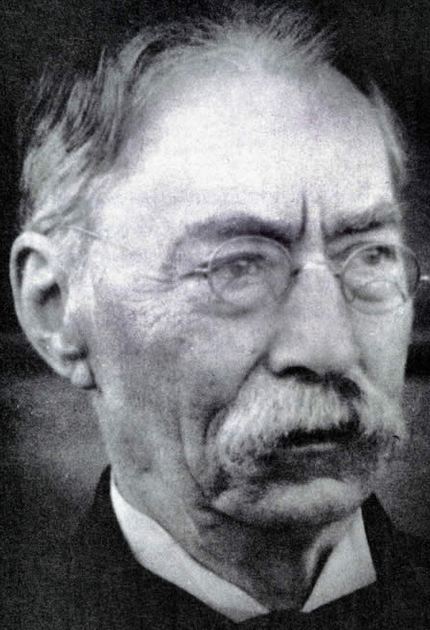
Jew of the Week: Samuel Ullman

Samuel Ullman (Photo Credit: likesuccess.com)

Samuel Ullman (Photo Credit: likesuccess.com)

Shmuel Ullman (1840-1924) was born in Hechingen, Germany. Due to persecutions of Jews in the region, his family fled to the US in 1850, settling in Mississippi. Ullman spent much of his youth working in his father’s butcher shop. The Civil War broke out when Ullman was just 21, and as a citizen of Mississippi, the young man served in the Confederate Army. Following the war, Ullman got married and started a dry goods business. He became active in his town’s political and religious life, often devoting his time to the needs of the community. He then moved to Alabama and started a new hardware business. Together with his wife, they founded a hospital for the needy. Ullman also served on the Board of Education, was a key civil rights activist, and fought tirelessly to bring equal education for African-American children. His efforts led to the first free public school for blacks. At the same time, he served as the president and unofficial rabbi of Temple Emanu-El in Birmingham. When he finally retired, Ullman devoted his time to writing. The most famous of his essays and poems is titled “Youth”. It was the favourite poem of American General and World War II hero Douglas MacArthur, who credited the poem with getting him through the horrors of the war. MacArthur had it framed and hanging in his Tokyo office, and introduced the poem (and its poet) to the Japanese. Many Japanese, too, were given hope by those words, ultimately making Ullman one of the most popular poets in Japan – even moreso than in America! It was the same poem that inspired Konosuki Matsushita to start a business despite his advanced age, giving birth to Panasonic. Kim Dae Jung often quoted the poem in his successful campaign to become President of South Korea, as did Robert F. Kennedy, and countless other noted figures around the world. Seventy years after Ullman’s passing, his home was turned into a museum by the University of Alabama and the Japan-America Society.

Words of the Week

Youth is not a time of life; it is a state of mind…
… Nobody grows old merely by a number of years. We grow old by deserting our ideals…
… Years may wrinkle the skin, but to give up enthusiasm wrinkles the soul…
– Verses from Samuel Ullman’s “Youth”
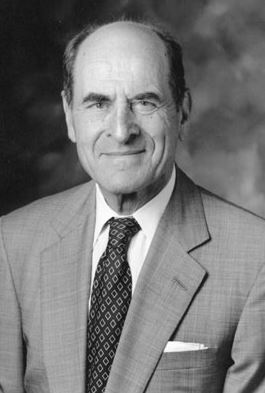
Jew of the Week: Henry Heimlich

The Heimlich Maneuver

Henry Heimlich (Courtesy: tytekmedical.com)

Henry Heimlich (Courtesy: tytekmedical.com)

Henry Judah Heimlich (b. 1920) was born in Delaware and studied at Cornell University. In 1943, he earned his M.D. and was soon shipped off to the Pacific as a US Navy surgeon at the height of World War II. In China, he found a quick and effective way to treat trachoma. In the early 50s, he developed a method for replacing the esophagus, which is recognized by some as history’s first complete organ transplant. His experiences in treating injured soldiers helped him invent the flutter valve (also known as the Heimlich valve) which quickly drains blood and air out of a punctured chest cavity. Over 150,000 of these life-savers are used each year in critical situations. Heimlich also invented an efficient oxygen delivery system for injured patients, called the Micro Trach. He is most famous, however, for developing the technique of abdominal thrusts to save people who are choking. Following an eye-opening 1972 New York Times report that showed 3,000 Americans died yearly in choking accidents, Heimlich researched the ideal way to open an obstruction in the throat. He experimented with dogs and large chunks of meat, finding that an upward thrust into the diaphragm successfully opened a blocked airway. Heimlich published his findings in the Journal of the American Medical Association. At the same time, he knew that this information was far too important to be practiced only by health professionals, and described the technique in the more common Emergency Medicine. From there, the procedure’s success and fame spread quickly, and was soon known as the “Heimlich maneuver”. Heimlich also developed a technique to help stroke victims re-learn how to swallow, researched maneuvers for asthma and cystic fibrosis, and suggested a controversial treatment for AIDS (since debunked and rejected). He has made a number of other controversial suggestions, leading some to label him a charlatan of sorts. Nonetheless, it is estimated that the Heimlich maneuver has saved at least 50,000 people (including former President Ronald Reagan). Many credit Heimlich with “saving more lives than any other living American”, and he has been awarded the prestigious Lasker Award for Public Service. Last year, Heimlich published an autobiography, and a film about his life is currently in the works.

UPDATE: Sadly, Henry Heimlich passed away in December of 2016.

Words of the Week

Do not pass up a single day without doing a mitzvah.
Rabbi Israel Baal Shem Tov

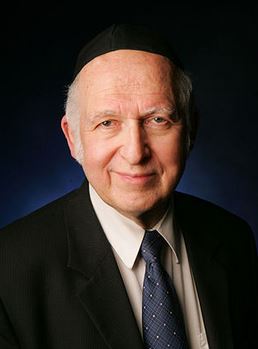
Jew of the Week: Rabbi Aharon Lichtenstein

In Memory of an Outstanding Rabbi

Rabbi Lichtenstein

Rabbi Lichtenstein

Aharon Lichtenstein (1933-2015) was born in Paris, France. His family fled the War in 1941, settling in the U.S., where Lichtenstein grew up. He went on to study at Yeshiva University, earning both a B.A. and rabbinic ordination, and continued his studies at Harvard, graduating with a Ph.D in Literature. He returned to Yeshiva University as a Talmud teacher, and then served as its dean (Rosh Yeshiva). After several years in that post, he made aliyah to Israel in 1971, and headed another Yeshiva, while quickly becoming a famed scholar and the central leader for Modern Orthodox and Religious Zionist Jews. He soon became one of the world’s top authorities in Halakha (Jewish law), too. Working with the ‘Takana’ organization, Rabbi Lichtenstein helped to combat harassment within the religious world, while also supporting the cause of women and encouraging women’s Torah studies. His support and outreach efforts spread beyond the religious world, encompassing secular communities, and even non-Jewish communities. Rabbi Lichtenstein also wrote a number of highly-acclaimed texts and commentaries. A noted scholar, he could easily quote both Jewish wisdom and secular philosophy. Last year he was awarded Israel’s highest honour – the Israel Prize. Sadly, Rabbi Lichtenstein passed away last week. Upon news of his passing, religious and political leaders from across the spectrum united to eulogize and honour him, including both Ultra-Orthodox and Reform rabbis, as well as conservative and liberal politicians. Israeli Prime Minister Benjamin Netanyahu described him as a “Zionist leader and Torah scholar of unparalleled stature… He loved the Land of Israel, the people of Israel, and the Torah of Israel.”

Words of the Week

God transcends all definitions, including the definition of “existence”.
Maimonides (Rabbi Moshe ben Maimon)