Tag Archives: World War II

Jew of the Week: Louis B. Mayer

The Man Who Defined Hollywood

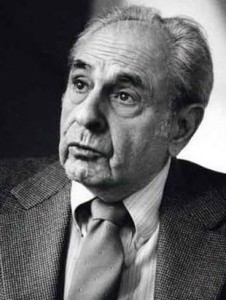
Louis B. Mayer (Photo Credit: LA Times)

Louis B. Mayer (Photo Credit: LA Times)

Louis Burt Mayer (1884-1957) was born Lazar Meir in Minsk, Belarus, to a Jewish family that immigrated to the US when he was just three years old. Unable to find prosperity in the States, the family moved to Canada and settled in New Brunswick, where Mayer grew up. At age 12, he dropped out of school to help in his father’s scrap metal business. Meanwhile, he spent most of his free time at the local theatre and opera house. At 19, Mayer set out on his own, moving to Boston and starting his own scrap metal business. After several years of struggling to make a living, he purchased an old, forgotten auditorium and turned it into a modern movie theatre. Business boomed, and several years later, Mayer partnered up with another company to form the biggest chain of theatres in the region. He soon started a film distribution agency and a talent booking agency, too. In 1918, Mayer made his way to Hollywood, founding his own film production studio. In 1924, he joined forces with Metro Pictures and Goldwyn Pictures to create Metro-Goldwyn-Mayer, aka. MGM, which went on to become the most successful film production studio in history. Mayer himself became America’s highest-paid man, with a salary of over $1 million (which also made him the first person in American history to officially earn a 7-figure income). Under his direction, MGM made some of the greatest films of all time, including Gone With the Wind and The Wizard of Oz. In 1927, Mayer co-founded the Academy of Motion Picture Arts and Sciences, which inaugurated the Academy Awards, better known as “the Oscars”, two years later. Mayer is also credited with giving rise to the modern “movie star”, and personally handpicked and developed some of the greatest actors of his day, many of which saw him as a father figure. After World War II, MGM’s business slumped, and by 1951, Mayer resigned from the company. He continued to work in film until his passing from leukemia in 1957. Mayer was also a noted philanthropist, devoted much of his time to the Jewish Home for the Aged, and to LA’s Wilshire Temple. Variety magazine considered him “the greatest single force in the development of the motion picture industry” while his biographer would go on to write: “Mayer defined MGM, just as MGM defined Hollywood, and Hollywood defined America.”

Words of the Week

There are some ideas so absurd that only an intellectual could believe them.
– George Orwell

The Famous MGM Logo

Jew of the Week: Fania Nisanov

Fania Nisanov, ת.נ.צ.ב.ה

Fania Nisanov, ת.נ.צ.ב.ה

Fania Nisanov (1924-2015) was born to an observant Bukharian-Jewish family in Kokand, Uzbekistan. Her father was the last in a long line of fabric dyers and merchants from the Emirate of Bukhara, the old Silk Road trading centre (and a UNESCO World Heritage site). One of eight surviving children, as a child she rose early each Friday morning to bake loaves of bread with her mother and sisters, which they then distributed to the poor in their community for the Sabbath. Unfortunately, the wealthy family was a target for criminals, and were robbed of all their possessions on multiple occasions. Despite these tough times, and the opposition from her family at a time when women were expected to stay at home, Nisanov pursued higher education and medical studies, becoming one of the first female doctors in the region. This made her part of an indispensable team that took care of the many ailing World War II veterans. Among those veterans was her future husband, David Polvanov, a high-ranking member of the Communist Party and a war hero that served in both European and Pacific battle zones. Ultimately, Nisanov became a pediatrician and worked diligently for some 40 years, treating children around the clock, never refusing a patient even when they arrived at her doorstep in the middle of the night. With the collapse of the Soviet Union, Nisanov immigrated to Israel with her family. There, she took care of her grandchildren and worked from home to help support the family. Among her many jobs was tying and knotting tzitzit (Jewish ritual fringes).The family would move once more to Canada, where Nisanov was a communal leader and elder in Toronto’s Bukharian community. She was frequently visited by travelers from Israel, Uzbekistan, and the US, who came in gratitude for her life-saving role in their lives. Famous for her wisdom, modesty, and sense of humour, she was never slowed down by a life-long disability, a battle with colon cancer, arthritis, and chronic pain. Even in her last days she would be seen with a smile on her face and a “Baruch Hashem” on her lips. Sadly, Fania Nisanov, our dear grandmother, passed away early yesterday morning.

Words of the Week

G-d transforms spirituality into physicality; the Jew must transform physical things into spiritual ones.
Rabbi Israel Baal Shem Tov

Jews of the Week: Waksman and Schatz

Selman Waksman

Selman Waksman

Selman Abraham Waksman (1888-1973) was born near Kiev to Jewish-Russian parents. At 22, he immigrated to the U.S. and began his studies at Rutgers University, where he got a Masters in Science before getting his Ph.D. in biology at UC Berkeley. He then headed back to Rutgers to take over the soil microbiology lab, focusing on the study of soil organisms and decomposition. Building on the work of previous scientists, Waksman soon found that bacterial substances could be used to fight bacterial infections. He shifted his lab’s focus towards finding “antibiotics” – a term which he coined. Over the next couple of decades, his lab discovered a dozen antibiotic compounds.

Albert Schatz

Most important of these was streptomycin, discovered by Waksman’s student Albert Israel Schatz (1920-2005). Schatz also came from Jewish-Russian lineage and originally wanted to be a farmer. He studied soil microbiology, and after serving in a military hospital during World War II, decided to research treatments for tuberculosis. Working in Waksman’s lab, Schatz discovered and named “streptomycin”, which would become one of the most important antibiotics in history, and is still found on the World Health Organization’s List of Essential Medicines. Schatz made no profit from his discovery, giving up his rights to the drug so that it could be distributed as widely and cheaply to as many people as possible. Unfortunately, he was never given the credit he deserved, with the Nobel prize going only to Waksman in 1952. Both biologists continued their contributions to science, and were decorated with many awards. Waksman also developed microbe-resistant paint for ships, enzyme-enhanced detergents, and a compound to prevent fungal infections of vineyards. He wrote over 400 papers and published 28 books. Meanwhile, Schatz campaigned against the fluoridation of water, proposed new theories for tooth decay and the extinction of dinosaurs, and published over 700 papers and 3 textbooks. Both were ultimately credited for streptomycin, which The New York Times ranked among the Top 10 discoveries of the 20th century.

Words of the Week

“Let there be light” means that all the world – even darkness – should become a source of light and wisdom. It is our job to reveal the hidden light – especially the light that you yourself hold.
Rabbi Menachem Mendel Schneerson, the Lubavitcher Rebbe