Tag Archives: World War II

Jews of the Week: Maurice Druon and Joseph Kessel

Game of Thrones

Kessel

Joseph Kessel

Joseph Kessel (1898-1979) was born in Argentina to a Jewish-Russian family, the son of a doctor from Lithuania. He spent his early childhood in Russia before the family moved to France. Kessel became a pilot and a writer. In the former capacity, he served valiantly in both World Wars, and in the latter, wrote over 20 novels. Many of his novels were translated into a number of languages, and were later adapted into very popular French films. Today, the Prix Joseph-Kessel is among the top literary prizes awarded for French literature. Maurice Druon (1918-2009) was Kessel’s nephew. (He went by his stepfather’s last name). He was born in Paris and raised in Normandy. Like his uncle, Druon became a writer as well. His career was interrupted by World War II, when he fought with the French Resistance, and together with his uncle, wrote the well-known anthem of the Resistance (based on an earlier Russian song).

Druon

Maurice Druon

Following the war, Druon wrote Les Grandes Familles, a bestseller adapted to an equally popular film. Druon would write two sequels to this novel, together with dozens of other important literary works. Among those is the seven-volume Les Rois Maudits (The Accursed Kings). This series was adapted to a TV show in 1972, and again in 2005. It also served as the foundation and inspiration for George R.R. Martin’s A Song of Ice and Fire, which was adapted to the current hit show Game of Thrones. In addition to his writing, Druon was France’s Minister of Cultural Affairs in the 1970s. Both he and his uncle Joseph Kessel were lifelong members of the prestigious ‘Académie française’.

Words of the Week

No problem can be solved from the same level of consciousness that created it.
Albert Einstein

Jew of the Week: Lydia Litvyak

The White Lily of Stalingrad

Lydia Litvyak

Lydia Litvyak

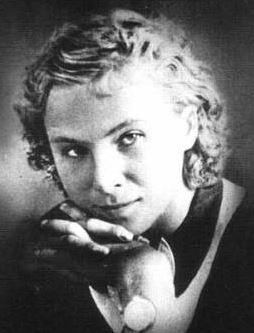
Lydia Vladimirovna Litvyak (1921-1943) was born in Moscow in the early days of the Soviet Union. She was fascinated by flight from a young age, and enrolled in a flying club at 14. She flew her first plane at 15 before heading to a military flight school. After graduating, Litvyak became a flight instructor. In 1941, Nazi Germany invaded the Soviet Union. Litvyak immediately volunteered to join a fighter pilot unit. However, she was rejected based on “lack of experience”, even though she had already trained 45 other pilots! Meanwhile, Marina Raskova established an all-female fighter force, and Litvyak was accepted. In 1942, Litvyak flew her first combat missions. She was soon moved to a standard (male) air force unit. In the battle for Stalingrad, Litvyak scored her first two kills, setting her name in history as the first female fighter pilot to take down an enemy plane. She went on to run 66 combat missions, and logged 16 victories. In 1943, now promoted to junior lieutenant and awarded the Red Star, Litvyak was assigned to the okhotniki, “hunters”, experienced fighter pilots who were given permission to roam the skies on their own, and strike at will. Despite suffering multiple wounds, and recommended to go on medical leave, Litvyak refused. Shortly after, she went on her final mission, and did not return to base. Her whereabouts were unknown. She was either killed or taken captive – the latter possibility preventing her from being awarded the prestigious ‘Hero of the Soviet Union’ award. Litvyak was only 22 years old. In 1979, after decades of searching, the remains of her plane and body were found. She had been buried by local villagers, having died from a head wound. In 1990, she was posthumously awarded the Hero of the Soviet Union, with a rank of senior lieutenant. Nonetheless, some claim that she survived, and either perished in a German prisoner camp, or lived out the rest of her life in secret, marrying and having children. Litvyak’s story has been featured in several fiction novels, and even a stage production. In the Soviet Union, she was affectionately called the “White Lily of Stalingrad”.

Words of the Week

Everything is by Divine Providence. If a leaf is turned over by a breeze, it is only because this has been specifically ordained by God to serve a particular function within the purpose of creation.
– Rabbi Israel Baal Shem Tov

Litvyak2

Jew of the Week: Lou Lenart

The Man Who Saved Tel-Aviv

Lou Lenart

Lou Lenart

Layos Lenovitz (1921-2015) was born in a rural Hungarian village, the son of farmers. While still a child, his family fled to America to escape persecution. They settled in Pennsylvania, and survived by selling home-made noodles. Growing up, Lenovitz was commonly a victim of anti-Semitic attacks, so he took up bodybuilding to protect himself. This led him to join the Marines at 17. Now going by the name Louis Lenart, he ended up in flight school and became a fighter pilot. During World War II, he served in the Pacific, and participated in a number of key battles, including the Battle of Okinawa – one of the war’s largest. Upon returning home (with the rank of Captain), Lenart learned that many of his relatives, including his grandmother, perished in the Holocaust. In response, he moved to Israel and volunteered with the Sherut Avir, the “air force” of the Haganah – which had no military planes at the time. Lenart helped to secretly smuggle four S-199 fighter planes from Czechoslovakia. Following its declaration of independence, Israel’s Arab neighbours immediately invaded. By the end of May 1948, the Egyptians were nearing Tel-Aviv with a force of 10,000. Lenart was called up to command Israel’s only four fighter planes to stop the Egyptian advance – the very first mission of the newly-created Israeli Air Force. The Egyptians thought Israel had no air force, and were shocked when they were being attacked from above. Thinking that Lenart’s four planes were just the first small foray of a larger attack, the Egyptians retreated in fear. Israel’s most populous city was spared from what could have been a devastating battle, and Lenart was nicknamed “the man who saved Tel-Aviv”. Following the war, Lenart played an important role in Operation Ezra and Nehemiah, which airlifted over 120,000 Iraqi Jewish refugees to safety in Israel. Outside of the military, Lenart was a pilot for El Al. Later in life, he moved to Los Angeles and helped to produce six Hollywood films while at the same time working as the general manager of the San Diego Clippers basketball team (before the team moved to LA). Lenart retired in Israel, where he spent the last years of his life. His story was featured in Nancy Spielberg’s award-winning 2014 film Above and Beyond, and the 2015 A Wing and a Prayer.

Words of the Week

It was the most important moment of my life, and I was born to be there at that precise moment in history… I survived World War II so I could lead this mission.
Lou Lenart, on his mission to save Tel-Aviv during the Independence War