The World’s Coolest Hats
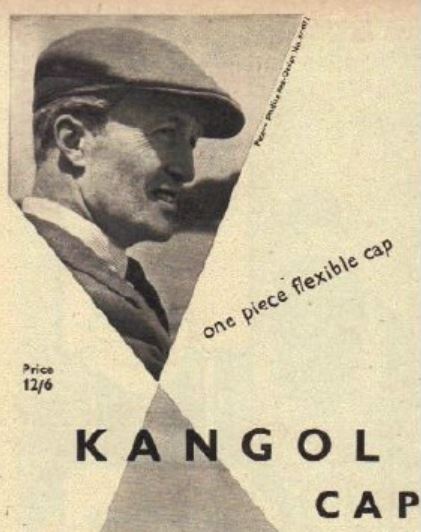 Yakov Henryk Spreiregen (1894-1982) was born to a Jewish family in Warsaw. The family immigrated to France when he was a young man—where he changed his name to Jacques—and then to England to escape the First World War. Spreiregen found a job working for a hatmaker, but was soon called up to serve in the military. After returning to England following his service, he started importing military-style berets from France. He then began making his own hats from high-quality angora wool. In 1938, Spreiregen leased an old thread factory in northwest England and founded Kangol (a name he made up from “knitting angora wool”). The company initially struggled to turn a profit, and many of the first employees were his own family members. Eventually, the hats did become popular, and earned a reputation for quality and durability. During World War II, Spreiregen won a contract to outfit the British army with berets. By the end of the war, he was making a million hats a year! Kangol later outfitted the English Olympic team, and the crew of British Airways. The company went public in 1952. Two years later, Spreiregen started a new division to produce helmets and seat belts. Kangol went on to become the largest seat belt manufacturer in Europe. In 1964, Kangol made a deal with The Beatles to make their branded hats. Soon, Kangol hats were popular among American hip hop artists, too, and have since been sported by the likes of Grandmaster Flash, Madonna, Brad Pitt, and Princess Diana. The most famous wearer of Kangol hats is undoubtedly Samuel L. Jackson, who has said that it’s a family tradition going back to his grandfather. Spreiregen retired from the company in 1972. Just a few years later, it would officially become the world’s largest hatmaker. Because Americans would often ask for the “kangaroo” hats when shopping, Kangol made their logo a kangaroo in 1983, a year after Spreiregen passed away.
14 Facts You Should Know About the Book of Psalms
Words of the Week
The real danger of antisemitism is not what others think of us, but what it makes us think of ourselves.
– Rabbi Manis Friedman
 Ludwig Guttman (1899-1980) was born to a German-Jewish family in what is now Poland. After serving in World War I, he volunteered at a hospital and first encountered a paraplegic patient. This inspired him to go to medical school and he went on to become a renowned neurosurgeon, specializing in spinal cord injuries and paralysis. He also taught at the University of Freiburg, where he supervised a Jewish fraternity that focused on fitness and physical training to give Jewish students more strength and confidence in the face of rampant anti-Semitism. When the Nuremberg Laws were passed by the Nazis, Guttman was stripped of his job and title. He was given an inferior position at the Breslau Jewish Hospital, where he eventually became the medical director. During Kristallnacht, Guttman witnessed the desecration of his synagogue and the abuse of his fellow congregants. That night, he admitted 64 Jewish patients that took refuge in his hospital, and was able to save 60 of them from deportation by the SS agents that came the next day. The following year, the Nazis gave him a visa and sent him on a medical mission to Portugal. Guttman never returned to Germany, and settled in England instead. He joined the Nuffield Department of Neurosurgery in Oxford. Guttman came up with the idea of turning paraplegic patients over in their beds every two hours to prevent bed sores, a small move that drastically cut the mortality rate. In 1943, the Royal Air Force asked Guttman to found and head the National Spinal Injuries Centre at Stoke Mandeville Hospital to look after injured pilots who commonly had spinal problems. It was here that Guttman realized how sports could be a powerful tool for rehabilitation. In 1948, he organized the first Stoke Mandeville Games for disabled war veterans, a huge success. Four years later, he turned it into an international event, and in 1956 was recognized by the IOC (International Olympic Committee) for his pioneering work. The Stoke Mandeville Games became an official part of the 1960 Rome Olympics, and by 1984 was known as the Paralympic Games. (When host city Mexico refused to hold the games in 1968, Guttman arranged for them to be held in Israel). Guttman founded what would become the English Federation of Disability Sport, as well as the International Spinal Cord Society. He was the first editor of the scientific journal Spinal Cord. The Guttmann Institute in Barcelona is named after him, as is the Ludwig Guttmann Prize awarded by the German Medical Society for Paraplegia. He was the subject of a BBC documentary called The Best of Men, and was knighted by Queen Elizabeth II in 1966. There are currently over 4400 athletes competing at the Tokyo Paralympic Games, the largest ever.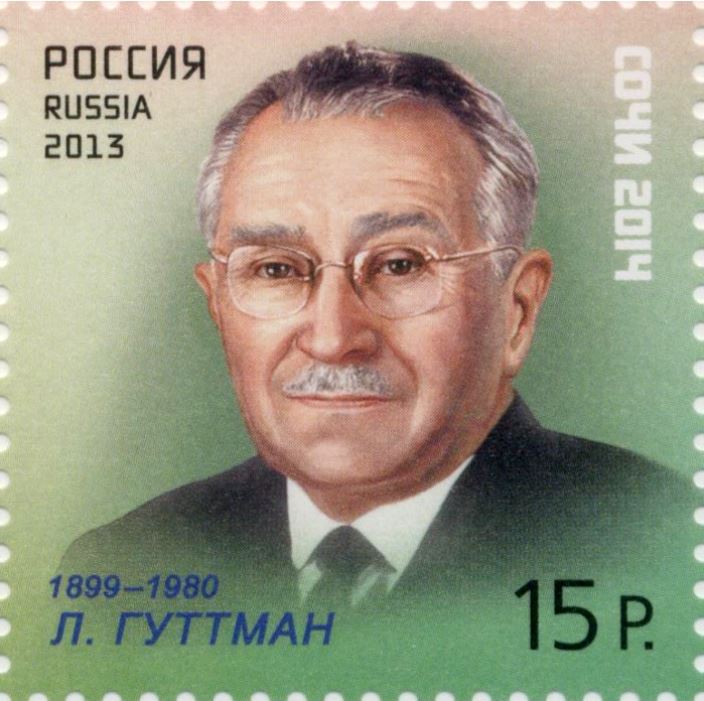
 Chaya Helena Rubinstein (1872-1965) was born in the Jewish ghetto of Krakow, Poland, the oldest of eight daughters in a very religious family. Her cousin was