Father of Iraq
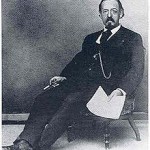
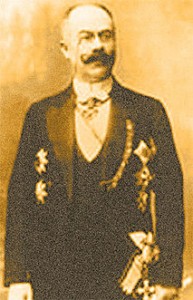
 Sassoon Eskell (1860-1932) was born in Baghdad to a wealthy and illustrious Mizrachi Jewish family. At the time, some 40% of Baghdad’s population was Jewish. Eskell’s father was a rabbi, and at one point served as the chief rabbi of India’s large Baghdadi community. Eskell studied law and economics in Istanbul, London, and Vienna. He spoke nine languages fluently, and became the official translator (dragoman) for the Ottoman government in Baghdad. When the Ottomans drafted a constitution and established a new Turkish Parliament in 1908, Eskell was elected as Baghdad’s deputy representative. He also served as the under-secretary of state for trade and agriculture, and represented the Ottomans on multiple international delegations. At the end of World War I, the Ottoman Empire collapsed and Eskell was among the key figures that pushed for Iraqi independence. He was one of two Iraqi representatives that negotiated with Winston Churchill in creating the new state and choosing its first king. Eskell went on to be Iraq’s first finance minister, and continued in this role through the next five governments. He was the primary advisor to the Iraqi king and prime minister, and was described as “by far the ablest man” on Iraq’s governing council. Eskell was elected to the first Iraqi parliament in 1925, and continued to serve on it until his death. He is often referred to as the “Father of Iraqi Parliament”. Among his many significant achievements was making sure that Iraq’s oil was sold to the British for gold, not pounds sterling. While this was unusual at the time, the British pound soon lost most of its value and was no longer backed by gold. Sassoon thus ensured Iraq’s wealth was not diminished, and that it would continue to profit from its oil sales. These funds were critical in ensuring the success and viability of the nascent state. Eskell was also a major philanthropist and gave countless sums to charity. Much of his wealth went to the Jewish National Fund to support the re-establishment of Israel. The village of Kfar Yehezkel in Israel is named after him. Among his many other awards and honours, Eskell was knighted by King George V. Several years ago, the Iraqi government demolished his historic 100-year old home in a controversial move that made way for a new development.
Words of the Week
Those who stand for nothing fall for anything.
– Alexander Hamilton
 Martin John Gilbert (1936-2015) was born in London to parents of Russian-Jewish background. Soon after World War II broke out, the family was moved to Canada by the British government. Returning to England after the war, Gilbert finished his schooling and served for two years in the British Intelligence Corps. He then went to Oxford to study history. While a postgraduate in 1962, Gilbert was asked by Winston Churchill’s son Rudolph to assist as a researcher for Churchill’s biography. Randolph died a few years later, having brought forth just two volumes on Churchill. Gilbert took over and became the official biographer for Churchill, working on the project for over twenty five years, publishing many volumes along the way. (Currently, there are 31 books encompassing over 25,000 pages, and Gilbert had plans for more.) It was said that “Whoever made the decision to make Martin Gilbert Churchill’s biographer deserves a vote of thanks from the nation. Nothing less would suffice.” Aside from Churchill, Gilbert’s primary interests were studying the World Wars and the Holocaust, as well as producing historical atlases (his were among the very first produced). He also wrote a great deal of books and histories of Jewish communities, of Russia, Israel, and the Arab-Israeli conflict, as well as to assist the plight of Soviet Jewry. All in all, Gilbert published an astounding ninety books, many of which were highly acclaimed. His abilities as a scholar and writer were praised. His first volume on Churchill had an original rough draft with two million words (which Gilbert narrowed down to 300,000 for publication), while the short “precis” version of the biography was a mere 981 pages! Gilbert also wrote for The Sunday Times, and for a number of films and TV programs, did research for the BBC, lectured at the White House, and stood before the UN Human Rights Commission. Since 2009, he served as the Privy Counsellor of the British commission inquiring into the Iraq War. Gilbert won numerous awards and honourary degrees, and was knighted in 1995. Sadly, he passed away last week after a lengthy illness.