In Memory of Hollywood’s Biggest Star
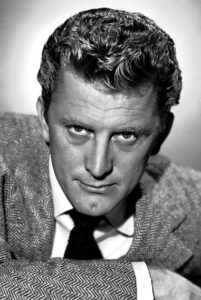
Kirk Douglas
Issur Danielovitch (1916-2020) was born in New York to a traditional Yiddish-speaking family of Jewish-Russian immigrants. Growing up in poverty, young Issur worked hard delivering newspapers and selling snacks to mill workers to help make a living. He studied at the local religious cheder, and was such a good student that everyone wanted him to become a rabbi. This frightened him, so he ended up moving to public school where he first got to act in plays. At this point, he went by the name Izzy Demsky (a last name he adopted from his uncle), and only changed his name to Kirk Douglas when he enlisted in the US Navy in 1941. Not long before that he graduated from St. Lawrence University, having convinced the dean to allow him to study for free since he had no money for tuition. While he tried to make it as an actor, Douglas also worked as a gardener, janitor, and professional wrestler. He eventually made it to the American Academy of Dramatic Arts and received a scholarship there, too. Douglas served in the navy for three years working in anti-submarine combat and was honourably discharged after being injured. After the war, he got his first acting job doing commercials and soap operas over the radio. A friend got him his first film role in 1946, after which he was instantly recognized as a “natural film actor”. He got his first Oscar nomination just three years later. Douglas was Hollywood’s biggest star through the 1950s and 60s, and took the lead in classic films like Spartacus (at that point the most expensive film ever made), The Bad and the Beautiful, Gunfight at the O.K. Corral, and Ace in the Hole (ranked among the greatest movies of all time). His portrayal of Vincent van Gogh in Lust for Life was especially praised. (He actually stayed in character throughout the weeks of filming, even when off-set!) He also played Israeli Hershel Vilnofsky in Victory at Entebbe, the first film about the famous rescue operation. All in all, Douglas starred in nearly 100 films, acted on Broadway, and made appearances in numerous TV shows. He also wrote 11 books, had his own film production company, and directed a number of films, too. Outside of Hollywood, Douglas was a noted philanthropist. He was an American goodwill ambassador for decades, donated some $50 million over his life to schools, hospitals, synagogues, and charities, and promised to leave most of his remaining $80 million net worth to charity as well. After a helicopter crash in 1991, he sought new meaning in life and rediscovered Judaism. He would write in his autobiography that while he once “tried to forget” that he was Jewish (though he never broke a Yom Kippur fast), he later realized “that you don’t have to be a rabbi to be a Jew.” Douglas became more observant, and had a second bar mitzvah at the age of 83. He studied Torah weekly with Rabbi David Wolpe. Douglas was also actively engaged with Aish HaTorah of Los Angeles, and helped support the Aish World Center across from the Western Wall in Jerusalem (the building’s Kirk Douglas Theater is named after him, as is Jerusalem’s Douglas Garden). Among his many awards are the Presidential Medal of Freedom, the French Legion of Honour, the National Medal of Arts, the King David Award, two Golden Globes and, of course, an Oscar for lifetime achievement. Sadly, Kirk Douglas passed away earlier today, aged 103. He is remembered as a film genius (who memorized not only his own lines, but seemingly every word of the entire script), a dedicated philanthropist, and one of the greatest actors of all time.
Words of the Week
The Torah is the greatest screenplay ever written.
– Kirk Douglas

Kirk Douglas at Aish HaTorah in Jerusalem, with Aish founder Rabbi Noah Weinberg on his left.
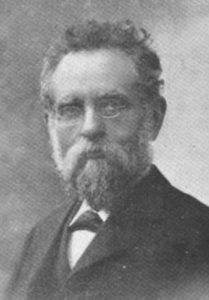
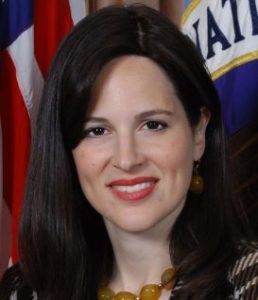 Chani Anne Neuberger (b. 1976) was born in Brooklyn to a Hasidic Jewish family with roots in Hungary. She grew up speaking Yiddish and went to school at Bais Yaakov of Boro Park. She studied at Touro College, then earned an MBA from Columbia University. A professor suggested that she apply for the prestigious White House Fellowship, and she did a couple of years later. She was selected and – to her surprise – instead of going to the Treasury Department she was posted to the Department of Defense. From there, she got a job working for the Secretary of the Navy, and eventually became the US Navy’s deputy chief management officer. In 2009, Neuberger was posted to the new Cyber Command team of the NSA (National Security Agency). Her work was impressive, and after the Snowden leaks of 2013, she was appointed the NSA’s first chief risk officer. Neuberger also served as assistant deputy director of operations, and most recently oversaw security during the 2018 US Midterm elections. Earlier this week, Neuberger was named the NSA’s new head of the Cybersecurity Directorate. She sits on the NSA’s board of directors, and is one of its highest-ranking women. Neuberger finds inspiration for her work in her own family history: Seven of her eight great-grandparents were killed in the Holocaust, her grandparents were survivors, and in 1976 her parents were hostages on the Air France plane that was hijacked by terrorists and diverted to Entebbe. Outside of government, Neuberger runs a charity called Sister to Sister which helps single mothers in Orthodox Jewish communities across the US and Canada. The organization has over 1000 members and volunteers. Neuberger remains devoutly religious, and has said that sometimes her coworkers remind her that sunset is approaching so that she can make it home for Shabbat. Her advice to religious Jews: “learn to navigate the secular world as a frum [religious] Jew without apologizing, without abandoning your principles, but also with a sense of how and when to be flexible.”