Tag Archives: Ukrainian Jews

Jews of the Week: Salita, Foreman and Greenberg

Jewish Boxers 

Yuri Foreman, Rabbi Boxer

From the beginnings of professional boxing early in the last century, Jews have played an enormous role in the sport. The tradition continues with today’s two young stars Dmitry Salita and Yuri Foreman. Most amazingly, both are practising Orthodox Jews! Salita was born Dmitry Lekhtman in Odessa, Ukraine (he uses the maiden name of his mother, who passed away from breast cancer). His family immigrated to Brooklyn where he began his career at age 13, building an amateur record of 59 wins to just 5 losses. At 19 he began his professional career, and his record stands at 33 wins, 1 draw and 1 loss, with 17 KOs. Salita has said, “I will never compromise my beliefs. Never. It’s not a question. I have a personal relationship with God… My boxing is such a big part of my life, but it won’t get in the way of my religion.” Meanwhile, Yuri Foreman was born in Belarus, where his mother signed him up to boxing so that he can stand up to anti-Semites. The family moved to Israel, then Brooklyn. Foreman recorded 75 wins to 5 losses in his amateur career, and since going pro has 28 wins and 2 losses. He is also studying to become an Orthodox Rabbi, and has said, “You have the physical and mental challenges in boxing, just like you have lots of challenges in exploring the different levels of Judaism. They are different but the same.” Final mention goes to rising star Roman Greenberg, nicknamed “the Lion from Zion”, a Moldovan-Israeli who was the youngest ever to win Israel’s heavyweight title. His record stands at 27-1. He says: “I represent Israel and myself. All through history, the Jews have always had to fight for their freedom and for their lives. When I come out wearing the Star of David, it shows the whole world that the Jews are still here and that they are successful.” Amen.

Kosher Boxer Dmitry Salita


Words of the Week

We can easily forgive a child who is afraid of the dark; the real tragedy of life is when men are afraid of the light.
– Plato

Jews of the Week: Martin Cooper and Joel Engel

Inventing the Cellphone

Cellphone Inventor

Martin Cooper & DynaTAC

Though many people were involved in the production of the cellphone, credit is given to Martin Cooper (b. 1928), nicknamed the “father of the cellphone”, who made the first cellular phone call in New York on April 3, 1973. Cooper was the executive of Motorola, and placed the first-ever cellphone call to his major competitor Joel S. Engel (b. 1936), a fellow Jew who was also working on cellphone technology. Engel participated in the Apollo space program and worked for AT&T before becoming the research head at Bell Labs, where he had previously co-led the team that developed “the architecture of the cellular network and its parameterization”. Meanwhile, Martin Cooper was born in Chicago to Ukranian-Jewish immigrants. Besides the cellphone, he had many more contributions to radio and communications technology, including “Cooper’s Law”, named in his honour. He went on to become Vice-President and Corporate Director at Motorola, which opened its first branch outside the U.S. in Israel. Their first phone was the DynaTAC, which weighed 1 kilogram and cost $9,000 (adjusting for inflation). Cooper described it as such: “The battery lifetime was 20 minutes, but that wasn’t really a big problem because you couldn’t hold that phone up for that long.” He said that his inspiration for the cellphone came from Captain Kirk’s Communicator device on Star Trek!

Words of the Week

Joel Engel

We have discovered how to hit the Jews where they are the most vulnerable. The Jews love life, so that is what we shall take away from them. We are going to win, because they love life and we love death.

– Hezbollah leader Hassan Nasrallah


Jew of the Week: William Sidis

The Smartest Man That Ever Lived?

Genius.

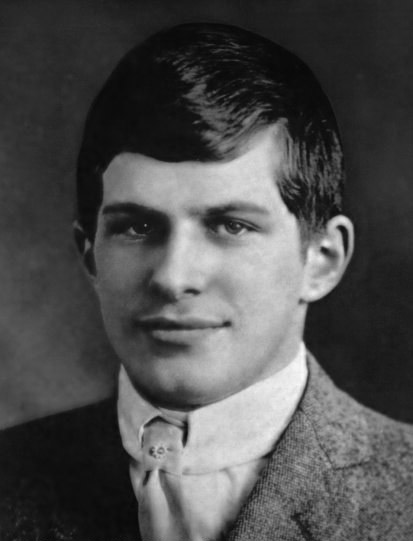
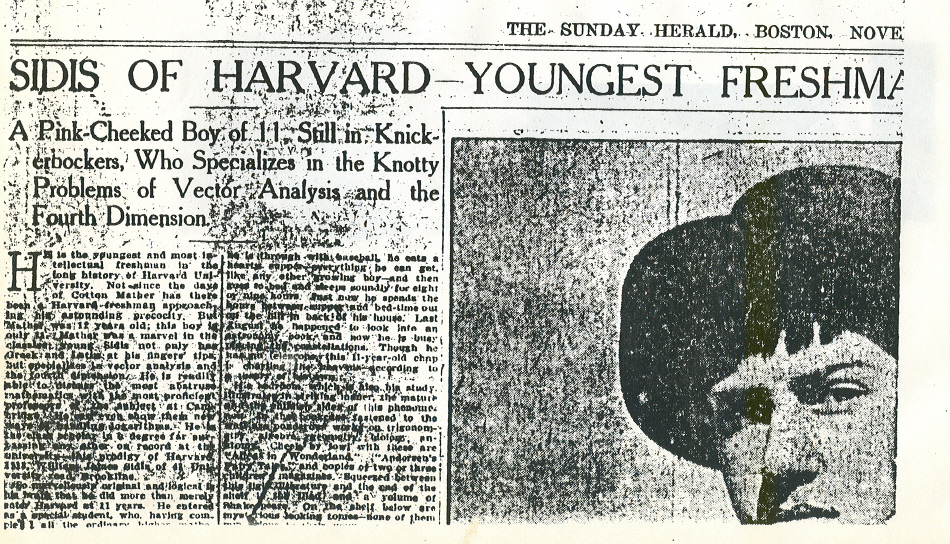
William James Sidis (1898-1944) was born to Ukrainian Jews who fled to America because of the pogroms. Sidis was quickly recognized as a child prodigy. His parents were geniuses in their own right – doctors, polyglots and professors – but Sidis would outdo them both. At 1.5 years, he was already reading the New York Times. At age 4, he wrote his first book (in French). By 8, he spoke fluently in English, Russian and Hebrew, as well as Latin, Greek, French, Russian, German, Armenian and Turkish. He later invented his own language called Vendergood. At age 11, William enrolled in Harvard, becoming the youngest person in history to do this. A year later, he was lecturing at the Harvard Mathematical Club. At 17, he had a teaching job at Rice University, where he wrote a geometry textbook in Greek. At 21, he was thrown in prison for participating in violent Communist rallies. After his release, he lived in seclusion and isolation until his death of a brain hemorrhage at age 46. He spoke 40 languages. New York’s Aptitude Testing Institute placed his IQ between 250 and 300, giving him the highest intelligence quotient in history (in comparison, Einstein’s was around 170). Despite his genius, he appears to have left no legacy. Much of his life remains clouded in mystery.

Boston Herald Headline – 1909

Words of the Week

A person is forbidden to eat before he feeds his animals.
– Talmud, Brachot 40a