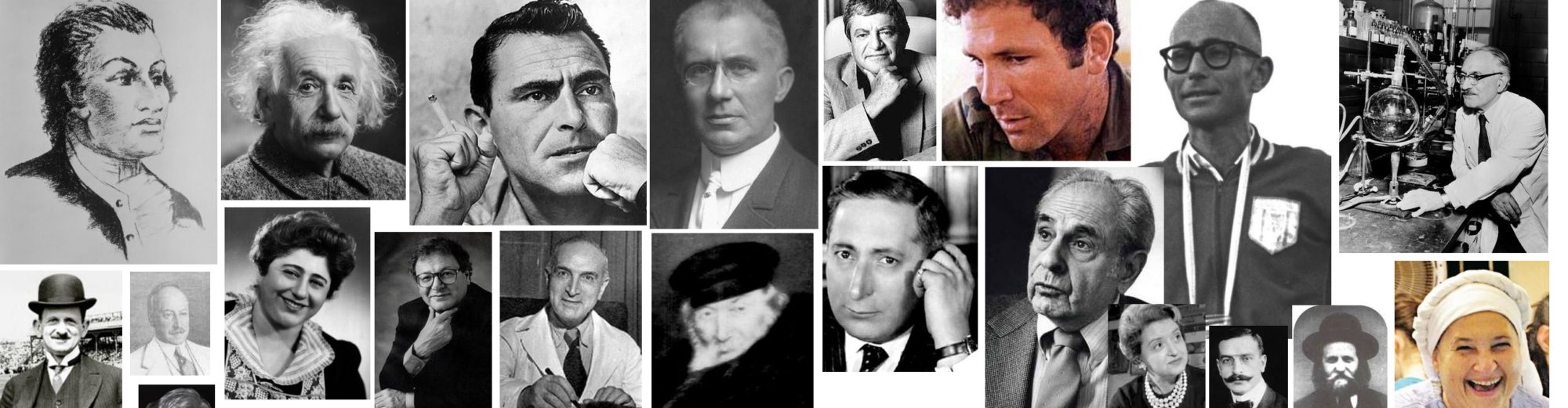

Rabbi Kook
Avraham Itzhak Kook (1865-1935) was born in what is now Latvia (then part of the Russian Empire). Recognized as a young prodigy, he spent only a year and a half at the famous Volozhin Yeshiva, and yet, it was said that it was worthwhile for the yeshiva to have been founded just for him. After serving as head rabbi of several European towns, in 1904 Kook settled in Israel to become rabbi of Jaffa (Yafo), overseeing predominantly secular Zionists, whom he was able to inspire with Torah, and lead them to incorporate more observance into their lives. World War I broke out while he was on a trip to Europe, preventing him from returning to the Holy Land. Wasting no time, he served as a rabbi in London, England until the end of the war, then returned to Israel and took up the post in Jerusalem. He was instrumental in establishing the Chief Rabbinate of Israel, and saw it as a stepping stone towards reinstating the Sanhedrin. In 1921 he was appointed Ashkenazi Chief Rabbi of Palestine.
Rabbi Kook wrote excessively on Jewish law and exegesis. Many of these profound writings were only published after his death, and continue to make a powerful impact on people around the world. Kook founded Yeshivat Mercaz HaRav (“Centre of the Many”), Israel’s central academy for religious Zionists. He was beloved as a figure who tried to bridge the gaps between various sectors of Jewish society, especially between secular and religious. He also tried to win over the non-Zionist religious groups, and often preached that the re-establishment of the state of Israel was a necessary precursor for the coming of Mashiach. Kook remained totally apolitical, and refused to join any parties, working to unify groups instead of separating them into even smaller factions. His love for the Torah, the land of Israel, and the Jewish nation was renowned, and at his passing, over 20,000 mourners attended his funeral in Jerusalem (out of a total population of roughly 130,000!) He commanded a photographic memory and it was said there was no mystical secret he did not know. Some consider him to be the most influential religious Jewish thinker of the 20th century.
Words of the Week
The truly righteous do not complain about evil, but rather add justice; they do not complain about heresy, but rather add faith; they do not complain about ignorance, but rather add wisdom.
– Rav Kook
 Chaim Yosef David Azulai (1724-1807) more commonly known as the Chida (derived from his initials), was born in Jerusalem to a family with a long line of rabbis. From childhood he showed amazing proficiency in Jewish study, and learned under the great Torah scholars of the day. His name was soon well-known across the Jewish community of the Holy Land, and before he was 30, the Chida was selected to be the community’s emissary to Europe. He would go on several international trips to raise support and funds for the Jews in Israel (long before the start of the Zionist movement). Two of these trips lasted over 5 years each, and took him across Africa and Europe. Many credit him with sustaining the small Jewish community of Israel, which would have otherwise been extinguished by various Turkish and Arab warlords. During his travels he made sure to visit any ancient libraries he came across, and diligently studied their manuscripts, which earned him fame as a great scholar of all subjects. Meanwhile, he was able to publish roughly 70 different works on Judaism (writing his first book at age 16), ranging from Jewish law and scriptural commentaries to prayer books, mysticism and Kabbalah. His works are also important to secular scholars, as the Chida recorded a detailed diary during his trips around the world, giving historians an eyewitness account of the 18th-century. His incredible travels included a meeting with the Sultan of Turkey and King Louis XVI of France, a stint as Chief Rabbi of Cairo, as well as some dangerous encounters with the Knights of Malta and the Russian Navy. By the end of his life, he was considered a saint by both Jews and non-Jews alike.