
The Man Who Made New York Great Again
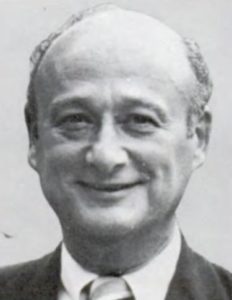
Ed Koch
Edward Irving Koch (1924-2013) was born to poor Polish-Jewish immigrants in The Bronx. He was drafted to the US Army in 1943 and sent to Europe as an infantryman, earning three medals of distinction. Because he could speak German, he remained in Europe after the war to help dismantle the Nazi government. Returning to New York, Koch studied at City College, then got his law degree from NYU. He worked as a lawyer for the next two decades, and during that time became an influential member of the Democratic Party. In 1967 he was appointed to the New York City Council, and two years later was elected to the US House of Representatives. Though he was originally “just a plan liberal”, he soon became a “liberal with sanity” (in his own words), realizing that at times liberal ideology was illogical and harms the very people it aims to help. He was renowned for his human rights efforts, as well as for combating communism and dictatorships. This drew the ire of various foreign governments (including Uruguay and Chile, who unsuccessfully plotted to assassinate him). Koch served in Congress until 1977, resigning only to take the post of New York City’s mayor under a platform of restoring “law and order”. He fulfilled his campaign promises, among them hiring 3500 new police officers to make New York safer. He ended the riots, and saved New York from its deep economic crisis. Koch was a beloved mayor, easily winning re-election in 1981 with 75% of the vote, and again in 1985 with 78% of the vote. When Chabad wanted to put up a public menorah for Chanukah, he readily agreed, and made sure it would be “the world’s largest”. In fact, he paved the way for other cities to do the same. (Amazingly, a lighting ceremony in Manhattan one Friday afternoon went behind schedule, so Koch summoned a helicopter to transport the rabbi back home to Brooklyn in time for Shabbat!) Despite a stroke in 1987, Koch recovered and continued faithfully serving his city. A year later, he took a strong stand against Jesse Jackson’s run for president (citing Jackson’s anti-Semitic comments). This lost him the support of most black voters, and Koch narrowly missed re-election in 1989. He returned to practicing law, and also became a professor at NYU. He spent more time writing, publishing a children’s book and contributing to a number of newspapers. Back in 1984 he had already published a memoir, Mayor, which became a bestseller and was later turned into a hit Broadway musical. Koch was a big movie buff, and his film reviews became legendary. Koch himself appeared in over 60 films and TV shows. He continued lecturing and going on speaking tours, often in support of human rights, and always in support of Israel. New York’s Queensboro Bridge was renamed after him, and there is a street named after him in Tel-Aviv, too. Koch’s funeral was attended by thousands, with the NYPD doing a fly-over, and eulogies by Bill Clinton and Michael Bloomberg. He asked his tombstone to simply state the Shema, along with the final words of journalist Daniel Pearl, who was kidnapped and brutally murdered by terrorists: “My father is Jewish, my mother is Jewish, I am Jewish.”
Where in the Torah is Chanukah?
Words of the Week
A small hole in the body is a big hole in the soul.
– Rabbi Dov Ber, the Maggid of Mezeritch (1704-1772)

American-Israeli astronaut Jessica Meir tweets her Chanukah wishes from the International Space Station, with a photo of her Chanukah socks.
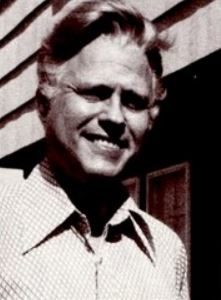
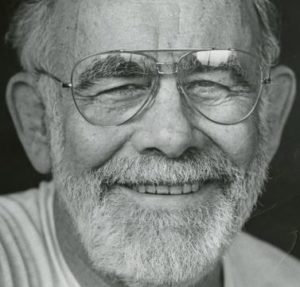 Gerald Wexler (1917-2008) was born in The Bronx to an immigrant family of German-Jewish and Polish-Jewish background. He graduated from high school by age 15, but there was little to do in the difficult days of the Great Depression. Wexler spent much of his time with a small circle of friends listening to music and discussing literature. It was only after returning from World War II military service that he finally pursued a career in journalism and music. He got a job as a reporter for Billboard Magazine, and soon became its editor. At the time, the magazine had a separate music chart for “black music”, called “Race Records”. Wexler took a stand against racism and came up with a new title, renaming the chart “Rhythm & Blues”. He thus coined the now popular term “R&B”. In 1953, the president of the start-up Atlantic Records (a fellow Jew named Herb Abramson) was drafted to the US Army. Wexler was offered to take his place. Under Wexler’s leadership, Atlantic Records became one of the world’s most successful music labels, and produced some of the biggest names in music, including Ray Charles and Aretha Franklin. For bringing the latter to the world, Wexler was named Record Executive of the Year in 1967. (Franklin had struggled to find success in music until Wexler convinced her to join him at Atlantic, and produced her breakout hit song, “Respect”.) The following year, he signed a young group called Led Zeppelin. Wexler would go on to work with other big stars, including Bob Dylan, the Bee Gees, Richard Pryor, Carlos Santana, and George Michael. He was inducted into the Rock and Roll Hall of Fame in 1987. Wexler played a central role in ending the era of “race music” (and stopping the practice of white musicians covering songs of black musicians and raking in all the fame and fortune for themselves). He opened the door for more “black music” to enter the once all-white Billboard charts, and has been credited with bringing “black music to the masses”. Not surprisingly, Wexler has been called “a prophet of roots and rhythm” and “the Jewish king of black music”.