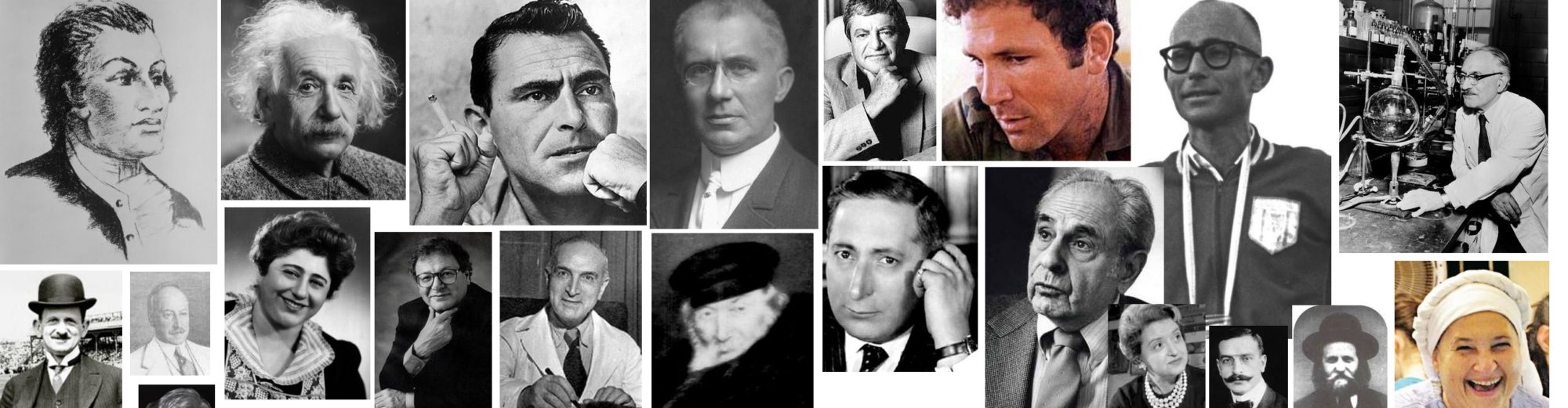
Prophet of the Andes
 Segundo Zerubbabel Tzidkiya Villaneuva (1927-2008) was born in a small village in the Andes Mountains of Peru to a Catholic family. When he was 21, his father was murdered and Villaneuva discovered a Bible while going through his father’s things. He started reading the Bible and going to church regularly. However, as he went deeper into his studies, he found no good answers to his questions. He was puzzled by Christian observance of the Sabbath on Sunday instead of Saturday, as the Torah clearly commands. Villaneuva soon became a Seventh-Day Adventist. But the problems and inconsistencies persisted. He learned Hebrew and began reading Scripture in the original language. He then discovered that Christians had mistranslated the Torah to suit their needs, and twisted what the Tanakh really said about the concept of Mashiach, the messiah. After many years, Villaneuva decided to convert to Judaism. He started his own congregation with a group of like-minded individuals, called Bnei Moshe. The movement grew to some 500 individuals, many of whom also found out that they actually had Jewish ancestors—Sephardic Jews who were forcibly converted to Christianity during the Inquisition (called Anusim or Conversos). It took many years, but in August of 1989 a delegation of Israeli rabbis came to Peru and converted Villaneuva and 160 others. Villanueva took on the Hebrew name “Zerubbabel Tzidkiya”. The following year, he made aliyah with a large group of Bnei Moshe. This motivated two more groups of Peruvians to convert to Judaism and make aliyah, including the Bnei Abraham and the Inca Jews. Villaneuva’s story inspired countless others in Latin America to convert to Judaism or explore their Sephardic Jewish ancestry. It is estimated that there are now some 60 communities in 14 countries across Latin America that have returned to Judaism. Villaneuva passed away in Israel and was buried on the Mount of Olives. He has been called “The Prophet of the Andes”.
Video: A Kabbalistic History of the World
Words of the Week
The Jews are a peculiar people: things permitted to other nations are forbidden to the Jews. Other nations drive out thousands, even millions of people, and… no one says a word about refugees. But in the case of Israel, the displaced Arabs have become eternal refugees… Other nations, when victorious on the battlefield, dictate peace terms. But when Israel is victorious, it must sue for peace.
– Eric Hoffer
 Eilat Mazar (1956-2021) was born in Israel to a family of archaeologists, and grew up playing and learning on excavation sites. Her grandfather, Benjamin Mazar, was the State of Israel’s first official archaeologist, and was the president of the Hebrew University. Eilat studied archaeology at the same university, and began her field work in 1981. She made a big splash right away by discovering the Royal Quarter of the ancient City of David in Jerusalem, including what is thought to be the royal palace of King David himself. She went on to uncover some of the biggest finds of the last century, including parts of the walls built by King Solomon, the seal of King Hezekiah, and the seal of the Prophet Isaiah. Mazar was driven by her belief that the Tanakh records actual historical events (whereas many of her secular colleagues often viewed the Tanakh as mythology). She would say that “I work with the Bible in one hand and the tools of excavation in the other.” Over the decades, her work played a major role in helping to prove the authenticity of the Bible. Mazar discovered countless treasures from the First and Second Temples in Jerusalem, and was a vocal activist trying to stop Palestinian and Jordanian authorities from
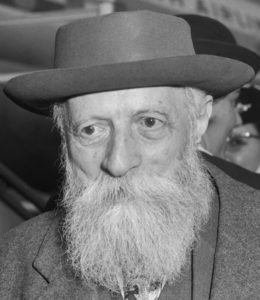 Mordechai Martin Buber (1878-1965) was born in Vienna to a religious Jewish family. His parents got divorced when he was just three years old, so Buber was raised in what was then Poland by his grandfather. Despite growing up in a richly Hasidic home, Buber began reading secular literature and returned to Vienna as a young man to study philosophy. Around the same time, he became active in the Zionist movement and soon became the editor of Die Welt, the main newspaper of Zionism. It wasn’t long before Buber became dissatisfied with the secularism and “busyness” of Zionism and returned (partially) to his Hasidic roots. He saw in Hasidic communities the right model for a new Israel, and a better alternative to the entirely-secular kibbutz. Buber ultimately saw Zionism not as a nationalist or political movement, but as a religious movement that should, first and foremost, serve to spiritually enrich the Jewish people—along with the rest of the world. He would later be credited with being the father of “Hebrew humanism” and “spiritual Zionism”. In 1908, he was invited to address a group of Jewish intellectuals known as the “Prague Circle”, and to “remind them about their Judaism”, as the group’s leader had requested. Among the members of the Circle was (former Jew of the Week)