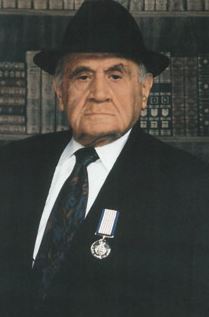
Jacob Ghermezian
Jacob Ghermezian (1902-2000) was born to a religious Jewish family in Azerbaijan, and grew up in Iran. He started a business selling Persian rugs when he was just 17 years old. Within two decades, Ghermezian became one of Iran’s wealthiest businessmen. In 1943, he hosted Roosevelt, Churchill, and Stalin in his apartment during the critical “Tehran Conference” where the three world leaders discussed the final stages of World War II and planned their path to victory. Unfortunately, the religious and political situation in Iran worsened in the 1950s, so the Ghermezian family emigrated to America. After a short stay in New York, they settled in Montreal. Soon after, Ghermezian and his four sons (Eskandar, Nader, Raphael, and Bahman) discovered the inexpensive, pre-oil boom Edmonton real estate market, and heavily invested in it. The family fortune soared, and the Ghermezians soon took on their biggest project: the $1.1 billion West Edmonton Mall, which remains North America’s largest to this day (and was the world’s largest from 1985 to 2004). The 5 million square foot complex boasts a theme park (with roller coaster), indoor shooting range, an NHL-sized hockey rink (where Wayne Gretzky’s Oilers used to practice), the world’s largest indoor lake, over 800 stores, a hotel, theatre, bungee jump, and the world’s largest parking lot. The Mall was once called the “eighth wonder of the world”, and draws 32 million visitors a year. The Ghermezians also built the Mall of America in Minnesota, the largest in the United States, and are currently building the extravagant American Dream Mall in New Jersey, which will have America’s only indoor ski hill. Despite the fame and fortune, Jacob Ghermezian never abandoned his Jewish faith, nor did he ever conduct business on the Sabbath. He instilled the same values in his sons, all of whom, like their father, were tremendous philanthropists, funding schools and scholarships, synagogues, charity organizations, and other institutions in Alberta and around the world.
Words of the Week
To the Jews we owe the idea of equality before the law, both divine and human; of the sanctity of life and the dignity of the human person; of the individual conscience and so of personal redemption; of the collective conscience and so of social responsibility; of peace as an abstract ideal and love as the foundation of justice, and many other items which constitute the basic moral furniture of the human mind.
– Paul Johnson
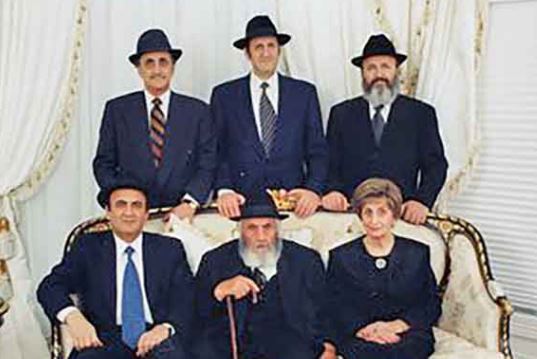
Jacob and Miriam Ghermezian with their four sons in the 1990s.
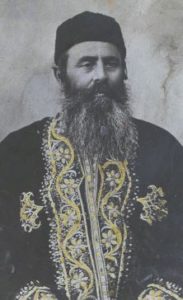 Shlomo ben Yakov Moussaieff (1852-1922) was born in the emirate of Bukhara (present-day Uzbekistan). Both a renowned rabbi and a wealthy businessman, he made aliyah to the Holy Land in 1888 – bringing with him forty cases of gold – and was one of the founders of Jerusalem’s famous Bukharian Quarter. Moussaieff built four synagogues, and homes for 25 poor families. Meanwhile, he published a prayer book and disseminated it widely, making it his mission to inspire more Jews to pray regularly. He also continued his business ventures, particularly in real estate, tea, silk, and gemstones. Moussaieff was an avid collector of rare manuscripts, and amassed an impressive library with 225 ancient texts, including prized manuscripts of Maimonides and the mystical teachings of the Arizal. Until his last days, Moussaieff was committed to the development of Israel, and stated in his will that only those of his seven children that remain in Israel would receive any inheritance.
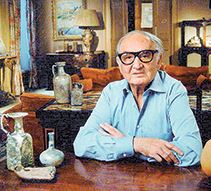 His grandson, also Shlomo Moussaieff (1923-2015), though better known as Sam, would become even more famous. One of twelve children raised in Jerusalem, Sam Moussaieff ran away from home as a teen to avoid his strict father. Living in a synagogue, he worked for a carpenter and sold ancient coins he would find in Jerusalem’s caves and tombs. Once arrested by Arab policemen, he ended up in a Muslim school for nearly a year, becoming proficient in Arabic and the Koran. At 17, Moussaieff enlisted in the British Army to fight the Nazis. After World War II, he fought for Israel’s independence and was captured by the Jordanians, who imprisoned him for a year. Moussaieff returned to Jerusalem and joined the family jewellery business. He soon opened his own antiquities shop in Jaffa, at times getting in trouble for smuggling goods. In 1963, Moussaieff was offered to have his record cleared of legal issues, as well as the rights to an exclusive shop in London’s Hilton Hotel, in exchange for handwritten letters from Maimonides which he owned. Moussaieff accepted and moved to London. His shop soon specialized in jewellery, and he became the dealer of choice for wealthy barons from Arab oil states thanks to his pristine Arabic. Moussaieff became world-renowned for his extremely rare and special gems. He owned the most precious stone in the world: a red diamond valued at $20 million. In 2011, he was ranked among the richest Londoners, with an estimated worth of some $350 million. Moussaieff amassed a personal collection of over 60,000 ancient artifacts, including millennia-old seals from Jerusalem’s First Temple, and reportedly even items associated with the forefather Abraham! His stated goal was to collect indisputable evidence proving the accuracy of the Torah. Moussaieff was given an honourary degree by Bar Ilan University (to whom he donated many artifacts, including his grandfather’s ancient manuscripts) which established the Dr. Shlomo Moussaieff Center for Kabbala Research. Interestingly, Moussaieff once purchased an ancient Torah scroll for $1 million from the Allenby family – who had the Torah because the elder Shlomo Moussaieff gave it as a gift to General Allenby during World War I!
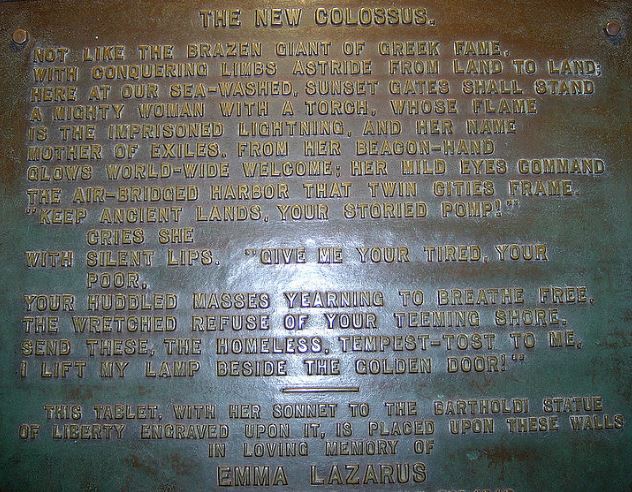
 Emma Lazarus (1849-1887) was born in New York City. Her father came from a Jewish family that immigrated from Germany, while her mother was from an illustrious Sephardic-Portuguese family that settled in America before the Revolution. Lazarus studied literature and language, speaking German, French, and Italian. She became a famous poet, novelist, and playwright; one of the first successful Jewish-American authors. Her first book of poetry was published when she was just 17 years old, and she went on to collaborate with such great writers as Ralph Waldo Emerson. Lazarus was also an influential social activist. Her first cause was fighting for tax reform and fairer distribution of land. After hearing of the violent pogroms in Russia, she advocated strongly on behalf of Russian Jews and helped settle Jewish refugees in New York. Lazarus worked for the Hebrew Emigrant Aid Society, training impoverished immigrants and helping them find work. She also co-founded the Hebrew Technical Institute to educate Jewish refugees. Meanwhile, Lazarus argued passionately for the creation of a Jewish state in Israel – thirteen years before Theodor Herzl arrived on the scene! (For this, among other reasons, she was once described as the “fiery prophet of the American Jewish community.”) Lazarus is undoubtedly most famous for her poem “The New Colossus”, which she wrote to raise money for the construction of the Statue of Liberty. The sonnet’s powerful words – familiar to most Americans – have inspired many, and have been quoted by leaders like John F. Kennedy and Barack Obama. Two decades after she first wrote it, the poem was etched onto a bronze plaque at the base of the Statue. It has been said that the poem transformed the Statue into a symbol of immigration and freedom, and defined “the American vision of liberty”. Sadly, Lazarus did not live to see this day. She tragically died at the young age of 38, from lymphoma. She has since been inducted into the National Women’s Hall of Fame.