Tag Archives: Russian Jews

Jews of the Week: Waksman and Schatz

Selman Waksman

Selman Waksman

Selman Abraham Waksman (1888-1973) was born near Kiev to Jewish-Russian parents. At 22, he immigrated to the U.S. and began his studies at Rutgers University, where he got a Masters in Science before getting his Ph.D. in biology at UC Berkeley. He then headed back to Rutgers to take over the soil microbiology lab, focusing on the study of soil organisms and decomposition. Building on the work of previous scientists, Waksman soon found that bacterial substances could be used to fight bacterial infections. He shifted his lab’s focus towards finding “antibiotics” – a term which he coined. Over the next couple of decades, his lab discovered a dozen antibiotic compounds.
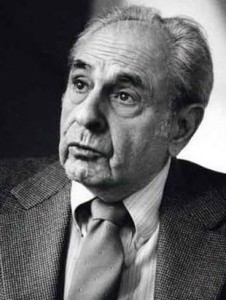
Albert Schatz

Most important of these was streptomycin, discovered by Waksman’s student Albert Israel Schatz (1920-2005). Schatz also came from Jewish-Russian lineage and originally wanted to be a farmer. He studied soil microbiology, and after serving in a military hospital during World War II, decided to research treatments for tuberculosis. Working in Waksman’s lab, Schatz discovered and named “streptomycin”, which would become one of the most important antibiotics in history, and is still found on the World Health Organization’s List of Essential Medicines. Schatz made no profit from his discovery, giving up his rights to the drug so that it could be distributed as widely and cheaply to as many people as possible. Unfortunately, he was never given the credit he deserved, with the Nobel prize going only to Waksman in 1952. Both biologists continued their contributions to science, and were decorated with many awards. Waksman also developed microbe-resistant paint for ships, enzyme-enhanced detergents, and a compound to prevent fungal infections of vineyards. He wrote over 400 papers and published 28 books. Meanwhile, Schatz campaigned against the fluoridation of water, proposed new theories for tooth decay and the extinction of dinosaurs, and published over 700 papers and 3 textbooks. Both were ultimately credited for streptomycin, which The New York Times ranked among the Top 10 discoveries of the 20th century.

Words of the Week

“Let there be light” means that all the world – even darkness – should become a source of light and wisdom. It is our job to reveal the hidden light – especially the light that you yourself hold.
Rabbi Menachem Mendel Schneerson, the Lubavitcher Rebbe
Jews of the Week: Nathan, Benzion and Yoni Netanyahu

Nathan Mileikowsky (1879-1935) was born in what is now Belarus to an Orthodox Jewish family descended from the great Vilna Gaon. When he was ten, he joined the famous Volozhin yeshiva and after eight years of diligent study was ordained as a rabbi. During this time he became drawn to Zionism and soon dedicated his time to the Zionist cause. He traveled across Europe, Russia, and later the United States to raise support for Zionism – becoming one of the world’s most popular Zionist speakers – as well as to raise money for the Jewish National Fund. In 1920, Mileikowsky made aliyah to Israel. He headed a school in Rosh Pina, promoted settlement of the Galilee, and wrote articles for the Hebrew press – often under the pen name “Netanyahu”. He continued to tour globally, at one point giving over 700 lectures in under 9 months, and publishing some of these talks in a popular book. Towards the end of his life, Mileikowsky settled in Herzliya and established a farm.

Benzion Netanyahu

Benzion Netanyahu

His son, Benzion Mileikowsky (1910-2012), was born in Warsaw while Nathan was head of its Hebrew Gymnasium. Growing up in Israel, he adopted his father’s pen name “Netanyahu”. Benzion studied at the Hebrew University in Jerusalem, taking on a more hard-line approach to Zionism. He became editor of a number of Zionist newspapers, and later the chief editor of the Encyclopaedia Hebraica. In 1940, Benzion moved to New York to build American support for the Jewish state, serving as executive director of an American Zionist group. Later on, he became a professor of Judaic studies and medieval history at Cornell University. Benzion published five books on Jewish history, and edited a number of others. His three sons are: Iddo, a doctor and author; Benjamin, Israel’s longest-serving prime minister; and Yoni, the eldest son.

Last known photograph of Yoni Netanyahu

Last known photograph of Yoni Netanyahu

Yonatan “Yoni” Netanyahu (1946-1976) was born in New York, went to high school in Pennsylvania, and studied at Harvard. He first enlisted in the IDF in 1964, and fought in the Six-Day War, getting wounded while rescuing a soldier behind enemy lines. A few years later, he joined Israel’s special forces unit, Sayeret Matkal, and by 1972 became its deputy commander. For his heroic service during the 1973 Yom Kippur War he was awarded a distinguished medal. In 1976, now commander of Sayeret Matkal, Yoni led Operation Entebbe, successfully rescuing over 100 Israeli hostages held in Uganda. Sadly, Yoni was the mission’s sole casualty, and passed away during the flight back home. In 1980, his personal letters were published, and were described as a “remarkable work of literature”. Both a film and play have recently been made about his life.

Words of the Week

God treats a person the same way they treat their children.
– Rabbi Shlomo of Karlin

Jew of the Week: Jack Goldman

Jacob Goldman (Photo Credit: Joyce Dopkeen, The New York Times)

Jacob Goldman (Photo Credit: Joyce Dopkeen, The New York Times)

Jacob E. Goldman (1921-2011) was born in Brooklyn to Jewish-Russian immigrants. He studied at both Yeshiva University and the University of Pennsylvania, where he got his Ph.D in physics. After brief stints working for Westinghouse and as a teacher for Carnegie Tech, he joined the Ford Motor Company’s Scientific Research Laboratory, where he helped to develop the sodium-sulfur battery for electric cars and large-scale energy storage, among many other things. Rising through the ranks, he soon became head of the department, and the first Jew to be an executive at the formerly anti-Semitic Ford Company. In the 1960s, Goldman was brought to Xerox to head its new computing division, and serve as chief scientist and technical officer. At the time, the computer industry was just getting underway, and Goldman convinced the authorities at Xerox to start a new research facility on the West Coast, near Stanford University, where they would be able to recruit young talent. For a while, the New-York based Xerox was reluctant to open up a new lab so far away, but eventually gave Goldman a chance. Teaming up with fellow physicist George Pake, the two opened up the Palo Alto Research Center, better known as PARC, in 1970. This lab would go on to completely revolutionize the digital world and the computer industry. PARC scientists, under the visionary leadership of Goldman and Pake, developed the laser printer, Ethernet, and most importantly, the first personal computer, as well as the first computer to have a graphical user interface (GUI) with an easy to use “desktop”. The concept of windows, folders, and icons that are operated by a computer mouse was also developed at PARC, as were the basics for LCD screens and optical discs. Interestingly, one of the few people who got a tour of PARC was a young Steve Jobs, who was so inspired by what he so that he went on to found Apple, drawing on most of PARC’s technologies for his own designs. Ultimately, it was Apple and Microsoft that took advantage of PARC’s advancements, as Xerox failed to support Goldman in commercializing those technologies. Nonetheless, Goldman is considered a key figure in transforming computers from massive industrial calculators to personal interactive tools used by the public.

Words of the Week

Jews have tended to prefer the power of ideas to the idea of power.
– Rabbi Lord Jonathan Sacks