Miracles in the Holocaust
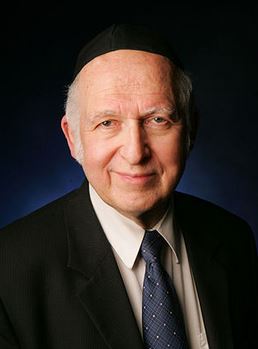
 Yekutiel Yehudah Halberstam (1905-1994) was born to a Hasidic family of the Sanz dynasty in the small Jewish town of Rudnik, Poland. At just 14, he lost his father, and replaced him as the town rabbi. At the age of 21, he was invited to become the rabbi of Klausenberg (then part of Hungary), and head its yeshiva. During the Holocaust, his entire family was sent to Auschwitz, and Rabbi Halberstam tragically lost his wife and 11 children. Nonetheless, he did not lose faith and continued to serve as an inspirational leader for the Jews in the camps. During a 1944 death march that took place on Tisha b’Av, the Rebbe recited the traditional Kinot as the Nazis tortured the Jews. Since it was Tisha b’Av, the Jews took off their leather shoes, so the Nazis used the opportunity to make the Jews march on broken glass. They then left them to die of thirst in the summer heat. As reported by several survivors, the Rebbe asked everyone to start digging in the earth. When they did so, water miraculously emerged out of the soil. The Jews were saved, and the bewildered Nazis left them alone. The Rebbe then said: “Here we have proof that despite all the troubles and the apparent concealment of God’s face, the Holy, Blessed One still loves us.” Another time, Rabbi Halberstam was shot in the arm by a Nazi and left to bleed to death. He wrapped a leaf around the wound and made a vow that if he survived, he would dedicate the rest of his life to saving the lives of others. The Rebbe survived. First, he stayed at the DP camps to run soup kitchens and care for the countless orphans. He established and headed the She’erit haPletah (“Surviving Remnant”) organization, which built mikvehs, set up Jewish schools, organized chuppas, and raised money for the victims. During this time, he met General (and future US president) Dwight Eisenhower, who was inspired by the “wonder rabbi”. Rabbi Halberstam then moved to New York, got remarried, and had seven more children. In 1960, he made aliyah and settled in Netanya. The Rebbe opened both a Hasidic-Ashkenazi yeshiva, and a Sephardic yeshiva, established the town of Kiryat Sanz and, to fulfill his Holocaust vow, founded the Sanz Medical Center/Ladiano Hospital. Today, the hospital serves half a million people, runs strictly according to Jewish law, and has the distinction of being the only hospital in Israel that has never closed—not even for a worker’s strike. Famous for his deep love and concern for every Jew, Rabbi Halberstam was beloved by everyone who knew him, secular and religious, Ashkenazi and Sephardi. His two sons continue to lead the Sanz-Klausenberg communities in New York and Netanya.
Tisha b’Av Begins this Saturday Night
Words of the Week
I promised myself that if, with God’s help, I got well and got out of there, from those evil people, I would build a hospital in Eretz Yisrael where every human being would be cared for with dignity. And the basis of that hospital would be that the doctors and nurses would believe that there is a God in this world and that when they treat a patient, they are fulfilling the greatest mitzvah in the Torah.
– Rabbi Yekutiel Yehudah Halberstam, the Sanz-Klausenberger Rebbe
 Aharon Yehuda Leib Shteinman (1914-2017) was born in what is now the city of Brest, Belarus. To avoid being conscripted into the Polish army, the young yeshiva student fled to Switzerland with some classmates. He continued his diligent studies in a Swiss yeshiva until being arrested during World War II and sent to a labour camp. Shteinman was the only member of his family to survive the Holocaust. He settled in Israel after the war. There, the young rabbi quickly made a name for himself as a Torah prodigy, and was soon appointed rosh yeshiva, head of a Torah academy. He would serve as a rosh yeshiva for the next five decades, while also establishing a number of children’s schools for the underprivileged. Meanwhile, Rav Shteinman wrote profusely, authoring dozens of bestselling books and discourses on Torah, Talmud, and Jewish thought, as well as being recognized as an expert in the field of education. While abstaining from politics himself, Rav Shteinman was the spiritual leader of Israel’s Degel HaTorah party, playing an influential role in government. In his 90s, and in frail health, the Rav decided to journey around the world to strengthen Jewish communities. Countless thousands gathered to greet him and hear his wise words in Los Angeles, New York, Mexico City, Buenos Aires, Manchester, Odessa, Berlin, Gibraltar, Paris, and many more small towns. On these trips, he would give as many as 10 talks a day.
 Rav Shteinman was known for his extreme piety, humility, and modesty. His daily diet was nothing but a cucumber, a boiled potato, and one small bowl of oatmeal. He lived in a tiny apartment, with little furniture but walls lined end to end with books. He slept on the same thin mattress that was given to Jewish refugees upon arrival in Israel for some 50 years. Streams of people lined up at his open door each day seeking counsel and blessings. Rav Shteinman stood only for truth, even when it brought him adversity. This was particularly clear when he supported the Nachal Charedi, an IDF unit for yeshiva students. Even after some backlash from ultra-Orthodox communities, the Rav stood his ground and continued his support. He was widely recognized as the gadol hador, the world’s chief rabbi. Sadly, the great rabbi passed away yesterday, at 103 years of age. (His condition had turned critical two weeks ago after the tragic death of his 72-year old daughter from a heart attack, even though no one had told him of her passing.) Rav Shteinman wrote in his will that it would suffice to have just ten men to carry out his funeral, and requested no eulogies. Nonetheless, the funeral procession brought over 600,000 people. Israel’s President Reuven Rivlin stated that Rav Shteinman “bore the entire weight of the Jewish people’s existence on his shoulders… he knew how to convey his ideas gently, in a pleasant manner, and with a great love of the Jewish people… He was a man whose wisdom was exceeded only by his humility.”