The Great Liberator
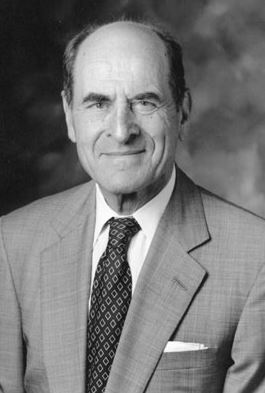
 Milton Friedman (1912-2006) was born in Brooklyn to poor Jewish immigrants from what is today Ukraine (then part of Hungary). He graduated high school at just 15 and earned a big scholarship to Rutgers University. Initially wishing to be a mathematician, the Great Depression inspired Friedman to become an economist instead. After post-graduate studies at the University of Chicago, and a fellowship at Columbia University, Friedman headed to Washington to work as an economist for the government. To help pay for World War II, it was Friedman who introduced the payroll withholding tax system (“pay-as-you-earn”), where income taxes are deducted automatically from an employee’s paycheck. (Friedman later regretted it very much and said he wished it hadn’t been necessary.) He also spent much of the war working on weapons design and military statistics. He finally earned his Ph.D from Columbia after the war, following which he took a professorship at the University of Chicago, where he taught for the next 30 years. He wrote a popular weekly column for Newsweek, for which he won a prestigious award. His 1962 book Capitalism and Freedom was an international bestseller and made Friedman world-famous, while his A Monetary History of the United States became the standard textbook for understanding the Great Depression and the effects of monetary policy. Friedman argued passionately for a free-market economy and for the government to stay out of business. He proposed such important concepts as the permanent income hypothesis, the quantity theory of money, floating exchange rates, sequential sampling, and the natural rate of unemployment. He also argued for abolishing the Federal Reserve, whom he blamed for many economic ills. He was opposed to minimum wages and foresaw that they would actually lead to increases in unemployment. He is also credited with bringing an end to America’s military draft, transitioning the US military into an all-volunteer paid army. He believed conscription was unethical and prevented young men from choosing their own life path. Friedman later said abolishing the draft was his greatest and proudest accomplishment. Friedman won the Nobel Prize in Economics in 1976. After retiring from the University of Chicago the following year, he continued to do research in San Francisco, and also worked on a popular ten-part TV show called Free to Choose (the companion text of which was the bestselling nonfiction book of 1980). Friedman was an economic advisor to Ronald Reagan, and was called the “guru” of the Reagan administration. In 1988, he won a National Medal of Science and a Presidential Medal of Freedom. Friedman stayed busy until his final days, and his last article for The Wall Street Journal was published a day after his death! He has been called “the Great Liberator” and has been compared to Adam Smith. The Milton Friedman Prize for Advancing Liberty is named after him. He is widely considered one of history’s most significant economists. Today was his yahrzeit.
The End of World War I and the Beginning of the Jewish State
Words of the Week
A society that aims for equality before liberty will end up with neither equality nor liberty.
– Milton Friedman
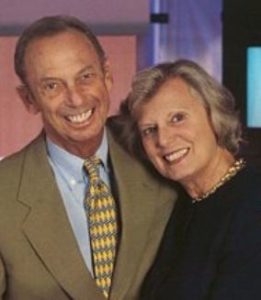 Irene Sue Kerchek (1924-2020) was born in St. Louis, Missouri. She met her future husband Abraham “Abe” Pollin (1923-2009) when she was just 17. The couple married and settled in Washington, D.C. Abe worked for his father’s construction company before he and Irene started their own business in 1957. Together, they built a prosperous real estate empire, raising up both affordable and subsidized housing projects as well as luxury properties. The Pollins went on to found and own the NBA’s Washington Wizards team, the NHL’s Washington Capitals, and the WNBA’s Washington Mystics, working hard to bring those three clubs to the city. They also built the Capital Center and what is now Capital One Arena (formerly the Verizon Center), and were credited with reviving Washington’s downtown core. In 1963, the Pollins lost their teenage daughter to heart disease, and Irene lost both of her parents to heart disease that same year. She fell into deep depression and, when nothing seemed to help her, decided to go study psychology and social work herself. She went back to university and earned two degrees. Pollin opened two pioneering therapy clinics, and wrote two acclaimed books on mental illness and counseling. Her greatest mission in life, however, was to combat heart disease. In 2008, she donated $12 million to Brigham and Women’s Hospital (of Harvard) to establish a heart wellness program. In 2012, she donated $10 million to Hadassah Medical Center in Israel to create a heart health institute, and another $10 million to do the same at Johns Hopkins University. The following year, she gave another $10 million to establish one more heart health centre in Los Angeles. After discovering that more women died from heart disease than from breast cancer, Pollin started a number of organizations to increase awareness of female heart disease and to get more women screened on time. The most famous of these organizations is Sister to Sister: The Women’s Heart Health Foundation. Through their efforts, and the screening clinics they set up across America, the lives of countless women have been saved. The Pollins were generous philanthropists and gave millions more to many other causes, including Washington’s Sixth & I Historic Synagogue, the National Symphony, and research into brain disease, which ultimately took the life of Abe Pollin. The Pollins had a summer house in Rehovot, Israel, and were close friends of