Tag Archives: Rabbi

Jew of the Week: Isaac Aboab da Fonseca

America’s First Rabbi

Rabbi Isaac Aboab da Fonseca, the first rabbi to set foot in America

Rabbi Isaac Aboab da Fonseca, the first rabbi to set foot in America

Isaac Aboab da Fonseca (1605-1693) was born in Portugal to a family of Conversos, or “Marranos” – Jews who had been forced to convert to Christianity during the Inquisition. Despite the conversion, their persecution persisted, and Conversos often continued to practice Judaism in secret. In 1581, the Dutch Republic separated from the Spanish Empire, triggering a large migration of Sephardic Jews to the area. By 1603, Dutch law officially made it legal for Judaism to be practiced openly. In 1612, da Fonseca’s family moved to Amsterdam, where they could finally practice Judaism once again. Da Fonseca went to study under the tutelage of the great doctor, poet, mathematician, and rabbi Isaac Uziel, who had opened a new Talmudic academy a few years earlier. Da Fonseca showed his genius early on, and was made a rabbi by the age of eighteen. Some twenty years later, he was invited to serve as the chief rabbi of the Dutch colony of Pernambuco in Brazil. This colony had a population of about 600 Sephardic Jews that fled the Spanish and Portuguese Inquisition. Da Fonseca’s arrival in 1642 likely made him the first rabbi to set foot in the Americas. During his thirteen years there, the colony established a proper synagogue, mikveh, and yeshiva – perhaps the very first in the New World – and the Jewish population grew to as many as 5000. During this time, he also wrote what is thought to be the first Hebrew text produced in America. Unfortunately, a Jesuit priest convinced the Portuguese to reconquer the colony and destroy its Jews who “have their open synagogues there, to the scandal of Christianity”. The Jews took up arms alongside the small Dutch army, and resisted the Portuguese forces for nine years. The Portuguese ultimately prevailed, but the Dutch would not surrender until the Portuguese agreed to let the Jews go. The majority sailed back to Amsterdam with da Fonseca. (One of these ships was attacked by pirates, lost its way, and ended up in the nascent colony of New Amsterdam. These first Jews in North America helped establish what would later become New York City.) Back in Amsterdam, da Fonseca soon became the city’s chief rabbi. He was on the panel that excommunicated the famous philosopher Benedict (Baruch) Spinoza. In his old age, Rabbi da Fonseca became known as a great mystic and Kabbalist. He passed away at 88 years of age. In 2007, the Jerusalem Institute published a book of his writings and teachings.

Words of the Week

If you want to change the world, change yourself.
– Jack Ma
Jews of the Week: Dov Behr and Bernard Manischewitz

Kosher Food Revolutionaries

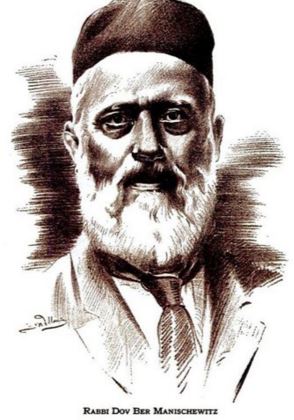
Rabbi Manischewitz (Image Source: Geni.com)

Rabbi Manischewitz
(Credit: Geni.com)

Dov Behr Abramson (1857-1914) was born to a religious Russian-Jewish family in Lithuania. He studied at the famous Telz Yeshiva. After becoming a rabbi he sought to immigrate to the United States. Some say he was only able to do so after buying the passport of a man that had passed away. The man’s name was Manischewitz, and the name stuck. Others say the Rabbi simply made up the name when arriving in America. Either way, he settled with his family in Cincinnati, Ohio. When the holiday of Passover came around, Manischewitz saw that the small Jewish community did not have much kosher matzah, so he began baking them in his basement. His matzahs soon became famous far beyond Cincinnati, and to keep up with demand, Manischewitz opened up a factory where matzahs were made by gas-powered machines. This generated a lot of controversy, as most rabbis at the time believed matzahs had to be hand-made. Nonetheless, machine-made matzahs were soon deemed kosher, and the Manischewitz brand grew ever larger. Manischewitz matzahs were also revolutionary because they were the first to be made in square shapes to simplify manufacturing, packaging, and shipping (traditional matzahs are round). Rabbi Manischewitz passed away in 1914 and left the company to his five sons, who went public in 1923. In the 1940s, the company moved beyond matzahs and expanded into other kosher foods like soups, crackers, and most famously, sweet wines.

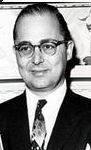
Bernard Manischewitz

The Rabbi’s grandson, Bernard Manischewitz (1913-2003), expanded the company even further during his 26 years as president, making it a truly international brand. By 1990, the company had over $1.5 billion in annual sales and was producing everything from gefilte fish to processed meats and borscht. However, there was no willing successor in the family to take over, so Bernard sold it to a private equity firm. He credited Manischewitz with ushering in the age of mass-produced, processed kosher foods, which he called “the biggest change in Jewish domestic life since Biblical times.” Today, Manischewitz is still America’s largest producer of kosher foods, and the world’s largest producer of matzahs.

Words of the Week

Age is an issue of mind over matter. If you don’t mind, it doesn’t matter.
– Mark Twain

Jew of the Week: Mazor Bahaina

Rabbi and Member of Knesset

Mazor Bahaina (Credit: Knesset.gov.il)

Mazor Bahaina (Credit: Knesset.gov.il)

Mazor Mahoy Bahaina (b. 1973) was born in the Ethiopian village of Welkite. As a child, he fled the country with his family on foot, heading for Israel. It took a year and a half, most of which was spent in Sudanese refugee camps, to finally reach the Promised Land. Bahaina enrolled in religious yeshivas for study, eventually making it to the prestigious Porat Yosef Yeshiva in Jerusalem. After earning his rabbinic ordination, he moved to Be’er Sheva to support the influx of Ethiopian Jewish immigrants, ultimately becoming the chief rabbi of the city’s 10,000 Ethiopian Jews. He also sat on the city’s council, which brought him into the political sphere. Bahaina eventually got on the list of Shas (“Shomrei Sefarad”, Israel’s religious Sephardic political party). He worked for the Ministry of Religious Affairs, and as an advisor to Israel’s Minister of Finance. In April 2008, Bahaina was given a seat in the Knesset, and served as a member of parliament until the following year. He was a member of the Labor, Welfare, and Health Committee, as well as the committee for children’s rights, among others. Though no longer in government, Bahaina continues to diligently serve Israel’s public, particularly the Ethiopian community, and is working to assist the remaining Jews of Ethiopia to make aliyah.

Words of the Week

Six million of us were murdered in the Holocaust. But instead of disappearing, we decided that after 2,000 years of exile, it would be better to go home and rebuild our own country. And so we did. What took other nations hundreds and hundreds of years to build, we did in only a few. What was possible we did very quickly, and what was impossible took us just a bit longer.
– Rabbi Dr. Nathan Lopes Cardozo