Few people know that the Warner Brothers that brought you hundreds of great films (such as The Dark Knight and The Matrix trilogies) and amazing television programs (Bugs Bunny and the Looney Tunes) were Jewish immigrants from Poland. Their names were Hirsch Moshe, Avraham, Shmuel and Yakov. Struggling to make a living, the family moved to the U.S., then to Canada, then back to the U.S., at which point the father of the brothers adopted the name Warner, changing it from Wonsal. The brothers worked in various odd jobs – bowling alleys, bicycle shops, meat salesmen – until they finally pooled their earnings and invested in a film projector. They would travel across small mining towns and put on film screenings. Once they saved enough money, they opened a proper theatre in Pennsylvania. It was such a success that they could soon afford to open more than a dozen other theatres.
During World War I, the brothers began experimenting with making their own films. In 1918, they officially opened Warner Brothers Studio in Hollywood, with their first popular film My Four Years in Germany. However, WB only made it big with their famous dog Rin Tin Tin, a German shepherd rescued by an American soldier. The dog became such a celebrity that WB signed Rin Tin Tin to star in films for $1000 per week – a great deal of money at the time. WB’s fame continued to rise, and by 1924 they were already the most successful independent studio in Hollywood. WB became a pioneer in motion pictures, and was the first studio to produce a “talking picture”, sparking the “talkie” revolution and changing the course of film. They would do this again in the 1930s, ushering in the “realistic” film period, as well as popularizing children’s cartoons. The success of Warner Brothers would continue to grow over the decades and their reach was extended to music (Warner Brothers Records), television (the WB Network) and even comic books (DC Entertainment). Thanks to the success of the Harry Potter films, WB became the first studio to gross over $2 billion domestically in just one year. They continue to produce hits and elevate film-making to new heights.
Words of the Week
“Who the heck wants to hear actors talk?”
– Hirsch “Harry” Warner, when first hearing of the talking picture.
 Feigele Peltel (1921-2012) was born in Warsaw, Poland. At 21 she joined the Jewish Combat Organization. Using her “Aryan” looks and fluency in Polish, she was able to pose as a Pole and come in and out of the Warsaw Ghetto. Through this, she smuggled weapons and supplies in, while saving countless children (and adults) by bringing them out of the ghetto. Her code name was ‘Vladka’, which she later adopted as her legal name. She also worked as a recruiting agent to bring more people into the resistance. One of these was Benjamin Meed, whom she would later marry in the U.S. Together they were among the key organizers of the infamous Warsaw Ghetto Uprising. Vladka wrote a popular book about her experiences, and along with her husband, continued to work in Holocaust education for the rest of her life.
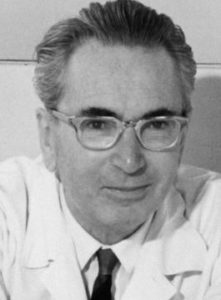 Meanwhile, Viktor Emil Frankl (1905-1997) was a distinguished psychiatrist and neurologist in Austria. He showed a talent for psychology at an early age, and provided psychoanalysis for high school students free of charge while in med school. He later worked in the dreaded “Suicide Pavilion” where he treated over 30,000 women at risk for suicide. After the Nazi takeover, Frankl was first demoted, then imprisoned, and spent three years in concentration camps. He used these experiences to develop a new philosophy of psychology, described in his world-famous book Man’s Search for Meaning (originally titled Saying Yes to Life in Spite of Everything). Frankl founded logotherapy, based on the belief that the central motivating force in humans is to find meaning in life, and most problems stem from this deficiency. Frankl revolutionized the field of psychology, wrote several highly-acclaimed books, and won multiple prestigious awards. Interestingly, he proposed that just as there is a Statue of Liberty on the East Coast, there should be a Statue of Responsibility on the West Coast. Plans are now in the works to build