
Tag Archives: Orthodox Jews

Jew of the Week: Rabbi Marvin Hier

The Rabbi at Trump’s Inauguration

Rabbi Hier at Trump’s Inauguration

Moshe Chaim Hier (b. 1939) was born in New York to Polish-Jewish immigrants. At the age of 23, he was ordained as an Orthodox rabbi and moved to Vancouver where he soon took charge of its Congregation Schara Tzedeck. In 1977, Hier moved to Los Angeles and established the Simon Wiesenthal Center, a non-profit dedicated to “confronting antisemitism, hate and terrorism, promoting human rights and dignity, standing with Israel, defending the safety of Jews worldwide, and teaching the lessons of the Holocaust for future generations.” The Simon Wiesenthal Center is now one of the most well-known Jewish organizations in the world, with offices in Toronto, Jerusalem, Paris, Buenos Aires, and across the US. Its Museum of Tolerance welcomes 350,000 visitors a year, and its library holds over 50,000 important volumes. Hier also established the Moriah Films company, which has produced over a dozen films focusing on Jewish history and the Holocaust. Two of these won Academy Awards for Best Documentary. This makes Hier the only rabbi to ever win an Oscar. He is also the only rabbi to be a member of the Academy of Motion Picture Arts and Sciences. Meanwhile, Hier established Los Angeles’ Yeshiva University High Schools and was its dean for many years. He is currently working on a $200 million project to build a Museum of Tolerance in Jerusalem, to open next year, and producing his 16th film, about the life of Shimon Peres. Most recently, Rabbi Hier gave a blessing at President Donald Trump’s inauguration. This made him only the second Jewish religious leader in history to speak at a presidential inauguration, and the first Orthodox rabbi to ever do so. He has been ranked as the most influential rabbi in America, and was once described as being “one phone call away from almost every world leader, journalist, and Hollywood studio head.”

Words of the Week

The bond that has united the Jews for thousands of years and that unites them today is, above all, the democratic ideal of social justice coupled with the ideal of mutual aid and tolerance among all men.
– Albert Einstein
Jew of the Week: Rebbetzin Esther Jungreis

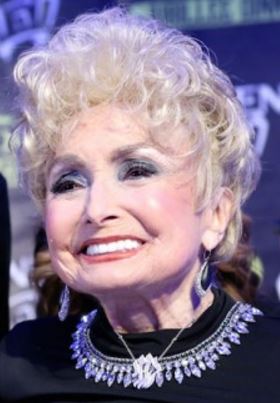
JungreisEsther Jungreis (1936-2016) was born in Hungary, the daughter of a rabbi. During the Holocaust, the family was sent to Bergen-Belsen, and later loaded up on a train headed for Auschwitz. On route, they managed to escape to Switzerland with the help of Rudolph Kastner’s Aid and Rescue Committee. The quota for migrants to Israel was filled, so the family was given papers to go to the States. Jungreis went on to marry a rabbi and settled in North Woodmere, New York, where the couple founded the town’s Jewish Center and Congregation Ohr Torah. Seeing the rampant assimilation in the United States, Jungreis made it her life’s work to prevent what she saw as a “spiritual holocaust”. In 1973, she started an organization called Hineni, aimed at inspiring Jewish youth to return to their roots. Under her dedicated leadership and moving speeches, Hineni grew to become an international organization, no longer focused solely on youth but rousing countless young and old alike. Jungreis organized events and gave lectures around the world – visiting fifteen or more countries a year was normal for her. Her weekly class drew as many as 1500 people at a time. Meanwhile, Jungreis wrote a regular column for The Jewish Press (the world’s largest English-language Jewish paper) for some 45 years, making it the longest running column in the publication’s history. She also wrote four best-selling books, and had a television programme. In 2004, the Rebbetzin spoke at the Republican National Convention, and in 2008 was selected by President Bush to join him on his delegation to Jerusalem for Israel’s 60th anniversary. Today, she is recognized as one of the central pioneers of the modern kiruv (Jewish outreach) movement. Sadly, the Rebbetzin passed away yesterday. She worked tirelessly until the very end, and in her last article – published just last week – finished with these words: “When will we wake up? When will we don our priestly garments and fulfill our G-d-given destiny and be ‘a light unto all mankind’?”

Words of the Week

A long life is not good enough, but a good life is long enough.
– Rabbi Theodore Meshulem Jungreis

Jew of the Week: Waldemar Haffkine

“Saviour of Humanity”Haffkine

Vladimir Mordechai Aaronovich Chavkin (1860-1930) was born to a Jewish-Russian family in what is now Ukraine. As a young man, he was a member of the Jewish League for Self-Defense, a group that protected Jews during pogroms. In one such event, he was injured and arrested. His teacher Elie Metchnikoff, the “father of immunology” (and former Jew of the Week), helped to have him freed from prison. Metchnikoff was soon forced to flee to Paris, and Chavkin joined him there some time later. For a time, the two worked together with Louis Pasteur. Chavkin (by this point going by Waldemar Wolff Haffkine) initially focused on the study of protist species before moving over to bacteria. Following major outbreaks of cholera, he was determined to find a vaccine, and experimented on himself to do so. Although he was succesful, his work was not accepted in Europe, so Haffkine went to India. There, he vaccinated 55,000 people while surviving both malaria and an assassination attempt by Muslim extremists. India then suffered a deadly outbreak of bubonic plague, so the government asked Haffkine for help. He worked tirelessly for three months (during which time all of his assistants quit), again experimenting on himself, and developed a working vaccine. By the end of the century, Haffkine’s vaccines were given to over four million people in India. Europeans finally took notice. When Russia had a cholera outbreak shortly after, Haffkine’s vaccine saved thousands of lives. By this point, he had been knighted by the Queen of England, and described by Lord Joseph Lister as a “saviour of humanity”. Throughout his career, Haffkine had to battle anti-Semitism, and persistent attempts at converting him to Christianity. In the last decades of his life, he became deeply religious and committed to Orthodox Judaism, even writing a treatise called A Plea for Orthodoxy, and establishing the Haffkine Foundation to spread traditional Jewish teachings, especially among so-called “enlightened” Jews. Haffkine was also a staunch Zionist, formulating his own plan to establish a Jewish state in the Holy Land, and negotiating with the Ottoman Empire to do so. Unfortunately, his plans were rejected. Nonetheless, Haffkine is immortalized in history as the inventor of the cholera and bubonic plague vaccines, and a man who saved countless lives around the world.

Words of the Week

Few men are willing to brave the disapproval of their fellows, the censure of their colleagues, the wrath of their society. Moral courage is a rarer commodity than bravery in battle or great intelligence. Yet it is the one essential, vital quality for those who seek to change a world which yields most painfully to change.
– Robert F. Kennedy