Tag Archives: Orthodox Jews

Jew of the Week: Baruch Blumberg

Hepatitis B and The First Cancer Vaccine
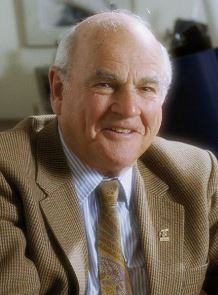
Baruch Samuel “Barry” Blumberg

Baruch Samuel Blumberg (1925-2011) was born to an Orthodox Jewish family in Brooklyn. He studied at the Yeshiva of Flatbush, and then at Far Rockaway High School in Queens (which was also attended by fellow prominent scientist and former Jew of the Week Richard Feynman). After serving in the US Navy during World War II (attaining the rank of commanding officer), Blumberg studied math and medicine at Columbia University. He earned his MD in 1951, worked as a doctor for several years, then enrolled at Oxford University to do a PhD in biochemistry. Decades later, he would be elected Master of Oxford’s prestigious Balliol College (founded all the way back in 1263), making him the first American and the first scientist to hold the title. In the 1960s, Blumberg discovered the hepatitis B antigen, and soon showed how the virus could cause liver cancer. His team began working on a diagnostic test and a vaccine, and successfully produced both. Although Blumberg had a patent on the vaccine, he gave it away freely to save as many lives as possible. (One thirty-year follow up study showed that the vaccine reduced infection from 20% to 2% of the population, and liver cancer deaths by as much as 90%. Some have therefore called it the first cancer vaccine.) Blumberg was awarded the 1976 Nobel Prize in Medicine for his work with hepatitis B, and his “discoveries concerning new mechanisms for the origin and dissemination of infectious diseases.” In 1992, he co-founded the Hepatitis B Foundation, dedicated to helping people living with the disease, and funding research for a cure. Meanwhile, Blumberg taught medicine and anthropology at the University of Pennsylvania. Incredibly, he also directed NASA’s Astrobiology Institute, was president of the American Philosophical Society, and a distinguished scholar advising the Scientific and Medical Advisory Board, as well as the Library of Congress. He had worked for the National Institutes of Health, and The Institute for Cancer Research. Blumberg remained Torah-observant throughout his life, and rarely missed his weekly Talmud class. He credited his Jewish studies as a youth for sharpening his mind and allowing him to excel in academia, and once said that he was drawn to medicine because of the ancient Talmudic statement that “if you save a single life, you save the whole world.” Fittingly, it has been said that Blumberg “prevented more cancer deaths than any person who’s ever lived.”

Words of the Week

Science gets the age of rocks, and religion the rock of ages; science studies how the heavens go, religion how we go to heaven.
– Renowned evolutionary bologist Stephen J. Gould
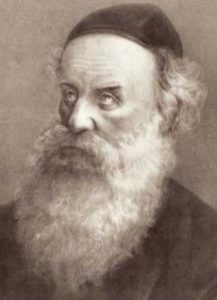
Jew of the Week: the Alter Rebbe

Founder of Chabad

Schneur Zalman of Liadi (1745-1812) was born in the shtetl of Liozna in what is now Belarus. A child prodigy, he wrote his first commentary on the Torah when he was eight years old. Shortly after, he was sent to the nearby town of Lubavitch to begin advanced Talmudic studies, and was sent back home at the age of 12 as he had surpassed the knowledge of his teachers. He married at 15, and around the same time was first exposed to Kabbalah by two Bohemian refugees that settled in Liozna. They also taught him math, astronomy, and philosophy. A few years later, Rav Schneur Zalman met the Hasidic master Dov Ber, “the Maggid [Preacher] of Mezeritch”, who was himself the disciple of the Baal Shem Tov, founder of the Hasidic movement. Rav Schneur Zalman became the Maggid’s devoted student, and when the latter died in 1772, was recognized as his successor. Unfortunately, there was still great opposition to the Hasidic movement at the time, most notably from the Vilna Gaon, who attempted to ban the Hasidim. Rav Schneur travelled to Vilnius in an effort to assuage the Gaon, but was refused a meeting. Despite the opposition, Hasidism flourished across Eastern Europe, and many Hasidic masters were emerging in towns large and small. Rav Schneur Zalman’s approach was unique in that he placed rationalism and thought above all else, and held by the mantras of “mind over matter” and “intelligent, not blind faith”. He therefore called his branch of Hasidism “Chabad”, based on the acronym for the Kabbalistic sefirot of Chokhmah, Binah, and Da’at, loosely translated as Wisdom, Understanding, and Knowledge. Rav Schneur Zalman would become known as the Alter Rebbe, the “Elder Rabbi”, the founder of Chabad. His magnum opus, known as the Tanya, is sometimes considered the “Bible of Hasidism”. The Alter Rebbe also put together a new Hasidic code of law, a prayer book, and multiple discourses on Hasidic teachings. During the Napoleonic Wars, he sided with the Czar, despite the fact that the Russians oppressed the Jews while Napoleon brought emancipation to them. He believed that while the Russians threatened the Jewish body, Napoleon threatened the Jewish soul, as his “emancipation” would lead to mass assimilation of Jews in Europe. History would prove him right. In 1812, the Alter Rebbe fled Napoleon’s approaching armies, and succumbed to an illness on the difficult journey. His disciples split among two potential successors: some supported Aharon Horowitz, based in the town of Strashelye, while others supported Rav Schneur Zalman’s son, Dov Ber, based in Lubavitch. Over time, the Strashelye branch dissipated, leaving the Lubavitch stream. This is one reason why the movement is still known as Chabad-Lubavitch. The organization has become the most successful Jewish outreach group in history, mainly due to the work of the seventh and last Lubavitcher Rebbe, Menachem Mendel Schneerson. Today, there is a Chabad House on every continent (except Antarctica, for now), with over 1300 Chabad-run institutions around the world. Yesterday, the 18th of Elul, was the Alter Rebbe’s birthday.

A Secret History of Zionism

Words of the Week

A little bit of light dispels a lot of darkness.
– the Alter Rebbe

In a letter to his grandson, dated 24 Tevet 5583 (December 1812, shortly before his passing), the Alter Rebbe wrote: “I no longer see a table, a chair, a lamp… only the letters of the Divine Utterances.” As we read in the Torah, God “spoke” the world into existence, and all material things are only a reflection of their spiritual inner essence, composed of a combination of Hebrew letters, the building blocks of Creation. Like other great Kabbalists before and after him, the Alter Rebbe saw through the illusory material world, and beheld the spiritual “code” within, reminiscent of this famous scene from ‘The Matrix’.

Jews of the Week: Recha Freier & Ruchie Freier

Two Trailblazing Women

Ruchie Freier

Rachel “Ruchie” Freier (b. 1965) was born in Brooklyn to a Hasidic Jewish family. In high school, she took a course in stenography and went on to work as a legal secretary. She soon became a paralegal, and was her family’s breadwinner, supporting her husband’s full-time religious studies. At 30, she realized she was working under lawyers that were younger and less knowledgeable than she was, and made the decision to go to law school herself. Juggling school, work, and raising six kids, it took Freier ten years to earn a bachelor’s degree in political science and a law degree. She passed the bar in 2006, becoming America’s first Hasidic female lawyer. Meanwhile, Freier was heavily involved in community work, and spent time as an advocate for New York’s oft-misunderstood Hasidic Jews. In 2005, she set up a charity called Chasdei Devorah to support poor Jewish families, and in 2008 co-founded B’Derech to help troubled teens. In 2016, she was elected Civil Court Judge after a tough race. That made her the world’s first female Hasidic judge. Freier also serves on New York’s Criminal Court. Amazingly, she is a licensed paramedic, too, and works with Ezras Nashim, an all-female volunteer ambulance service (a branch of the more famous, all-male Hatzalah). The New York Times has appropriately called her a “Hasidic superwoman”. Freier has won multiple awards, and was recently ranked by the Jerusalem Post among the 50 Most Influential Jews in the World.

Recha Freier

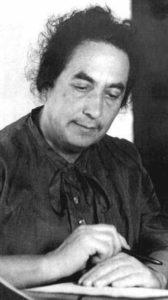
Ruchie Freier is not to be confused with Recha Freier (1892-1984), also born to a devoutly Orthodox family, in Germany. Recha Freier experienced tremendous anti-Semitism in her youth, and this inspired her to become a Zionist. Her husband was a rabbi in Berlin, while she taught in a high school and spent the rest of her time writing. In 1932, Freier was asked to help five young men who could not get jobs because they were Jewish. Freier had the idea to send the boys to the Holy Land instead to learn farming. She raised the necessary funds and organized their voyage and settlement. Thus was born what would become the Youth Aliyah. The organization would go on to save 7000 young Jews from Nazi Germany and settle them in Israel. Freier coordinated with (former Jew of the WeekHenrietta Szold to make sure the teens were taken care of in their new home. Freier herself escaped Germany in 1940 by crossing the border to Yugoslavia. There, she saved 150 Jewish orphans. All made it safely to Israel in 1941. Two years later, Freier established the Agricultural Training Center to educate impoverished children. She was also an avid musician and pianist, and in 1958 founded the Israel Composer’s Fund. In addition to composing a number of original musical pieces, Freier wrote works of poetry and Jewish folklore. In 1981, she was awarded the Israel Prize for her contributions, the State’s highest honour.

Words of the Week

If you love life, don’t waste time, for time is what life is made up of.
– Bruce Lee