The Rebel Evolutionist
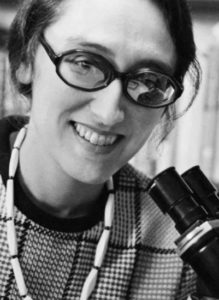 Lynn Petra Alexander (1938-2011) was born in Chicago to a prominent Jewish (and passionately-Zionist) family. She got accepted to the University of Chicago when she was just 15 years old, and graduated with a BA four years later. That same year, she married (former Jew of the Week) Carl Sagan, then on his way to becoming a world-renowned scientist himself. She then went to the University of Wisconsin and earned her Master’s in genetics and zoology, followed by a PhD from UC Berkeley. Around that time, she divorced Carl Sagan and later married another scientist, Thomas Margulis. Although she divorced him as well, she kept the last name and is best known today as Lynn Margulis. In 1966, she became a biology professor at the University of Boston and remained there until 1988, when she became Distinguished Professor of Biology and Geosciences at the University of Massachusetts. Her 1967 paper “On the Origin of Mitosing Cells” was initially rejected by fifteen journals and stirred a great deal of controversy before being confirmed experimentally in 1978. Much of her research (and the opposition to it) was based on demonstrating major flaws within Darwin’s evolutionary theory. She would say that “Natural selection eliminates and maybe maintains, but it doesn’t create.” Margulis offered one hypothesis of her own, endosymbiosis, now a widely-accepted theory in biology and a key mechanism of evolution. Margulis also co-authored the first paper on the now-famous Gaia hypothesis regarding the intricate interactions between living things and the planet. Margulis worked tirelessly to the last days of her life. She co-authored another big (and controversial) paper in 2009—at the age of 71! Margulis has been called a “scientific rebel” and won countless awards, including a National Medal of Science from President Bill Clinton and a NASA Public Service Award for Astrobiology. She also has 15 honourary doctorates and was elected to the National Academy of Sciences. In 2002, she was ranked among the 50 most important women in science.
Words of the Week
We never judge a statement by its author, but only on its own merit.
– Rabbi Moshe Chaim Luzzatto (1707-1746), Derekh Tevunot
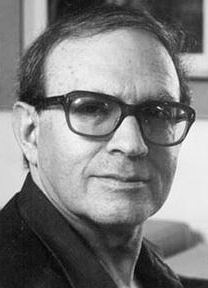
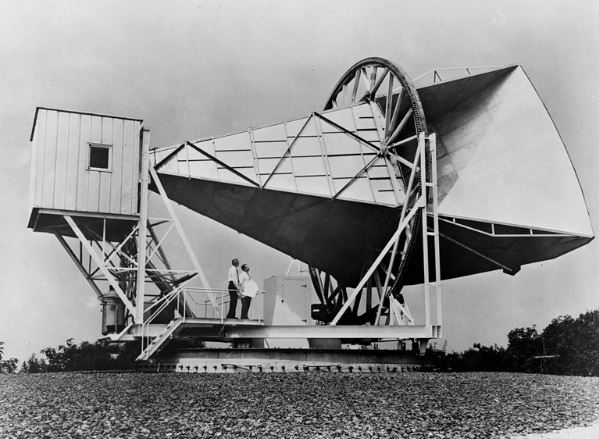
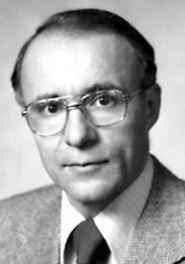 Arno Allan Penzias (b. 1933) was born in Munich. As a six year old, he was evacuated from Nazi Germany through the British Kindertransport rescue operation which saved 10,000 Jewish children. He was later reunited with his parents, who brought the family to New York. Penzias grew up in Brooklyn and went on to study physics. He graduated among the top of his class, then served two years in the US Army as a radar officer. From there, he got a research position at Columbia University’s Radiation Lab, where he helped to develop the maser (a “microwave laser”). After earning a Ph.D in physics from Columbia, Penzias got a job at Bell Labs to do astronomy research with microwave receivers. He was soon joined by Robert Wilson. The two noticed their antenna picking up an inexplicable signal. After ruling out all forms of interference, and carefully cleaning the antenna, the weak signal persisted. The two collaborated with another physicist, Robert Dicke, to show that this signal was the cosmic microwave background (CMB) radiation, the remnants of the universe’s birth, as predicted by the Big Bang Theory. The existence of CMB confirmed that the universe had a beginning, with a burst of radiation, and simultaneously confirmed ancient Jewish teachings about the universe’s origins. The Zohar, a famous mystical commentary on the Torah that was first published some 700 years ago, explains that the universe began with a nikuda hada d’zohar, a singular point of radiance, from which all things were formed. The Zohar explains that this ever-expanding radiance continues to fill the universe, based on the words in the Biblical Book of Daniel (12:3) which describes the “radiance of the firmament”. In fact, this is how the book got its name, Zohar meaning “radiance”. Penzias’ and Wilson’s monumental discovery brought about a beautiful harmony between Torah and science, at once confirming both the modern Big Bang Theory and the holy words of the ancient Jewish Sages. The two physicists won the 1978 Nobel Prize in Physics. Penzias continued his work at Bell Labs for a total of 37 years, rising to the position of Vice President of Research. He was made a Fellow of the American Academy of Arts and Sciences, and the National Academy of Sciences. Penzias later moved to Silicon Valley to advise venture capitalists and tech start-ups. Despite being in his 80s, he is still a venture partner at New Enterprise Associates, and says he has “no plants to retire”.