
Tag Archives: Mizrahi Jews

Jews of the Week: Houda & Ebrahim Nonoo

Houda Nonoo with former president George W. Bush

Houda Nonoo with former president George W. Bush

Houda Ezra Ebrahim Nonoo (b. 1964) was born in the small Arabian kingdom of Bahrain, to Jewish parents of Iraqi ancestry. She spent a major part of her formative years in Britain, where she went to Jewish school. Nonoo earned her BA and MBA in England, and also married there. After her father died, she returned to Bahrain and took over the family business, growing it ever larger. She was soon a well-noted businesswoman, and the secretary-general of the Bahrain Human Rights Watch Society. From there, she was able to get a seat in Bahrain’s parliament, appointed by the King of Bahrain himself. For over three years, she sat on the Shura Council, which is the upper house of the Bahraini legislature. In 2008, Nonoo was appointed Bahrain’s ambassador to the U.S. This made her the first Jewish ambassador from any modern Arab country. She served in that post for the next five years.

Her cousin and fellow businessman, Ebrahim Daoud Nonoo, also served in Bahrain’s parliament. He is the CEO of the Basma Company, which offers an array of services from security and IT solutions to travel, and custodial services. Meanwhile, he continues to direct the family’s foreign exchange and investment business, together with his siblings. Their Bahrain Stock Company now has 19 branches across the kingdom, and is the country’s main Western Union agent. In 2006, Ebrahim financed the reconstruction of Bahrain’s only remaining synagogue. Today, there are less than 50 Jews left in Bahrain.

Words of the Week

Better a sinful person who knows that he has sinned, than a righteous person who knows that he is righteous.
– Rabbi Yaakov Yitzchak Horowitz, The “Seer of Lublin”
Jew of the Week: Saadia Gaon

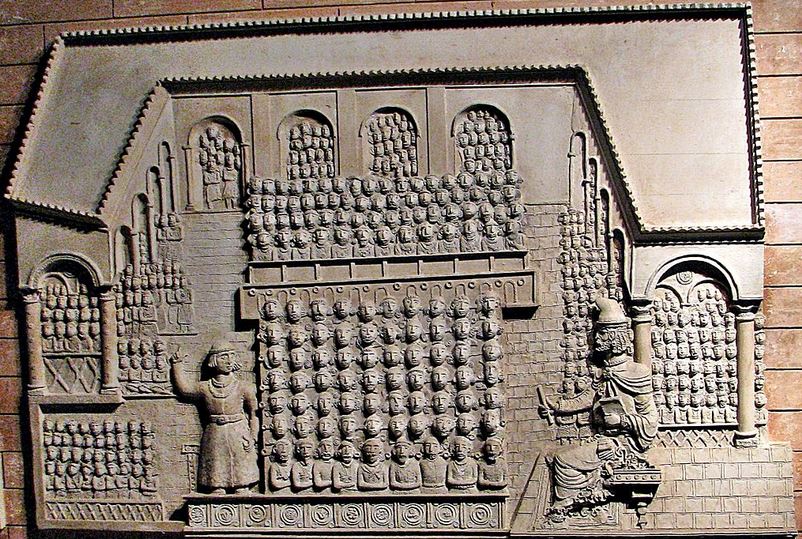
Depiction of the Sura Academy

Depiction of the Sura Academy

Sa’adiah ben Yosef (c. 882-942) was born in Fayum, Egypt. His family moved to Israel while he was still very young, and he began his Torah studies at the famous academy of Tiberias. By the time he was 20, he completed his first work, Agron, possibly the first official Hebrew dictionary. Sa’adiah went on to write over two dozen significant texts in both Hebrew and Arabic, including Emunot v’Deot, thought to be the first Jewish work that blended Jewish teachings with science and Greek philosophy. He also translated the entire Torah into Arabic, and wrote a deep commentary on top of it, together with many other books of the Bible. At the time, the vast majority of Jews in the world lived in Arabic lands, so this translation served a monumental role in helping spread Jewish learning. Sa’adiah also authored a number of legal treatises, and translated the mystical Sefer Yetzirah into Arabic, adding his own commentaries that weaved together both esoteric and scientific explanations. Sa’adiah is credited with being a key force in Judeo-Arabic culture, and inspiring a “renaissance” in Jewish-Arabic literature. Meanwhile, he played an instrumental role in defending traditional Judaism in the face of the rising Karaite sect, a cause he fought for until his last days (at times risking his life). For his great wisdom and tireless work on behalf of the Jewish community, Sa’adiah was appointed “Gaon” in 928. The title Gaon (literally “genius”) was given to the head of the Sura Academy, then the leading body of Jewish scholarship in the world. Sa’adiah Gaon died in Baghdad at the age of 60, having inspired a new generation of Torah scholars. Two hundred years later, the great Maimonides wrote: “Were it not for Rav Sa’adiah Gaon, the Torah would have almost disappeared from the Jewish people, for it was he who shed light on that which was obscure, strengthened that which had been weakened, and spread the Torah far and wide, by word of mouth and in writing.”

Words of the Week

The birds and many of the land animals forbidden [to eat] by the Torah are predators, while the permitted animals are not. We are commanded not to eat those animals possessive of a cruel nature, so that we should not absorb these qualities into ourselves.
– Nachmanides (the Ramban)

Jew of the Week: Rav Yitzhak Kaduri

Rav Yitzchak Kaduri

Rav Yitzchak Kaduri

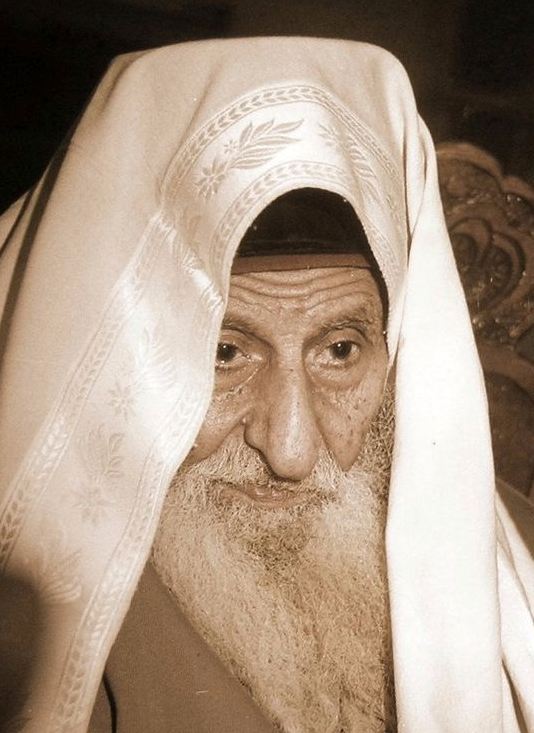
Yitzhak ben Zeev Diva (c. 1902-2008) was born in Baghdad to a rabbi who worked as a spice trader. Early on, he plunged into the depths of Jewish wisdom and by his teenage years was already recognized as a prodigy. In 1923, he settled in the Holy Land to bring spirituality into the secular Zionism that was flourishing in Israel. Upon arrival, he officially changed his last name to Kaduri. He continued his learning under some of the greatest rabbis of the time, particularly at Jerusalem’s famous Porat Yosef Yeshiva. Meanwhile, refusing to live on charity, he worked as a scribe and bookbinder, committing the books that he worked on to memory. It is said that he memorized the entire Talmud (over 5400 pages of dense text), together with its commentaries, along with a multitude of other works. He wrote several mystical texts of his own, which were never published, as Rav Kaduri did not want them getting into the wrong hands. He went on to become the head mekubal (“Kabbalist”) among Israel’s rabbis. His son spearheaded the opening of Rav Kaduri’s own yeshiva – Nachalat Yitzchak – located in the Bukharian Quarter of Jerusalem next to the Rav’s home. Rav Kaduri was famous for eating very little, and speaking very little. Despite his occupation with study, his doors were always open to help others (in fact, he refused to lock the doors of his home even amidst a spate of thefts). Hundreds of people sought his advice and blessings each day, and he was known as a miracle worker and healer. At his funeral, 8 years yesterday, over 300,000 people came to pay their respects.

Words of the Week

When God created the first man, He showed him all the trees of the Garden of Eden, and said to him: ‘See My works, how beautiful and praiseworthy they are. And everything that I created, I created for you. Be careful not to spoil or destroy My world—for if you do, there will be nobody after you to repair it.’
– Midrash Kohelet Rabbah 7:13