The Woman Who Saved Millions of Lives
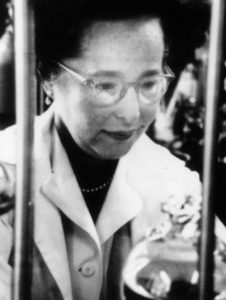
Gertrude Elion
Gertrude Belle Elion (1918-1999) was born in New York to Lithuanian- and Polish-Jewish immigrants. She excelled at school, and when her grandfather passed away from cancer, was determined to find the cure. She went on to volunteer as an assistant in a chemistry lab, and was eventually hired for just $20 a week. She used that money to pay for school, earning her Master’s in chemistry in 1941. Unfortunately, Elion was rejected for all fellowships and post-graduate positions because of her gender. Instead, she went to work for a supermarket, testing food quality. From there, she got a job as an assistant in a New York pharmacology lab (now owned by GlaxoSmithKline). Working under the supervision of George Hitchings, she developed two new anti-cancer drugs by 1950. Elion continued to work at the lab, and eventually became the head of its Experimental Therapy department. Despite never formally earning a Ph.D, she was a professor of pharmacology at Duke University between 1971 and 1999. Among the drugs that Elion developed are Purinethol (the first leukemia medication), Daraprim (to treat malaria), and Acyclovir (the first and most common antiviral medication, used to treat herpes, chicken pox, and shingles). Azathioprine, a drug to prevent organ transplant rejection which Elion discovered in 1963, has since been used to ensure successful kidney transplants for over 500,000 people. She also developed drugs to treat meningitis, gout, urinary, and respiratory infections. While Elion officially retired from drug-making in 1983, she was inspired to continue working due to the then-recent outbreak of HIV/AIDS. She continued working full time until the successful release of AZT, the first drug to treat AIDS. For all of this tremendous work, which saved the lives of countless thousands, Elion was awarded the Nobel Prize in Medicine in 1988. She received a National Medal of Science in 1991, and in that same year became the first woman ever inducted into the National Inventors Hall of Fame. (Elion holds 45 patents.) She finally received an honourary Ph.D from New York University in 1989, and another doctorate from Harvard when she was 80 years old. She is recognized as one of the greatest pharmacologists and biochemists of all time.
Red Sea or Reed Sea: Where is Mount Sinai?
Words of the Week
If you wait until you find the meaning of life, will there be enough life left to live meaningfully?
– Rabbi Menachem Mendel Schneerson, the Lubavitcher Rebbe
 Richard Phillips Feynman (1918-1988) was born in Queens to Lithuanian Jewish immigrant parents. Before his birth, his father had decided that his son should be a scientist, and raised Feynman from an early age to question everything. Feynman did not speak his first word until he was three years old. In childhood, he loved to take things apart and even set up a lab in his home, hiring his little sister for 4 cents a week to be his assistant. (He would later inspire and encourage her to become a renowned astrophysicist in her own right.) At 15, he taught himself advanced algebra, calculus, and trigonometry. He applied to Columbia University but was rejected because the quota for Jewish students had been filled. Feynman went to MIT instead, first majoring in math, then electrical engineering, and finally physics. He published his first two papers as an undergrad, and his senior thesis (putting forth what would become the Hellmann-Feynman theorem) brought him a great deal of recognition in the scientific community. Feynman then applied to grad school at Princeton, and got an unprecedented perfect score on the physics exam. Again, he was initially brushed aside for being Jewish before the dean was convinced not to miss out on the young genius. (Feynman was admitted only on the condition that he wouldn’t get married!) At 23, he defended his Ph.D, and was already being compared to