History’s Wisest Man and Greatest King
 Shlomo ben David (c. 983-931 BCE) was born in Jerusalem to King David and his wife Batsheva. He inherited the throne when he was just 12 years old. God famously appeared to him in a dream and asked what Shlomo wanted most, to which the young king replied that he wished for wisdom to rule his kingdom justly. God replied that since Shlomo did not ask for a long reign, riches, or power, He would grant Shlomo the wisdom he asked for, as well as longevity, riches, and power (I Kings 3:11). Shlomo went on to rule for a long four decades, equal to his father David, and merited to preside over an era of total peace (alluded to by his name “Shlomo”, from the root shalom). He forged many peace treaties (often through marriage, resulting in hundreds of wives), established strong trade relations with his neighbours, greatly expanded the Israelite military, and most importantly, built Jerusalem’s first Holy Temple, the Beit haMikdash. He was a wise judge, and prolific thinker and scholar, composing 3 of the 24 books of the Tanakh, including the Book of Proverbs, Ecclesiastes (Kohelet), and Song of Songs. He was also an astronomer, master of the dark arts, and a polyglot fluent in numerous languages—even able to communicate with wild life! Despite his immense wisdom, when he wrote in Proverbs 30:18 that there were four things he still did not quite understand, the Midrash states these are the mysteries of the four species waved on the holiday of Sukkot (lulav, hadassim, aravot, and etrog). In Jewish tradition, it is customary to read his book Kohelet during Sukkot. It is also believed that it was Shlomo who instituted the practice of netilat yadayim, the ritual washing of the hands before a meal. Interestingly, one of Shlomo’s direct ancestors was named Salmah (see Ruth 4:18-19), spelled the exact same way in Hebrew as Shlomo (שלמה), though vowelized differently. Salmah was also called Sal’mon (שלמון), which was likely confused in the non-Jewish world and may be the reason why Shlomo’s name was transliterated as “Salman” in Greek, “Suleiman” in Arabic, and “Solomon” in English! The Midrash (Pirkei d’Rabbi Eliezer) lists Shlomo as one of history’s ten most powerful kings.
Chag Sukkot Sameach!
14 Sukkot Facts Every Jew Should Know
Rare Photo of Sukkot During World War I
Who Really Wants Peace in the Middle East?
Words of the Week
Our way… is the way of peace. It is narrow, difficult and unpaved. There is no false heroism on it and no false pathos, but it rests, so I believe, on the historic tradition of the Jewish people.
– Chaim Weizmann, first president of Israel
 Eilat Mazar (1956-2021) was born in Israel to a family of archaeologists, and grew up playing and learning on excavation sites. Her grandfather, Benjamin Mazar, was the State of Israel’s first official archaeologist, and was the president of the Hebrew University. Eilat studied archaeology at the same university, and began her field work in 1981. She made a big splash right away by discovering the Royal Quarter of the ancient City of David in Jerusalem, including what is thought to be the royal palace of King David himself. She went on to uncover some of the biggest finds of the last century, including parts of the walls built by King Solomon, the seal of King Hezekiah, and the seal of the Prophet Isaiah. Mazar was driven by her belief that the Tanakh records actual historical events (whereas many of her secular colleagues often viewed the Tanakh as mythology). She would say that “I work with the Bible in one hand and the tools of excavation in the other.” Over the decades, her work played a major role in helping to prove the authenticity of the Bible. Mazar discovered countless treasures from the First and Second Temples in Jerusalem, and was a vocal activist trying to stop Palestinian and Jordanian authorities from
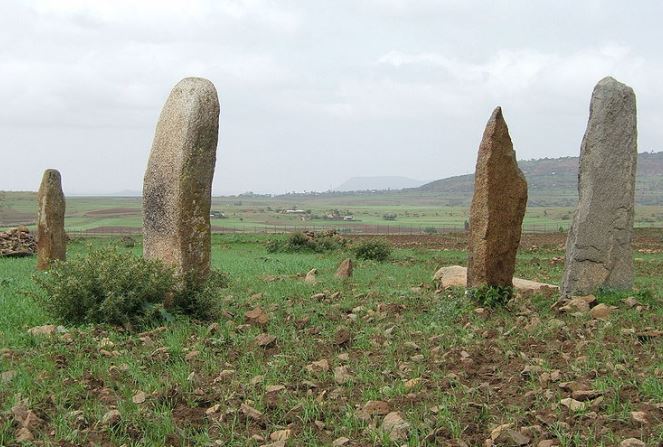
 Yehudit (c. 960 CE) was born in the Jewish-Ethiopian Kingdom of Beta Israel (also known as the Kingdom of Semien), the daughter of King Gideon IV, who traced his lineage back to King Solomon. According to tradition, the Ethiopian Beta Israel Jews are descendants of the Biblical Israelite tribe of Dan – a claim supported by historical texts from the 9th and 10th century that refer to an independent Jewish Danite kingdom in Africa. In the 900s CE, the Christian Ethiopian Kingdom of Axum began an aggressive expansion, and sought to forcibly convert all Jews and pagans. King Gideon was killed in battle, leaving the monarchy to his daughter Yehudit, or Gudit. Gudit formed an alliance with a neighbouring kingdom, and soon raised a massive confederation to defeat Axum. Axum’s capital was destroyed, and its churches and monuments burned down. Gudit saved the Jewish population from forced conversion. The community would survive until modern times, and most have now settled in Israel. Gudit went on to sit on the throne for 40 years, establishing a new dynasty that would last three centuries. Historical records suggest she laid down vast trade networks, and ruled over a wealthy kingdom. In one tradition, she is said to have married a Syrian-Jewish nobleman. The golden age she ushered in lasted until 1270, when a new Christian dynasty got the upper hand. The Jewish Beta Israel Kingdom would survive until 1627, when it was annexed and dissolved.