The Commando Heading the Jewish Agency

Almog in 1982
Doron Avrotzky Almog (b. 1951) was born in Rishon LeZion, Israel. He went to a military boarding school and eventually joined the Paratroopers Brigade. He became an officer in 1971, and served as a company commander during the Yom Kippur War, in which his brother Eran lost his life. In 1976, Almog was one of the company leaders of Operation Thunderbolt to save Israeli hostages in Entebbe. In fact, he was the first commando to disembark at the Entebbe airport runway, and led the way to capture the control tower. Almog fought in the 1982 Lebanon War, too, and later commanded Operation Moses to airlift over 7000 Ethiopian Jews to Israel. In 2000, now with the rank of major general, he was appointed to head the IDF Southern Command. Almog had a son with severe disabilities who died young, and a daughter born with a heart defect that ended her life after just a month. Sadly, a devastating suicide bombing in a Haifa restaurant in 2003 took the lives of five more of his family members, and left another severely injured. These horrible tragedies motivated Almog to devote the rest of his life to helping people with disabilities. He retired from the military that same year, and founded the village of Aleh Negev (also called Nahalat Eran, both after his son and fallen brother), a 40-acre rehabilitation and living centre for people with severe disabilities. Today, the village cares for 150 residents, and provides services for another 12,000 patients across Israel. Almog was awarded the Israel Prize in 2016 for lifetime achievement. Last week, he was appointed as the new head of the Jewish Agency. His most pressing task will be settling new Ukrainian and Ethiopian refugees in Israel. In his first speech, he said his mission would be “To reach the heart of every Jew on Earth. To instill pride in our Judaism and the State of Israel, the most important enterprise of the Jewish people since 1948. To instill pride in this one miracle called the State of Israel and its extraordinary achievements in science, technology, culture, agriculture, medicine, society, economy, army, aliyah, and more.”
Words of the Week
“They called me a wiseguy. I won ‘Italian of the Year’ twice in New York, and I’m Jewish, not Italian… I was denied in a country club once.”
– James Caan (1940-2022)


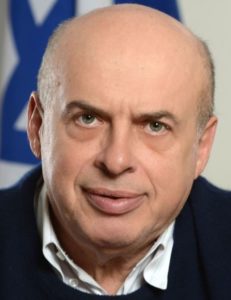 Anatoly Borisovich Sharansky (b. 1948) was born in Donetsk, Ukraine. He was a child chess prodigy, and won his city’s chess championship as a teenager. He went on to study math in Moscow and later worked in a secret Soviet research lab. In 1973, Sharansky applied for an exit visa to Israel and was refused. Henceforth, he became a vocal activist on behalf of Soviet Jewry, and became the world’s most famous refusenik. He soon expanded his scope to work for all human rights, and was the spokesperson for the Moscow Helsinki Group, today Russia’s primary human rights organization. In 1977, Sharansky was arrested on trumped-up charges of treason and espionage, and sentenced to 13 years of hard labour. He was tortured, and kept in solitary confinement for long periods of time. (He would later remark that one of the things that helped him through it was playing chess in his mind.) After ceaseless activism from his wife, mother, and countless international supporters, Sharansky was finally released in 1986. Shortly after, he received a Congressional Gold Medal from the US government. He moved to Israel and started going by his Hebrew name, Natan. A couple of years later, he published a bestselling memoir, Fear No Evil. (This book was passed on by