Creator of Hit TV Show Fauda
 Avi Issacharoff (b. 1973) was born in Jerusalem to a 7th generation Bukharian-Israeli family. His ancestors were among the first settlers of the famed Bukharian Quarter of Jerusalem. Although his family had built the Issacharoff-Babayev Synagogue of Jerusalem, Issacharoff himself was raised in Givat Shaul and attended its Kurdi synagogue. There, he picked up Arabic and would go on to become fluent in the language. This allowed Issacharoff to serve in the prestigious IDF Unit 217, also known as Duvdevan (“Cherry”), the elite special forces of the Commando Brigade, famous for their undercover work in Arab territories. Following his service, Issacharoff studied at Ben-Gurion University, then got an MA from Tel Aviv University. His first big role was as a Middle East Affairs Correspondent for Israel Radio. In 2002, he won a Best Reporter Award for his coverage of the Second Intifada. Shortly after, he began writing his first book (together with Amos Harel), called The Seventh War: How we won and why we lost the war with the Palestinians. The award-winning book was translated into French and Arabic, and became a Middle Eastern bestseller. The two later wrote another award-winning and bestselling book about the 2006 Lebanon War. Meanwhile, Issacharoff moved over to work at Ha’aretz as its Palestinian and Arab Affairs Correspondent. In 2014, he and a cameraman were beaten by Palestinian rioters. After producing, writing, and directing a number of short documentaries, Issacharoff teamed up with actor Lior Raz (a fellow Duvdevan veteran) to create Fauda, a new television show about Israeli secret agents in Palestinian communities. The show – based on their own experiences – became a huge hit, and won six Ophir Awards (the Israeli Oscars). It was eventually picked up by Netflix and streamed in 190 countries. Last month, The New York Times called it the best international show of 2017. Its long-awaited second season is now on air, and a third is coming next year. Meanwhile, Issacharoff still writes regularly, now as the Middle East Analyst for The Times of Israel and Walla!, Israel’s largest news portal. He is also a lecturer at Tel Aviv University. In a recent interview, he said how he fondly remembers Pesach seders at his grandfather’s house, where everyone wore joma, the traditional Bukharian robes, and that one of his favourite pastimes to this day is cooking Bukharian food.
Words of the Week
They don’t speak enough about the Kurds, because we have never taken hostages, never hijacked a plane. But I am proud of this. We have only three advantages: our willingness to sacrifice our bodies, our high morale, and if those fail us, we always have the mountains. Because they are our only friends.
– Dr. Abdul Rahman Ghassemlou, on why there is so much support for Palestinians, but none for Kurds
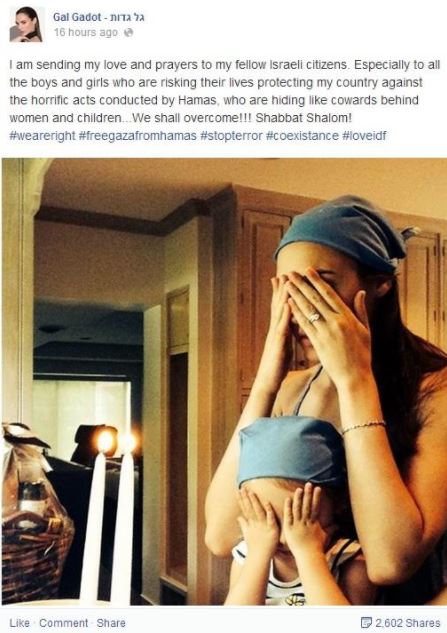
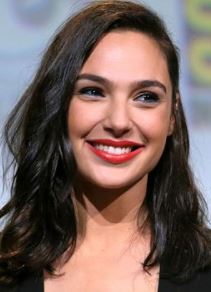 Gal Greenstein (b. 1985) was born in Petah Tikva, Israel, the granddaughter of Holocaust survivors and immigrants from Poland, Austria, Germany, and Czechoslovakia. As is common in Israel, her parents Hebraized their last name, choosing Gadot, meaning “river banks”. After graduating from high school, she was spotted by a talent agent and convinced to participate in the Miss Israel beauty pageant. Gadot joined for fun, with no interest to actually win – but she did. When moving on to the Miss Universe pageant, she purposely sabotaged her chances of winning by not wearing the required dresses or putting on makeup. Upon her return, she completed her two year military service with the IDF, then enrolled in college to study law and political science. Meanwhile, her appearance at the Miss Universe pageant brought many modeling agencies to her door. A year later, Gadot was called to audition for the part of a Bond girl in Quantum of Solace. Though she didn’t get that part, she was soon given the part of Gisele in the Fast and the Furious series, going on to appear in three of the films. She starred in a number of other Hollywood and Israeli movies and TV shows. Her big break came in 2015, when she was cast as Wonder Woman in the Dawn of Justice film. She did a great deal of training for the part, and put on 17 pounds of muscle. While the movie itself received mixed reviews, Gadot’s performance was applauded, and she was signed on for two more films, including a stand-alone Wonder Woman movie. That film (described as being “75 years in the making”) was recently released, and broke records for the largest opening weekend for a film directed by, and starring, a woman. It has raked in an impressive $450 million so far. The film has received marvelous reviews – already ranked among the greatest comic book movies of all time – mainly for Gadot’s performance, described as being inspiring and “electric”. Gadot has been credited with saving the DC Universe of films. (Amazingly, she was pregnant with her second daughter while filming Wonder Woman, yet still trained around the clock and did her own stunts.) Gadot has been praised for her unrelenting pro-Israel stance, her unfazed response to ceaseless criticism, anti-Semitism, and sexual harassment (even her role as the UN’s Honourary Ambassador for the Empowerment of Women and Girls was protested heavily), for being down-to-earth and keeping it simple (she appeared at the LA premiere in $50 flats from Aldo), and sticking to Jewish traditions over the years despite the fame and fortune. Gadot has entranced much of the world, particularly at home in Israel, where she has been called a “national treasure”, and surprisingly in China, where she has been awarded China’s “Most Popular Hollywood Actress.” Gadot will reprise her role as Wonder Woman later this year in the forthcoming Justice League film.