
The Amazing Life of Israel’s First Rocket Scientist
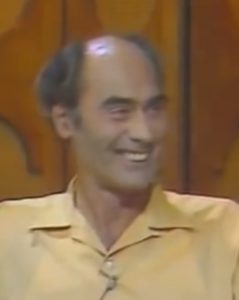
Itzhak Bentov
Itzhak Emery Bentov (1923-1979) was born in Czechoslovakia. After most of his family, including both parents, were killed in the Holocaust, Bentov settled on a kibbutz in the Negev. He soon joined the nascent Israeli Science Corps. In 1948, the corps was absorbed into the IDF as its official military research arm (heil hamadah). Although having no formal background or degree in science, Bentov quickly demonstrated his genius. Among other things, he designed Israel’s very first rocket, which was used successfully in the War of Independence. This marked the birth of Israel’s now world-famous military research and weapons development program. Out of the heil hamadah would be born RAFAEL, the organization tasked with developing Israel’s state-of-the-art rocketry, including the Iron Dome and the new David’s Sling missile system. Bentov moved to the US in 1954 and opened up his own workshop. There, he came up with dozens of new inventions, his most famous being the life-saving steerable heart catheter. Teaming up with a businessman, he founded Medi-Tech, which grew quickly and eventually became Boston Scientific, now a multi-billion dollar company with 29,000 employees worldwide. With dozens of patents for vital medical technologies under his belt, Bentov is considered a pioneer of the biomedical engineering industry. Full of great ideas, he was known as “Invention-a-Minute Ben”. At the same time, Bentov was a very spiritual person and was particularly drawn to the exploration of consciousness. After years of meditation and study, in 1977 he published his bestselling book, Stalking the Wild Pendulum: On the Mechanics of Consciousness. Many credit this book with launching the field of consciousness studies. Intriguingly, Bentov invented a seismograph which could record the vibrations of the aorta (the main artery coming out of the heart). He demonstrated that when a person meditates, the aorta’s vibrations tune to the beat of the heart, and synchronize with the brain’s alpha waves, and the Earth’s own magnetic pulsations. Bentov became a leading researcher on paranormal and supernatural phenomena, working alongside the renowned Dr. Andrija Puharich and Apollo astronaut Edgar Mitchell (who founded the Institute of Noetic Sciences to study the paranormal after returning from the moon and reporting a supernatural experience). In his second prized book, A Brief Tour of Higher Consciousness, Bentov synthesized the findings of modern physics and neurology with ancient mystical and Kabbalistic teachings. Bentov was famous for his vast array of knowledge, his ability to speak 11 languages, as well as his sense of humour. Sadly, he died in a plane crash at the young age of 56. His daughter recently published a book about his incredible life, called The Book of Telling: Tracing the Secrets of My Father’s Lives.
Why Do We Play With a Dreidel on Chanukah?
Chanukah & the Light of Creation
Words of the Week
We are all part of a gigantic hologram called Creation, that is everybody’s Self… a cosmic game where nothing exists apart from you.
– Itzhak Bentov
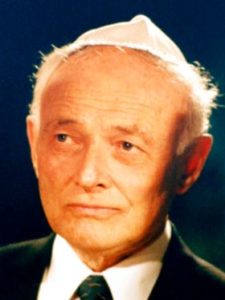 Liviu Librescu (1930-2007) was born in Ploiesti, Romania. In November of 1940, the Romanian government allied with Nazi Germany, and Librescu’s family was deported to a labour camp. Eventually, they ended up in the Focsani Ghetto from which Librescu was liberated in 1945. He stayed in Romania and enrolled in aerospace engineering studies (inspired by his time watching birds fly in and out of the ghetto). A year after graduating he joined the Bucharest Institute of Applied Mechanics where he served as a researcher for 22 years. In 1969, Librescu earned his Ph.D in fluid dynamics, and wrote some very important papers that were unfortunately unknown in the West. He was also recruited by the government to work on top secret military projects. However, Librescu was soon fired for refusing to swear allegiance to the Romanian Communist Party and for requesting to emigrate to Israel. Thankfully, one of his groundbreaking research papers was smuggled out of Romania and brought him international attention. It reached the desk of Israeli Prime Minister Menachem Begin, who personally put pressure on the Romanian government to free Librescu. In 1978, the Romanians relented and Librescu made aliyah to the Holy Land. For the next seven years, Librescu taught at Tel-Aviv University and the world-famous Technion in Haifa. In 1985, he took a sabbatical year and visited Virginia Tech in the US. He decided to stay and joined their Department of Engineering Science and Mechanics. Librescu went on to become one of Virginia Tech’s most famous and beloved professors. He is credited with publishing more papers (250) than any other Virginia Tech professor, and among his many awards are a Dean’s Award for Excellence in Research and a Frank J. Maher Award for Excellence in Engineering Education. He was also on the editorial boards of seven scientific journals, and a guest editor of five more. On April 16, 2007, Librescu was teaching his regular class when a gunman walked into the engineering building at Virginia Tech and opened fire. When the gunman tried to enter Librescu’s classroom, the professor blocked the door and told his students to escape through the windows. He was fatally shot five times. All but one of his students were able to escape. The remaining 22 were saved by Librescu’s heroic actions. In a horrible twist of irony, the Virginia Tech shooting took place on the 27th of Nisan – Holocaust Memorial Day. President Băsescu of Romania posthumously awarded Librescu the Grand Cross of the Order of the Star of Romania (the country’s highest civilian honour), and renamed the street in front of the US Embassy in Bucharest after him. Virginia Tech’s Jewish Student Center is now named after him, too, as is a professorship at Columbia Law School. He was called the “Most Inspiring Person of 2007”. President George W. Bush eulogized Librescu with the following words: “With the gunman set to enter his class, this brave professor blocked the door with his body while his students fled to safety. On the Day of Remembrance, this Holocaust survivor gave his own life so that others may live.”