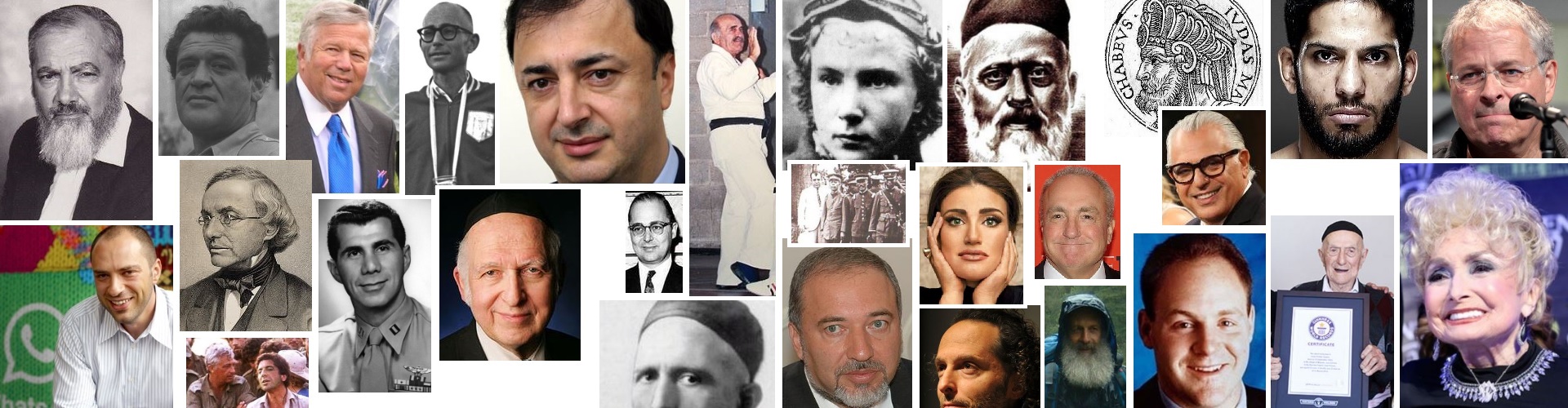
In Memory of a “Once-in-a-Millennium Scholar”
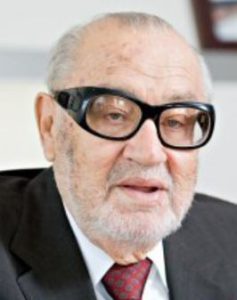
 Adin Even-Israel Steinsaltz (1937-2020) was born in Jerusalem to parents who had made aliyah from Eastern Europe a decade earlier. His father was completely secular, and a devoted socialist who had fought in the Spanish Civil War on behalf of Communist International. Nonetheless, his father wanted his son to know what Judaism was all about, and made sure to have him tutored by a rabbi. Meanwhile, young Steinsaltz studied math and science at Hebrew University. He then took up rabbinical studies at Chabad’s Yeshivat Tomchei Temimim. After receiving semicha (rabbinic ordination), Steinsaltz tried to establish a neo-Hasidic community in the Negev, but was unsuccessful. He then became a school principal and, being just 24 years old, was the youngest principal in Israel’s history. In 1965, he embarked on a life-long journey to translate the Talmud into Modern Hebrew, along with composing a detailed commentary to explain its complexities. He finished the massive 42-volume set in 2010, after which it was translated into English, too, and shared freely online to make Talmudic learning accessible for everyone. Rabbi Steinsaltz also wrote profusely about topics that span the gamut of Judaism, including bestsellers on Kabbalah and Hasidism. Altogether, he penned over 60 books and some 200 other original texts of Jewish thought. (He even wrote an unpublished science fiction novel!) Meanwhile, Rabbi Steinsaltz helped found several yeshivas in Israel, as well as the Jewish University in Russia, with campuses in Moscow and St. Petersburg. He had spent several years in the former Soviet Union to help re-establish Jewish life there, and in 1995 was given the title of Russia’s duchovny ravin, the “spiritual head” of Russian Jewry. In 2004, a large gathering of rabbis in Israel sought to re-establish the ancient Sanhedrin. Rabbi Steinsaltz accepted the nomination to head the court, being given the title nasi, “president”. Before he suffered a stroke in 2016, he was known to regularly give classes until two in the morning. He spent time at Yale University as a scholar-in-residence, and received honourary degrees from five universities. Among his many awards is the prestigious Israel Prize. His motto was “Let my people know!” and he has been compared to a modern-day Rashi and Maimonides. Sadly, Rabbi Steinsaltz, one of the Jewish world’s most beloved public figures, passed away last Friday.
Words of the Week
The Bible is the record of when God talks to Man. The Talmud is Man talking to God.
– Rabbi Adin Steinsaltz
 Anna Miriam Roth (1910-2005) was born in what is now Slovakia to Jewish-Hungarian parents. She studied psychology and pedagogy at Brno University in the Czech Republic, and was a member of Hashomer Hatzair, the Zionist youth organization. Upon graduating, she made aliyah to the Holy Land on her own and took up studies at Tel Aviv’s teacher’s college before enrolling at the Hebrew University. In 1937, she co-founded Kibbutz Sha’ar HaGolan, where she lived most of her life and worked as a teacher. Back in Europe, her entire family perished in the Holocaust. To make matters worse, during Israel’s War of Independence, the Arab forces burned down her kibbutz—including all photographs and letters from her family. In 1955, Roth published The Preschool Method, one of the first textbooks for early childhood education. She followed that up with The Theory of the Kindergarten in 1956, and The Child and You in 1958. A couple of years later, Roth relocated to New York to further her studies. She went on to earn a Master’s in education from Columbia University, as well as a Master’s in pedagogy from City College, New York. Upon her return to Israel, she continued her writing career, and soon began writing children’s books, too. Among her first were the very popular A Tale of Five Balloons (which sold over half a million copies and won a UNICEF Smile Award), HaBayit Shel Yael (“Yael’s House”), and Hot Corn. Perhaps her most famous work is Yuval HaMebulbal (“Confused Yuval”), now also an Israeli television show for kids. All in all, Roth wrote 23 books for children, along with 6 books on childhood education. She won the Ze’ev Price for Lifetime Achievement in 1990, and the Bialik Prize for Literature in 2002. Roth worked as a teacher for nearly five decades, and trained many of Israel’s educators. She is credited with being both a pioneer of Israeli education and of early childhood education worldwide.