
Tag Archives: Israel

Jew of the Week: Judah Touro

A Great American Hero

Judah Touro: War Hero, Philanthropist

The Touro family was forced out of Portugal in the explusion of 1497. They first settled in the Netherlands, then tried their fortunes in the New World, being among the earliest pioneers in America. There, they established the first official synagogue in the Americas, the Touro Synagogue of Newport, Rhode Island. George Washington visited in 1790, there giving his famous speech “to bigotry no sanction, to persecution no assistance.” Isaac Touro was the chazzan of this congregation. His son Judah Touro (1775-1854) established a small goods store in New Orleans which blossomed into a massive merchant empire. Throughout his life, Judah contributed vast sums of money for important causes, both Jewish and non-Jewish – schools, cemeteries, orphanages and hospitals, including the $20,000 necessary to build the Jews’ Hospital of New York, now known worldwide as Mount Sinai Hospital. In an early act of Zionism, Touro sent $50,000 to Jews living in Israel. In another instance, he provided the funds to establish a Jewish settlement near Jerusalem, called Mishkenot Sha’ananim. At death, he left half a million dollars to charity, an unheard of amount in those days. Two-thirds of this money went to non-Jewish causes. The other third was given to nearly every active synagogue operating in America. For these reasons, some say Judah Touro is the greatest Jewish philanthropist of all time. Most impressively, Judah Touro also served his country in the War of 1812. After getting injured, he continued to volunteer as a munitions carrier. In the Battle of New Orleans, a 12-pound cannonball smashed his leg, ripping off most of his thigh. Left for dead, he managed to survive and continued his business for another 40 years. Humble and modest, he lived in a small apartment all his life. Judah Touro’s financial advice: never take a mortgage on an existing property to invest elsewhere.

Words of the Week

Better an Israel that everyone hates than an Auschwitz that everyone loves.
– Rabbi Meir Kahane
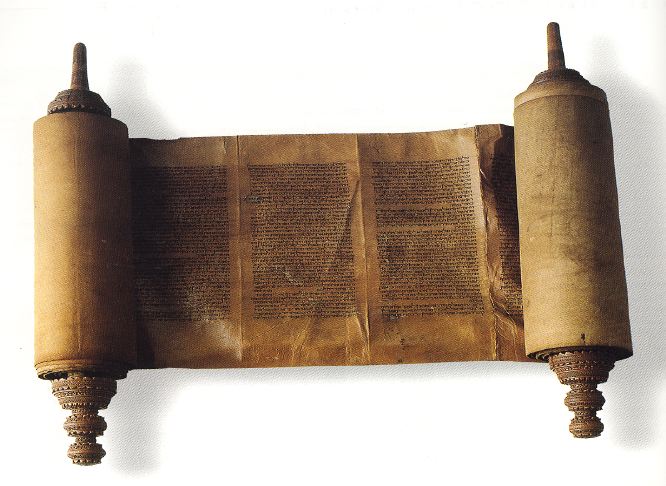
Jews of the Week: Asenath Barzani & the Maid of Ludomir

Two Amazing Women

Torah

Asenath Barzani (1590-1670) was born in Mosul, Iraq to the chief rabbi of Kurdistan, Shmuel Barzani. After her father’s passing she took over his role, serving as the head of the Mosul Yeshiva and teaching Torah to the masses (preferring to do this from behind a curtain, for she was also very beautiful). Asenath was given the title Tanna’it (“Great Teacher”) and was known for performing incredible miracles, including reviving a dead dove, bringing a legion of angels down from Heaven, and fighting crime using only her mystical powers. To this day, people make pilgrimages to her grave in Iraq.

On the other side of the world, in the Ukranian town of Ludomir, lived a woman named Hannah Rachel Verbermacher (1805-1888). After a midnight incident at a cemetery, where she had a certain revelation, Hannah Rachel transformed into a highly respected Torah teacher famous across Eastern Europe (she, too, gave her speeches from behind a screen for modesty). Many Hassidim became her devoted followers, building a synagogue and study house for the great ‘Maid of Ludomir’. Some even called her rebbe, and she was often seen wearing tefillin and a tallit (which stirred up quite a bit of controversy). At the end of her life, she made Aliyah to Israel and is said to have joined a descendant of the great Yemenite sage Shalom Shabazi in the mission of bringing Mashiach. However, according to legend the angel Eliyahu came down to stop them, for the world was not yet ready!

Words of the Week

Don’t ask for a lighter burden, ask for broader shoulders.
– Jewish Proverb

Jews of the Week: Abu-Kariba & Yusuf Dhu-Nawas

How Arabia Almost Became Jewish

Arabia, one-time home of Jewish Kings

In the 400s CE, before the time of Muhammed, the Arabian Peninsula was dominated by the powerful Kingdom of Himyar, based in Yemen. Their ambitious king was a man named Abu-Kariba, who gathered a massive army to war with the Byzantines (aka. the Eastern Roman Empire). However, Abu-Kariba got only as far as the city of Yathrib, which was then the heart of Jewish Arabia (and today is the second holiest site in Islam, called Medina). While fighting a rebel army in Yathrib, Abu-Kariba fell ill. Two Jewish sages from the city went across enemy lines and healed the king. Their kindness, courage and wisdom prompted Abu-Kariba to convert to Judaism, along with his entire army. Kariba changed his plans and returned home to Yemen to spread the new faith. However, his successor Dhu-Shenstir, was a mad pagan who brutally tortured his people. Thankfully, he was killed by Yusuf Dhu-Nuwas, who became the new king and restored Judaism to the throne. “Dhu-Nuwas” is Arabic for ‘Lord Sidelocks’, because of the long sidelocks he wore, like many Jews do today. Dhu-Nuwas tried his utmost to stop Jewish persecution by Christians in the Byzantine Empire. When his calls went on deaf ears, he kidnapped a handful of Byzantine officials and executed them, sparking a war which he won. Emboldened by his success, he worked mightily to re-establish a Jewish kingdom in Israel, collaborating with the famous Torah leader of the time, Mar Zutra (the Third). Unfortunately, in 525 CE, the Byzantines allied with Ethiopia, as well as the Arab Christians, and destroyed Dhu-Nawas’ growing domain. His dream of a pan-Jewish empire came to an end. This spectacular episode is the reason many historians suggest “only a hair’s-breadth prevented all Arabia from becoming Jewish.”


Words of the Week

I am for peace, but when I speak, they are for war.
King David, Psalms 120:7

Modern Arabia, where few Jews may be found…