Tag Archives: Israel

Jew of the Week: Dr. Malka Schaps

Dr. Schaps

Dr. Schaps

Mary Elizabeth Kramer was born in Ohio and grew up attending church and Christian Sunday school. By high school, she was drawn to atheism and secularism, but ultimately found no solace in those philosophies either. While in university majoring in mathematics, she found herself exploring various religions. Studying in Germany one semester, she had an inexplicable yearning to attend a Passover seder, and there met an Australian rabbi with whom she continued learning, eventually undergoing a proper Orthodox Jewish conversion (and taking the name Malka). Back in college, she met her future husband – David Schaps – and both went on to earn PhDs at Harvard. The new couple then moved to Israel to teach, had two kids and two foster children. Malka Schaps joined Bar-Ilan University’s Department of Exact Sciences, researching advanced quantum spin representations, in addition to founding and running a financial math program. Meanwhile, Schaps has written a handful of popular, best-selling novels under the pen name “Rachel Pomerantz”. Despite being deeply involved in the scientific community, her faith has only strengthened, and she has said, “I always point out that the study of mathematics shares something in common with Judaism. They both seek to discern a greater order of things and the objective truth.” Recently, she was elected to be Dean of the Department of Exact Sciences at Bar-Ilan, making her the first Orthodox woman in the world to hold such a post. Schaps lives with her family in Bnei Brak.


Words of the Week

Why was the Torah given in the desert? For if it were given in the Land of Israel, the residents of the Land of Israel would say, “It is ours”; and if it were given in some other place, the residents of that place would say, “It is ours.” Therefore it was given in the wilderness, so that anyone who wishes to acquire it may acquire it.
– Mechilta D’Rashbi
Jew of the Week: Rav Yitzhak Kaduri

Rav Yitzchak Kaduri

Rav Yitzchak Kaduri

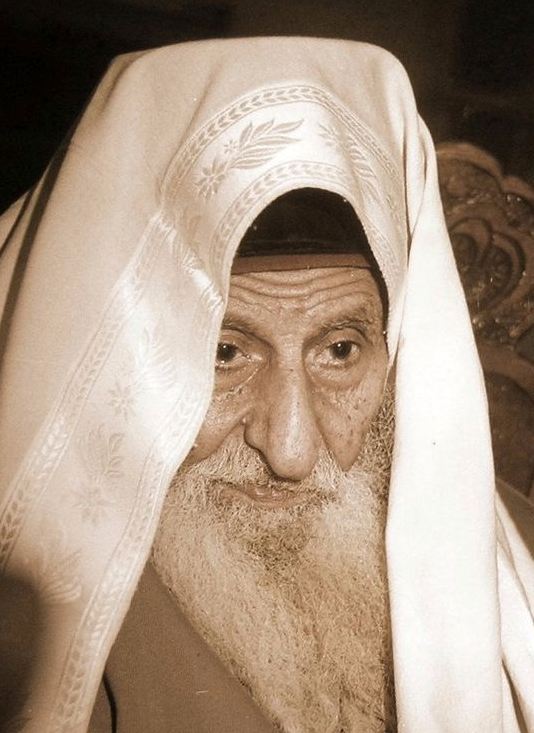
Yitzhak ben Zeev Diva (c. 1902-2008) was born in Baghdad to a rabbi who worked as a spice trader. Early on, he plunged into the depths of Jewish wisdom and by his teenage years was already recognized as a prodigy. In 1923, he settled in the Holy Land to bring spirituality into the secular Zionism that was flourishing in Israel. Upon arrival, he officially changed his last name to Kaduri. He continued his learning under some of the greatest rabbis of the time, particularly at Jerusalem’s famous Porat Yosef Yeshiva. Meanwhile, refusing to live on charity, he worked as a scribe and bookbinder, committing the books that he worked on to memory. It is said that he memorized the entire Talmud (over 5400 pages of dense text), together with its commentaries, along with a multitude of other works. He wrote several mystical texts of his own, which were never published, as Rav Kaduri did not want them getting into the wrong hands. He went on to become the head mekubal (“Kabbalist”) among Israel’s rabbis. His son spearheaded the opening of Rav Kaduri’s own yeshiva – Nachalat Yitzchak – located in the Bukharian Quarter of Jerusalem next to the Rav’s home. Rav Kaduri was famous for eating very little, and speaking very little. Despite his occupation with study, his doors were always open to help others (in fact, he refused to lock the doors of his home even amidst a spate of thefts). Hundreds of people sought his advice and blessings each day, and he was known as a miracle worker and healer. At his funeral, 8 years yesterday, over 300,000 people came to pay their respects.

Words of the Week

When God created the first man, He showed him all the trees of the Garden of Eden, and said to him: ‘See My works, how beautiful and praiseworthy they are. And everything that I created, I created for you. Be careful not to spoil or destroy My world—for if you do, there will be nobody after you to repair it.’
– Midrash Kohelet Rabbah 7:13

Jew of the Week: Ariel Sharon

Ariel Sharon

Ariel Sharon

Ariel “Arik” Scheinermann (1928-2014) was born on a moshav in Israel during the British Mandate, to Belorussian parents that immigrated there in 1922. He joined a youth battalion when he was just 14, and soon made a name for himself in the War of Independence, commanding a platoon that fended off the Iraqi invasion. His unit was often sent into the toughest conditions (in a single battle, they once lost 139 soldiers). Scheinermann himself was shot twice in the abdomen and once in the foot. Now a war hero, Prime Minister Ben-Gurion renamed him ‘Sharon’. After serving as an intelligence officer and studying in university, he was ordered back to the military to command 50 of Israel’s greatest soldiers in the new special forces Unit 101. In the 1956 war, he commanded a paratroopers brigade. In ’67, he was put in charge of the largest force in Sinai. He broke orders to come up with his own battle strategies, a major reason for Israel’s six-day victory. Later, his tactics were investigated by the US Army and credited with being unique military innovations. In August of 1973, Sharon finally retired to his farm. Unfortunately, just a few months later, the Arabs launched a surprise invasion of Israel on Yom Kippur. Unprepared, the State appeared to be doomed when Sharon was summoned out of retirement. When asked by his reserve commander, “How are we going to get out of this?” Sharon replied (like a boss): “You don’t know? We will cross the Suez Canal and the war will end over there.” Sharon drove to the war front in his own civilian car (!) and again broke his orders and did things his own way. His maneuvers were credited with turning the tide of the war and ending it in Israel’s favour. He became a national hero, and this led him to easily win a Knesset seat the following year. He would go on to serve as minister of defense, industry, housing, energy, foreign affairs, and finally, prime minister of Israel, while establishing and leading two political parties: Likud and Kadima. His most controversial act would be the pull-out from the Gaza Strip. Shortly after, he fell into a coma that lasted for 8 years, capping a difficult life that included the loss of a son and two wives. Sharon passed away last Saturday, on a special Jewish calendar date known as “Shabbat Shira”, the Sabbath of Song.

Tu B’Shvat Begins Tonight!

Words of the Week

A single action is better than a thousand groans.
– Rabbi Sholom Dov Ber of Lubavitch (1860-1920)