Tag Archives: Holocaust

Jew of the Week: Fritz Haber

Fritz Haber

Fritz Haber

Fritz Haber (1868-1934) was born to a traditional Jewish-German family in what is today Poland. He studied chemistry in Berlin, receiving his doctorate in 1891 and then going to apply his expertise in his father’s successful dyes and pharmaceuticals business. The two didn’t work well together, though, and Haber returned to academia. (In order to obtain a higher position at a time when Jews were barred from such posts, Haber nominally converted to Christianity.) His research in organic chemistry, electrochemistry, dye technology, gasses, and textiles brought him a great deal of recognition. In 1898 he was made an associate professor, and by 1906 a full professor at Karlsruhe University, among the most prestigious schools in Germany. It was there that Haber made his biggest breakthrough. Together with Carl Bosch, he invented a process that would quickly and cheaply produce ammonia (the key component of fertilizer) from abundant atmospheric nitrogen. Until then, ammonia had to be mined from very limited reserves. Today, over 100 million tons of ammonia is made annually using the “Haber Process”, helping to feed half of the world’s population. Haber won the 1918 Nobel Prize for this work. Unfortunately, Haber also applied his know-how to less honourable endeavours. Aside from the fact that ammonia is a central ingredient of explosives, too, and the Haber Process helped to arm the German military, Haber headed the Ministry of War’s Chemistry Section during World War I, developing gasses for chemical warfare (as well as the gas masks to protect from them). To be fair, many of the world’s top chemists during this time period worked on chemical warfare to assist in their nation’s war effort. As Haber himself said, “During peace time a scientist belongs to the World, but during war time he belongs to his country.” His wife did not agree, and committed suicide after failing to convince him to abandon his project. After the war, Haber started a company that produced pesticides. Incredibly, their most famous product was Zyklon B, later used in the gas chambers of the Holocaust. Haber fled Germany when the Nazis came to power. He accepted a position in what would later be the Weizmann Institute in Israel, but passed away on the journey there. Few people have at once been able to cause both so much harm and so much good. While half of the world’s food production today depends on the Haber process, so do much of its explosives, and Haber is often called “the father of chemical warfare”. Haber’s work simultaneously brought death to millions of people, and life to millions more.

Words of the Week

When God desired to create man, Truth said: “He should not be created, for he is full of lies.” Kindness said: “He should be created, for he is full of kindness.”
– Midrash Rabbah, Bereshit 8:5

Jew of the Week: Emanuel Tanay

Emanuel Tanay (Photo Credit: John Lofy)

Emanuel Tanay (Photo Credit: John Lofy)

Emanuel “Emek” Tanay (1928-2014) was born in Vilnius, Lithuania and grew up in Poland. The Holocaust began while he was still young, and he spent the first part of it hiding in a Catholic monastery. After his father died in a concentration camp, Tanay led his family out of Poland, through Slovakia and Hungary, finding hiding places and falsifying papers to keep himself and his remaining family members alive. Following the war, he moved to the US and studied psychiatry. Tanay went on to become a professor of psychiatry at Wayne State University, and was internationally renowned in his field. He dedicated a major part of his career to treating Holocaust victims, as well as working with the German government to provide compensation for survivors. Because of his own experiences in the Holocaust, Tanay worked tirelessly for those suffering from Post-Traumatic Stress Disorder (PTSD). He was part of a group of scientists who got PTSD recognized as a real, treatable condition. At one point, he was described as “the nation’s premier psychiatric theorist on homicide”, and served as an expert witness in some of the most famous trials of recent history, including that of Jack Ruby and Ted Bundy. Meanwhile, Tanay worked for his local Jewish community, too, founding the Jewish Council in the town of Grosse Point, and serving as its president. Tanay wrote three important books, including his reflections on the Holocaust in a book called Passport to Life, highly praised by fellow Holocaust survivor Elie Wiesel. He appeared on numerous television shows, and his story is explored in the Oscar-nominated documentary Courage to Care. Sadly, Tanay passed away on the 5th of August from prostate cancer.

Words of the Week

If you wait until you find the meaning of life, will there be enough life left to live meaningfully?
– Menachem Mendel Schneerson, the Lubavitcher Rebbe

Jew of the Week: Anne Frank

A Diary that Changed the World

Anne Frank

Anne Frank

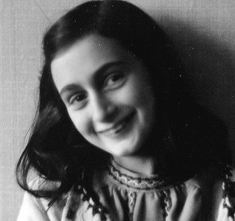
Annelies Marie Frank (1929-1945) was born in Frankfurt, Germany. Her family fled to Amsterdam shortly after the Nazis took over, and there her father started a new business selling herbs, spices, and fruit extracts. On her thirteenth birthday, Anne received an autograph book that she began to use as a diary, which she addressed as “Kitty”, her best friend. By then, the Nazis had already occupied the Netherlands, and a month later Anne’s family was ordered to report to labour camps. Instead, they hid in a space above her father’s company offices. Some of the employees were aware of this, and provided the Franks with food. During this time, Anne wrote in her diary of her experiences, struggles, and relationships, as well as deeper insights into human nature. In the summer of 1944, the Franks’ hiding place was discovered and the family was arrested. They were sent through various detention centres and labour camps, ending up in Auschwitz. There, her father was taken away and presumed dead, while Anne, her sister, and mother were forced into back-breaking labour. By the time that the two sisters were relocated to Bergen-Belsen, their mother had already succumbed to starvation. Not long before the camp was liberated, a typhus outbreak spread that killed thousands. Anne and her sister were likely among those victims. The only member of the family to survive was Anne’s father, Otto. He went on to publish Anne’s original diary in 1947. By 1952 it was published in the US as Anne Frank: The Diary of a Young Girl, and would go on to be translated into 67 languages. In 1955, the first dramatization of the diary premiered as a Pulitzer prize-winning play. A movie version followed in 1959. The diary is still among the top-selling books of all time, and included in La Monde‘s list of the 100 greatest books of the century. It is praised for its beautiful writing, and is powerful not only for capturing some of the horrors of the Holocaust, but also for its honest portrayal of a girl’s transformation into a young adult. Nelson Mandela read the diary while imprisoned and said how Anne Frank’s story inspired his struggle. Others who derived inspiration from Anne Frank include President Kennedy, Eleanor Roosevelt, and Hillary Clinton. TIME Magazine named Frank as one of its 100 most important people of the century. The Anne Frank House in Amsterdam still stands, and is one of the city’s most visited places.

Words of the Week

“The best remedy for those who are afraid, lonely or unhappy is to go outside, somewhere where they can be quiet, alone with the heavens, nature and God. Because only then does one feel that all is as it should be.”

“How wonderful it is that nobody need wait a single moment before starting to improve the world.”

– From the diary of Anne Frank