Hollywood Blockbuster
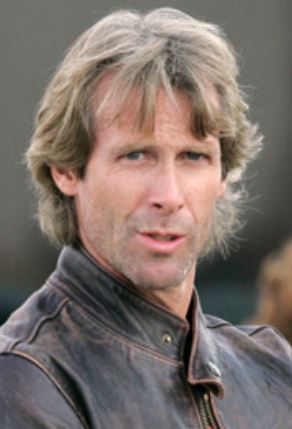 Michael Benjamin Bay (b. 1965) was born in Los Angeles and adopted by Jewish parents. A big lover of dogs, he donated his bar mitzvah gifts to an animal shelter. As a child, he once rigged a toy train with fireworks and recorded the explosion with an old camera. Although it caused a fire and got him grounded, Bay knew he was destined to make big blockbuster movies. At 15, he got a menial job filing storyboards for George Lucas on his production of Raiders of the Lost Ark. He went on to major in film studies and English, and did graduate work at Pasadena’s Art Center College of Design. Two weeks after graduating, he got a job to film commercials. His first breakthrough was a popular ad for Coca-Cola, followed by an ad for the Red Cross in 1992. His 1993 “Got Milk?” ad won an award for Commercial of the Year. Meanwhile, Bay directed a number of hit music videos. This caught the attention of Hollywood producer (and former Jew of the Week) Jerry Bruckheimer, who hired him to direct Bad Boys. This was Bay’s first feature film and was a massive success, making $141 million in the summer of 1995 alone (against a budget of just $19 million). The movie thrust both Bay and Will Smith to international fame. His next film, The Rock, was another huge hit, as was the following Armageddon with Bruce Willis, the highest-grossing movie of 1998 and nominated for four Oscars. Bay also got four Oscar nominations for Pearl Harbor. In 2007, Bay teamed up with Steven Spielberg to make Transformers, another huge blockbuster that launched an entire film franchise. In 2018, he directed 6 Underground, then Netflix Studio’s largest-ever production. Bay has recently ventured into augmented and virtual reality games and films. While some have criticized his movies for being too childish, outlandish, and explosive, others have praised his artistry, ambition, and vision. Altogether, his films have raked in over $7 billion, putting him in the top-5 highest grossing directors of all time.
The Intersection of Science and Mysticism
Words of the Week
We must no longer isolate ourselves from the great scientific movement that stirs souls in so many ways; [Judaism] can remain orthodox only by becoming scientific.
– Rabbi Elijah Benamozegh (1823-1900)
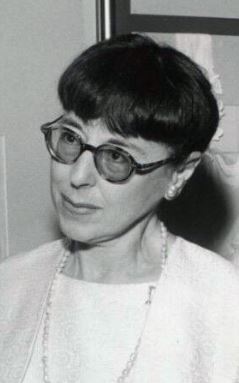

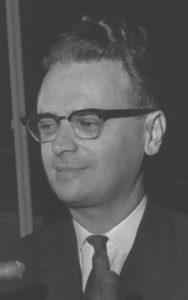 Ferenc Hoffman (1924-2005) was born in Budapest, Hungary to a secular Jewish family. He loved to write from a young age, and won a prize for a novel he wrote while still in high school. He was also an avid chess player. During World War II, he was first expelled from university before being imprisoned at a number of concentration camps, ending up in the Sobibor death camp. One of the ways he survived is by challenging the guards to chess matches. Another is by maintaining his sense of humour. After the Holocaust, he went by the name Franz Kishunt, studying sculpting and art history while also writing satire. In 1949, he escaped communist Hungary and made aliyah, becoming “Ephraim Kishon”. He was a passionate Zionist and would staunchly defend the State of Israel for the rest of his life—often being disparaged by the media for his hardline views. Within two years of settling in the Holy Land, Kishon was fluent in Hebrew (he literally hand-copied an entire dictionary) and began writing satire for a number of papers. His most famous column was Had Gadya in the Ma’ariv newspaper, which he wrote almost daily for over 30 years. Kishon soon became Israel’s greatest and most famous humourist. He also wrote popular plays, an opera, and books that have been translated into some 40 languages, including So Sorry We Won! about the Six-Day War. In the 1960s, Kishon entered the world of film. He wrote, directed, and produced five movies, the first being the critically-acclaimed Sallah Shabbati, highlighting the struggle of Mizrachi Jewish refugees to Israel. The film won a Golden Globe and was nominated for an Oscar, making Kishon the first Israeli with that distinction. (The film also launched the international career of Israeli actor Chaim Topol, most famous for portraying Tevye in Fiddler on the Roof.) Kishon’s fourth film, The Policeman, also won a Golden Globe and was nominated for an Oscar. Not surprisingly, Kishon has been credited with opening up Israeli cinema to the world, and paving the path to Hollywood for Israelis. He won a long list of awards, including the Bialik Prize and the Israel Prize. He was a billiards champ, a pioneer in the field of computer chess, and even created a board game (“Havila Higiya”) once popular in Israel. Kishon has been called the “father of Israeli satire”, and inspired an entire generation of Israeli humourists.