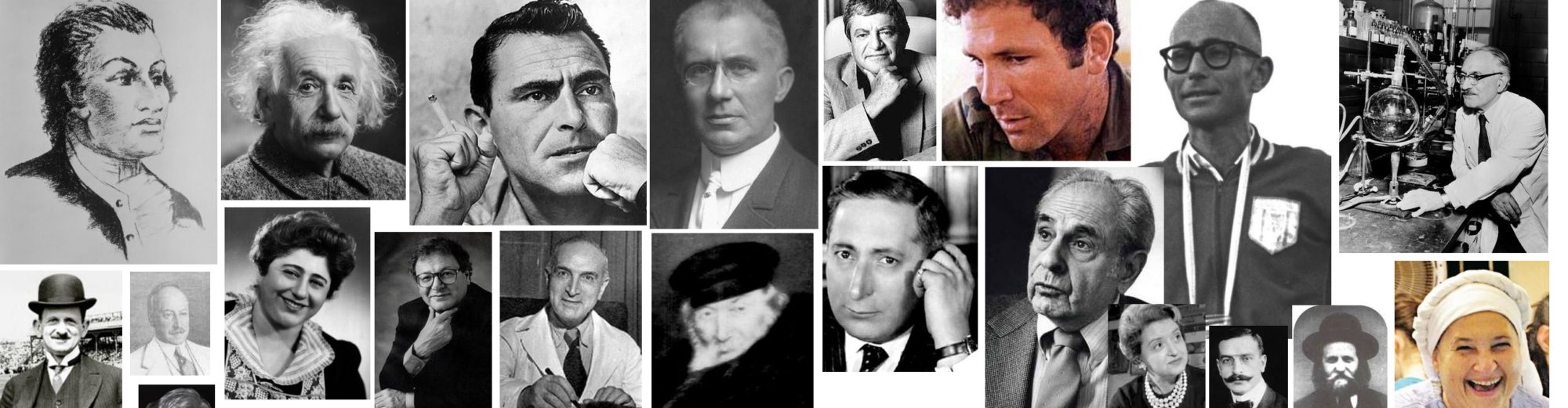
In Memory of a “Once-in-a-Millennium Scholar”
 Adin Even-Israel Steinsaltz (1937-2020) was born in Jerusalem to parents who had made aliyah from Eastern Europe a decade earlier. His father was completely secular, and a devoted socialist who had fought in the Spanish Civil War on behalf of Communist International. Nonetheless, his father wanted his son to know what Judaism was all about, and made sure to have him tutored by a rabbi. Meanwhile, young Steinsaltz studied math and science at Hebrew University. He then took up rabbinical studies at Chabad’s Yeshivat Tomchei Temimim. After receiving semicha (rabbinic ordination), Steinsaltz tried to establish a neo-Hasidic community in the Negev, but was unsuccessful. He then became a school principal and, being just 24 years old, was the youngest principal in Israel’s history. In 1965, he embarked on a life-long journey to translate the Talmud into Modern Hebrew, along with composing a detailed commentary to explain its complexities. He finished the massive 42-volume set in 2010, after which it was translated into English, too, and shared freely online to make Talmudic learning accessible for everyone. Rabbi Steinsaltz also wrote profusely about topics that span the gamut of Judaism, including bestsellers on Kabbalah and Hasidism. Altogether, he penned over 60 books and some 200 other original texts of Jewish thought. (He even wrote an unpublished science fiction novel!) Meanwhile, Rabbi Steinsaltz helped found several yeshivas in Israel, as well as the Jewish University in Russia, with campuses in Moscow and St. Petersburg. He had spent several years in the former Soviet Union to help re-establish Jewish life there, and in 1995 was given the title of Russia’s duchovny ravin, the “spiritual head” of Russian Jewry. In 2004, a large gathering of rabbis in Israel sought to re-establish the ancient Sanhedrin. Rabbi Steinsaltz accepted the nomination to head the court, being given the title nasi, “president”. Before he suffered a stroke in 2016, he was known to regularly give classes until two in the morning. He spent time at Yale University as a scholar-in-residence, and received honourary degrees from five universities. Among his many awards is the prestigious Israel Prize. His motto was “Let my people know!” and he has been compared to a modern-day Rashi and Maimonides. Sadly, Rabbi Steinsaltz, one of the Jewish world’s most beloved public figures, passed away last Friday.
Words of the Week
The Bible is the record of when God talks to Man. The Talmud is Man talking to God.
– Rabbi Adin Steinsaltz
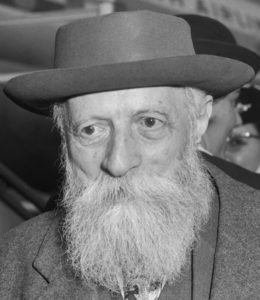 Mordechai Martin Buber (1878-1965) was born in Vienna to a religious Jewish family. His parents got divorced when he was just three years old, so Buber was raised in what was then Poland by his grandfather. Despite growing up in a richly Hasidic home, Buber began reading secular literature and returned to Vienna as a young man to study philosophy. Around the same time, he became active in the Zionist movement and soon became the editor of Die Welt, the main newspaper of Zionism. It wasn’t long before Buber became dissatisfied with the secularism and “busyness” of Zionism and returned (partially) to his Hasidic roots. He saw in Hasidic communities the right model for a new Israel, and a better alternative to the entirely-secular kibbutz. Buber ultimately saw Zionism not as a nationalist or political movement, but as a religious movement that should, first and foremost, serve to spiritually enrich the Jewish people—along with the rest of the world. He would later be credited with being the father of “Hebrew humanism” and “spiritual Zionism”. In 1908, he was invited to address a group of Jewish intellectuals known as the “Prague Circle”, and to “remind them about their Judaism”, as the group’s leader had requested. Among the members of the Circle was (former Jew of the Week)
 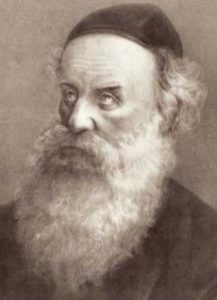 Schneur Zalman of Liadi (1745-1812) was born in the shtetl of Liozna in what is now Belarus. A child prodigy, he wrote his first commentary on the Torah when he was eight years old. Shortly after, he was sent to the nearby town of Lubavitch to begin advanced Talmudic studies, and was sent back home at the age of 12 as he had surpassed the knowledge of his teachers. He married at 15, and around the same time was first exposed to Kabbalah by two Bohemian refugees that settled in Liozna. They also taught him math, astronomy, and philosophy. A few years later, Rav Schneur Zalman met the Hasidic master Dov Ber, “the Maggid [Preacher] of Mezeritch”, who was himself the disciple of the