Tag Archives: German Jews

Jew of the Week: Emile Berliner

Inventor of the Gramophone and Helicopter

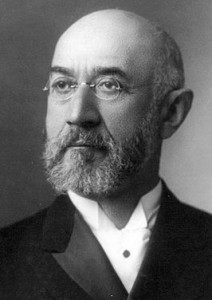
Emile Berliner, inventor of the Gramophone and the helicopter

Emile Berliner, inventor of the Gramophone and the helicopter

Emile Berliner (1851-1929) was born in Hanover, Germany. Though he studied to be a merchant like the rest of his family members, he was always more interested in invention. With the outbreak of the Franco-Prussian War in 1870, Berliner fled to the US and settled in New York. During the day, he struggled to make ends meet by delivering newspapers and doing other petty jobs, while at night he studied physics. He became interested in the new technology of telephone and began working on sound transmission. Berliner first invented a new phone transmitter that was later adapted to make the first microphone. Bell Telephone Company bought out his patent and hired Berliner. He worked for Bell until 1883, when he established his own company. Building on previous phonograph technology, Berliner revolutionized the world in 1887 by inventing the gramophone and the flat disc record. At first, it was sold as just a toy, and only in Europe. In 1895, Berliner managed to get a $25,000 investment for his invention, and started the US Berliner Gramophone Company. Unfortunately, others stole his patents and sold unauthorized records, and Berliner was eventually unable to sell his own invention. He moved to Canada, started a new company, and soon focused on other technologies. One of these was an automatic loom for mass-producing clothes. Another, more famous, was the first helicopter. For over twenty years, Berliner focused on developing vertical flight machines, with the help of a number of other inventors and scientists. He designed the vertical rotor that made modern helicopters possible. In 1922, Berliner demonstrated the first helicopter to the US Army. Meanwhile, Berliner wrote and published five books, and was a noted advocate for public health and better sanitation. He won a number of prestigious awards for his work, which forever transformed the music, clothing, and flight industries.

Words of the Week

The souls of all the living… On Rosh Hashanah will be inscribed and on Yom Kippur will be sealed: how many will pass from the earth and how many will be created; who will live and who will die… Who will rest and who will wander, who will live in harmony and who will be harried, who will enjoy tranquility and who will suffer, who will be impoverished and who will be enriched, who will be degraded and who will be exalted. But repentance, prayer, and charity avert these severe decrees!
– Verses from Unetanneh Tokef, sung during Rosh Hashanah prayers

Jew of the Week: Anne Frank

A Diary that Changed the World

Anne Frank

Anne Frank

Annelies Marie Frank (1929-1945) was born in Frankfurt, Germany. Her family fled to Amsterdam shortly after the Nazis took over, and there her father started a new business selling herbs, spices, and fruit extracts. On her thirteenth birthday, Anne received an autograph book that she began to use as a diary, which she addressed as “Kitty”, her best friend. By then, the Nazis had already occupied the Netherlands, and a month later Anne’s family was ordered to report to labour camps. Instead, they hid in a space above her father’s company offices. Some of the employees were aware of this, and provided the Franks with food. During this time, Anne wrote in her diary of her experiences, struggles, and relationships, as well as deeper insights into human nature. In the summer of 1944, the Franks’ hiding place was discovered and the family was arrested. They were sent through various detention centres and labour camps, ending up in Auschwitz. There, her father was taken away and presumed dead, while Anne, her sister, and mother were forced into back-breaking labour. By the time that the two sisters were relocated to Bergen-Belsen, their mother had already succumbed to starvation. Not long before the camp was liberated, a typhus outbreak spread that killed thousands. Anne and her sister were likely among those victims. The only member of the family to survive was Anne’s father, Otto. He went on to publish Anne’s original diary in 1947. By 1952 it was published in the US as Anne Frank: The Diary of a Young Girl, and would go on to be translated into 67 languages. In 1955, the first dramatization of the diary premiered as a Pulitzer prize-winning play. A movie version followed in 1959. The diary is still among the top-selling books of all time, and included in La Monde‘s list of the 100 greatest books of the century. It is praised for its beautiful writing, and is powerful not only for capturing some of the horrors of the Holocaust, but also for its honest portrayal of a girl’s transformation into a young adult. Nelson Mandela read the diary while imprisoned and said how Anne Frank’s story inspired his struggle. Others who derived inspiration from Anne Frank include President Kennedy, Eleanor Roosevelt, and Hillary Clinton. TIME Magazine named Frank as one of its 100 most important people of the century. The Anne Frank House in Amsterdam still stands, and is one of the city’s most visited places.

Words of the Week

“The best remedy for those who are afraid, lonely or unhappy is to go outside, somewhere where they can be quiet, alone with the heavens, nature and God. Because only then does one feel that all is as it should be.”

“How wonderful it is that nobody need wait a single moment before starting to improve the world.”

– From the diary of Anne Frank

Jews of the Week: Straus and Bloomingdale

Macy’s and Bloomingdale’s 

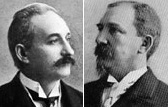
Lyman and Joseph Bloomingdale

Lyman and Joseph Bloomingdale

Lyman Bloomingdale (1841-1905) and Joseph Bloomingdale (1842-1904) were the sons of German-Jewish immigrants who settled in New York. Their father Benjamin started a small clothing shop, and it was here that Lyman and Joseph sold their first hoop skirts for ladies. In 1872, the brothers opened their own store. Business boomed, and in 1886, the company expanded and opened its current world-famous Bloomingdale’s location. Over the next century, Bloomingdale’s went on to open dozens of stores across America, and become one of the most recognizable department store brands in the world. In 1930, Bloomingdale’s joined together with another department store giant – Macy’s. Macy’s began in 1858 as a small dry goods store. Thirty years later, a pair of Jewish brothers (who originally only supplied Macy’s with tableware) became partners in the business, and the shop’s fortunes boomed.

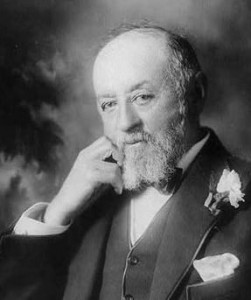
Isidor Straus

The brothers were Isidor Straus (1845-1912) and Nathan Straus (1848-1931), who were also German-Jewish immigrants like the Bloomingdales. Eventually, the two became the sole owners of Macy’s, and turned the company into an internationally-recognized brand, which now has 850 locations. The elder Isidor served as a US Congressmen and was a noted philanthropist and social activist. Tragically, he and his wife were aboard the Titanic when it sank in 1912. Despite his wealth and status, which immediately guaranteed him a seat on a lifeboat, Isidor refused so that all women and children could be saved first. He and his wife did not survive. His brother Nathan was also supposed to cruise the Titanic, but instead decided to take a trip to Israel. This decision saved his life, and Nathan saw this is a divine message.

Nathan Straus

Nathan Straus dedicated the rest of his life to support the Jewish state, going on to donate two thirds of his wealth for the cause. His money opened up countless schools, health clinics and public kitchens in Israel. The modern city of Netanya is named after him. Meanwhile, Nathan also did a great deal at home. He opened a pasteurized milk institute that gave out free milk to children, and is credited with significantly reducing the incidence of milk-borne diseases. During the recession of 1893, he gave away coal and meat for free, opened lodgings for 64,000 people, and provided 50,000 meals for a penny each. In the recession of 1914-15 he provided over one million such penny meals, and during World War I, sold his private yacht in order to feed orphans. His personal motto was: “The world is my country, to do good is my religion.”

Words of the Week

God transforms spirituality into physicality; the Jew makes physical things spiritual.
– Rabbi Israel Baal Shem Tov