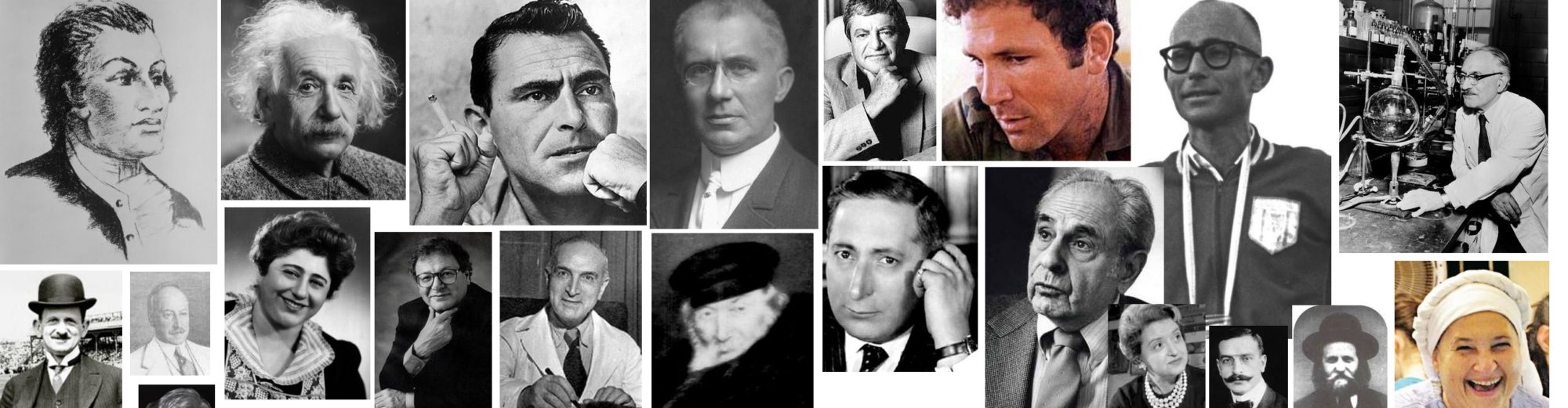
 Chaim Yosef David Azulai (1724-1807) more commonly known as the Chida (derived from his initials), was born in Jerusalem to a family with a long line of rabbis. From childhood he showed amazing proficiency in Jewish study, and learned under the great Torah scholars of the day. His name was soon well-known across the Jewish community of the Holy Land, and before he was 30, the Chida was selected to be the community’s emissary to Europe. He would go on several international trips to raise support and funds for the Jews in Israel (long before the start of the Zionist movement). Two of these trips lasted over 5 years each, and took him across Africa and Europe. Many credit him with sustaining the small Jewish community of Israel, which would have otherwise been extinguished by various Turkish and Arab warlords. During his travels he made sure to visit any ancient libraries he came across, and diligently studied their manuscripts, which earned him fame as a great scholar of all subjects. Meanwhile, he was able to publish roughly 70 different works on Judaism (writing his first book at age 16), ranging from Jewish law and scriptural commentaries to prayer books, mysticism and Kabbalah. His works are also important to secular scholars, as the Chida recorded a detailed diary during his trips around the world, giving historians an eyewitness account of the 18th-century. His incredible travels included a meeting with the Sultan of Turkey and King Louis XVI of France, a stint as Chief Rabbi of Cairo, as well as some dangerous encounters with the Knights of Malta and the Russian Navy. By the end of his life, he was considered a saint by both Jews and non-Jews alike.
Lag B’Omer is This Saturday Night!
Words of the Week
Fighting evil is a very noble activity when it must be done. But it is not our mission in life. Our job is to bring in more light.
– Rabbi Menachem Mendel Schneerson, the Lubavitcher Rebbe
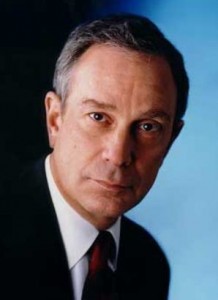 The 10th richest person in the U.S., Michael Rubens Bloomberg was born in Massachusetts, the grandson of immigrants from Europe and Russia. In the 1970s he worked for a Wall Street firm where he learned that information is the key to success, and people are willing to pay for it. So, when the company he worked for was bought out, he used his severance money to start a company called Market Systems, which built terminals that gave their users on-the-fly and up-to-date financial information, presented in various graphs and charts to make it simple to understand. The company started selling its terminals in 1982 and they were an instant hit. By 1990, over 8000 ‘Bloomberg’ terminals were in use around the world. Today, that number has risen to 310,000, and Bloomberg LP also includes a news channel, radio stations, magazines (such as BusinessWeek) and software. Michael Bloomberg himself left the helm of the company to become popular mayor of New York City. His mayoral salary is a symbolic $1. A mayor of the people, Bloomberg often rides the NYC subways to work. More impressively, The Chronicle of Philanthropy lists him as the leading individual donor in the U.S. for two years in a row. Bloomberg has donated hundreds of millions of dollars to hospitals, schools, environmental causes, and scientific research, as well as the arts. Many of his contributions are anonymous. He recently pledged another $500 million together with Bill Gates. Some have stated Bloomberg is the greatest contributor to higher education institutions in history, donating over $800 million to Johns Hopkins alone. All of these factors may be why Bloomberg has been elected to a third term as mayor, despite the two-term limit. And some say he will be president in the near future. If so, it would make him the first Jewish Commander-in-Chief.