First Jew (and Scientist) in America
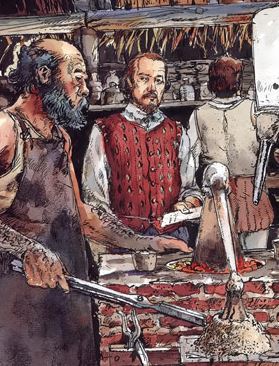
Illustration of Joachim Gans and Thomas Hariot in America’s First Science Lab (Credit: National Park Service)
Joachim Chaim Gans (later known as Dougham or Yougham Gannes) was born in the thriving Jewish community of 16th-century Prague, then the capital of the Kingdom of Bohemia. Nothing is known of his early life. Historical records show that Gans was invited to England in 1581 to demonstrate his mining and smelting techniques. Gans had invented a new, cheaper method for purifying copper, reducing the length of the process from sixteen or eighteen weeks to just four. He also developed new ways of producing sulfuric acid, vitriol, and other compounds, most notably saltpeter (for gunpowder). “Master Yougham” was soon a respected scientist in the court of Queen Elizabeth I. When Sir Walter Raleigh was given a royal charter to explore the New World in 1584, he hired Gans as the expedition’s chief metallurgist. Gans’ primary objective was discovering valuable metals in the New World, and to determine whether further exploration and settlement was worthwhile. Gans set forth on the voyage, and in 1585, was one of the founders of Roanoke, England’s first colony in America. Amazingly, archaeologists have uncovered Gans’ original laboratory, filled with mining tools and scientific instruments. His team (together with Thomas Hariot) discovered many new plants, mapped the surrounding landscape, and even identified sassafras as a treatment for syphilis. Most importantly, Gans determined that the New World contains ample amounts of iron and copper, and perhaps silver and gold, too, convincing the queen that the continent was worth investing in. Gans himself is credited with being the first Jew to set foot in North America, as well as its first technologist or materials scientist. His lab has been called “America’s First Science Center” and “the Birthplace of American Science”. Unfortunately, the first colony didn’t last long, and 104 of the original 108 settlers, including Gans, returned to England a year later. Gans settled in Bristol and continued his work for the Royal Mining Company. When it became known that he spoke Hebrew and Yiddish, the town reverend asked Gans if he denied “Jesus Christ to be the son of God.” Gans replied: “What needeth the almighty God to have a son? Is He not almighty?” Gans was subsequently arrested for blasphemy. He was sent to London to be tried by the Queen’s Privy Council. What happened after this is unclear. There are no further records of Gans. Many historians hold that he was spared the death penalty because of his tremendous contributions to England, and was instead deported. There is mention of a “Joachim Gantz” buying a large estate 80 kilometres north of Prague in 1596, not far from a mine. It is quite likely that he lived out the rest of his life quietly in his homeland. Scholars believe Joachim Gans is the basis for the character Joabin, the wise scientist and “good Jew” of Sir Francis Bacon’s famous 1627 novel New Atlantis. Last Friday, the state of North Carolina (where Roanoke was located) officially honoured Gans in a ceremony, and will soon erect a commemorative highway marker for him near Fort Raleigh.
Did You Know These People are Jewish?
Words of the Week
Happiness is not a life without pain, but rather a life in which the pain is traded for a worthy price.
– Orson Scott Card
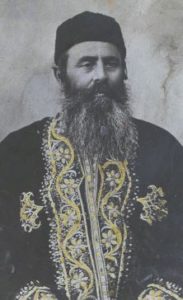 Shlomo ben Yakov Moussaieff (1852-1922) was born in the emirate of Bukhara (present-day Uzbekistan). Both a renowned rabbi and a wealthy businessman, he made aliyah to the Holy Land in 1888 – bringing with him forty cases of gold – and was one of the founders of Jerusalem’s famous Bukharian Quarter. Moussaieff built four synagogues, and homes for 25 poor families. Meanwhile, he published a prayer book and disseminated it widely, making it his mission to inspire more Jews to pray regularly. He also continued his business ventures, particularly in real estate, tea, silk, and gemstones. Moussaieff was an avid collector of rare manuscripts, and amassed an impressive library with 225 ancient texts, including prized manuscripts of Maimonides and the mystical teachings of the Arizal. Until his last days, Moussaieff was committed to the development of Israel, and stated in his will that only those of his seven children that remain in Israel would receive any inheritance.
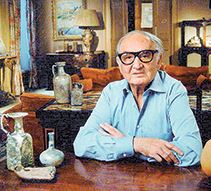 His grandson, also Shlomo Moussaieff (1923-2015), though better known as Sam, would become even more famous. One of twelve children raised in Jerusalem, Sam Moussaieff ran away from home as a teen to avoid his strict father. Living in a synagogue, he worked for a carpenter and sold ancient coins he would find in Jerusalem’s caves and tombs. Once arrested by Arab policemen, he ended up in a Muslim school for nearly a year, becoming proficient in Arabic and the Koran. At 17, Moussaieff enlisted in the British Army to fight the Nazis. After World War II, he fought for Israel’s independence and was captured by the Jordanians, who imprisoned him for a year. Moussaieff returned to Jerusalem and joined the family jewellery business. He soon opened his own antiquities shop in Jaffa, at times getting in trouble for smuggling goods. In 1963, Moussaieff was offered to have his record cleared of legal issues, as well as the rights to an exclusive shop in London’s Hilton Hotel, in exchange for handwritten letters from Maimonides which he owned. Moussaieff accepted and moved to London. His shop soon specialized in jewellery, and he became the dealer of choice for wealthy barons from Arab oil states thanks to his pristine Arabic. Moussaieff became world-renowned for his extremely rare and special gems. He owned the most precious stone in the world: a red diamond valued at $20 million. In 2011, he was ranked among the richest Londoners, with an estimated worth of some $350 million. Moussaieff amassed a personal collection of over 60,000 ancient artifacts, including millennia-old seals from Jerusalem’s First Temple, and reportedly even items associated with the forefather Abraham! His stated goal was to collect indisputable evidence proving the accuracy of the Torah. Moussaieff was given an honourary degree by Bar Ilan University (to whom he donated many artifacts, including his grandfather’s ancient manuscripts) which established the Dr. Shlomo Moussaieff Center for Kabbala Research. Interestingly, Moussaieff once purchased an ancient Torah scroll for $1 million from the Allenby family – who had the Torah because the elder Shlomo Moussaieff gave it as a gift to General Allenby during World War I!