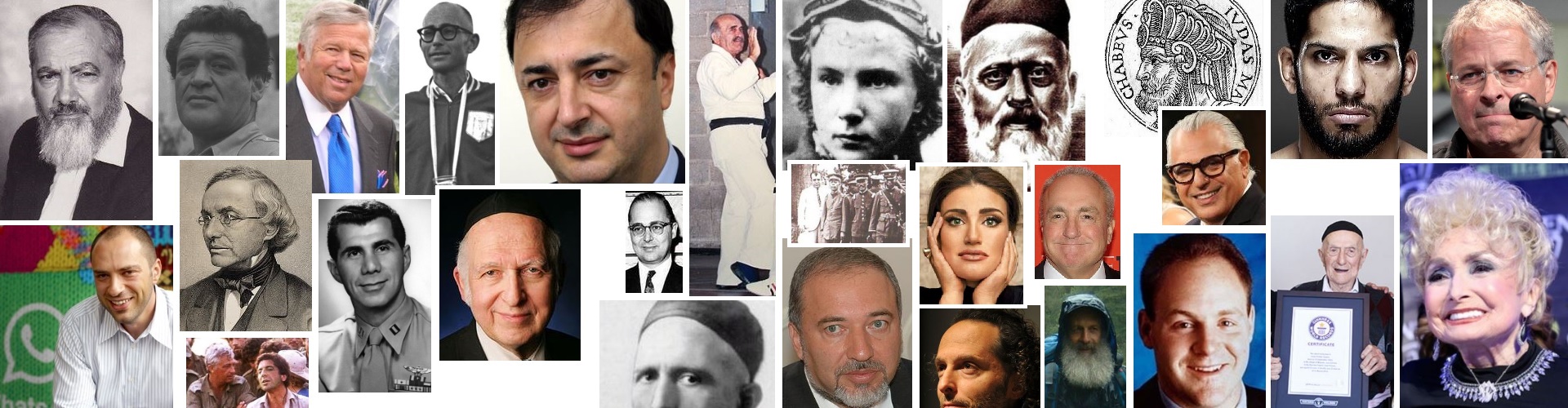
Germany’s Greatest Physicist
 Max Born (1882-1970) was born in Breslau (now Wroclaw, Poland) to a German-Jewish family. He first studied at the University of Breslau, then switched to the University of Gottingen where he met renowned mathematician (and former Jew of the Week) Hermann Minkowski, who became one of his mentors. After earning his Ph.D, Born continued his studies at Cambridge. He soon returned to Gottingen to work with Minkowski on unifying electrodynamics with Albert Einstein’s relativity. Over the next few years, Born published 27 important papers that made him a superstar in the world of physics and math. During this time, he met his wife and was pressured to convert to Lutheranism to marry her. He refused. However, in 1914 he received a letter from Max Planck inviting him to become a professor of theoretical physics at the University of Berlin—and to accept this position he would have to become a Christian, since professorships were still barred to Jews. Born ended up “converting” nominally for this reason. With the outbreak of World War I, Born joined a military research unit. During the war, he became best friends with Albert Einstein (who once described Born as the greatest physicist in all of Germany), and also briefly worked with Fritz Haber in discovering the Born-Haber cycle. Born would return to Gottingen, where Werner Heisenberg was one of his main students. Together, they did important work in advancing quantum mechanics. In 1932, Heisenberg won a Nobel Prize for his discoveries in quantum physics, but he protested that Born didn’t receive the prize with him. Another two of Born’s students went on to win Nobel Prizes in physics before he did. (It was only in 1954, two years after retirement, that Born received a Nobel Prize of his own!) Another of his Ph.D students was J. Robert Oppenheimer, later the “father of the atomic bomb”. When the Nazis came to power in 1933, Born was suspended from his job because he was a Jew. He moved to Cambridge temporarily and there wrote a bestselling physics book, as well as a textbook that became the standard for physics students for many decades to come. He then became professor of natural philosophy at the University of Edinburgh. Meanwhile, Born and his wife helped Jewish refugees escape Germany and settle in the UK. After retiring at the age of 70, Born returned to Germany and lived out the rest of his life there. One of his grandchildren is actress and singer Olivia Newton-John, who passed away last week.
Words of the Week
The difference between science and Torah is in the fundamental concept that science does not demand any behaviour. One can be the greatest scientist in the world and behave like the most degraded human, like the Nazis, who achieved the greatest scientific findings while manifesting the most degenerate behaviour…
– Rabbi Menachem Mendel Schneerson, the Lubavitcher Rebbe

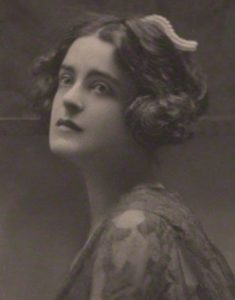 Harriet Pearl Alice Cohen (1901-1967) was born in London, England to a Jewish family with Russian heritage. She started playing piano in early childhood, and by age 13 won the Ada Lewis Scholarship and the Sterndale Bennett Prize from the Royal Academy of Music. A year later, she made her professional debut and soon became one of the most popular musicians in England. She was noted for resurrecting old English compositions that had been forgotten, as well as opening up Spanish and Russian music to the wider world. In fact, she was permitted to visit the Soviet Union (and perform there) in 1935, bringing back great compositions by contemporary Russians that she then performed around the world. While visiting Vienna in 1933, Cohen first recognized the plight of refugees fleeing Nazi Germany. She decided to devote herself to their cause. Cohen went on to raise large sums of money to support the refugees, and worked with several organizations to bring them to safety. In 1934, she performed a special benefit concert, with