Jew of the Week: Dalya Attar

Highest-Ranking Orthodox Jewish Woman in America
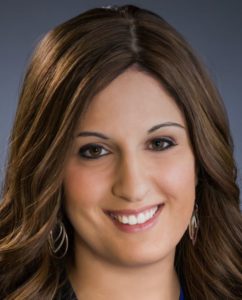
Dalya Attar (b. 1990) was born in Baltimore to a religious Sephardic family of Iranian and Moroccan heritage. She studied at a Bais Yaakov school, and always knew she wanted to be a lawyer. Among her inspirations are Joe Lieberman and Sarah Schenirer. Attar studied criminal justice at the University of Baltimore, then moved on the University of Maryland School of Law (during which time she married and had two kids). After passing the bar, she worked in the office of Baltimore’s State Attorney, first as a juvenile prosecutor and then as a narcotics and firearms prosecutor. She was asked by Baltimore’s Jewish community to run for the state legislature, and realized she could make a bigger impact if she had a seat in government. Despite having no experience or connections in politics, and running against twelve other candidates in a district that is only 5% Jewish, Attar won a seat in the Maryland House of Delegates. She assumed office in January of 2019, becoming the highest-ranking Orthodox Jewish women in American history. Attar has used her position to help all communities in her district. She has co-sponsored and voted for legislation to reduce crime in Baltimore (which has among the highest crime rates in America), and sits on the House Opioid Workgroup to put an end to the opioid crisis. This year she introduced legislation to help Jewish women whose husbands refuse to grant them divorces. She is also working towards opening up job opportunities for people coming out of prison, and to get landlords to reduce the risk of lead poisoning. Attar has campaigned for more funding for religious schools, better pay for teachers, and voted against granting people the right to suicide. In her book, “morals and ethics come first”.

Lag b’Omer Starts Monday Night – Chag Sameach!

The Hidden History of Lag b’Omer

Words of the Week

He who looks at things objectively, with an open mind, will see and recognize truth and understand the proper meaning of the Torah. The narrow-minded person, stubborn in his prejudiced self-righteousness, will see no more than what he wants to see.
– Rabbi J. Immanuel Schochet 

Jew of the Week: Eliezer Ben-Yehuda

The Man Behind Modern Hebrew

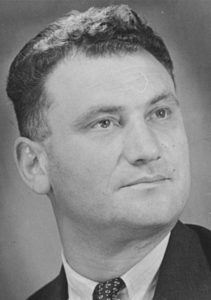
Eliezer Yitzhak ben Yehuda Leib Perlman (1858-1922) was born in what is now Belarus to a religious, Yiddish-speaking, Chabad family. Before his bar mitzvah he was already recognized as a genius in Torah and Talmud. While studying to become a rabbi, Ben-Yehuda was first exposed to some of the Hebrew works of the medieval Sephardic rabbis (such as Ibn Ezra) who wrote poems, stories, and even textbooks of Hebrew grammar. Meanwhile, he came across contemporary, secular (Haskalah) literature written in Hebrew, most notably a Hebrew-only Zionist newspaper called HaShahar. This sparked a passion for languages in general, and Hebrew in particular. Ben-Yehuda plunged into the study of the grammar, history, and development of Hebrew, and also started learning Russian, German, and French. He soon realized the tremendous power of language, and that the only thing truly uniting all Jews around the world—whether Ashkenazi or Sephardi, religious or secular—was Hebrew. In 1877, Ben-Yehuda moved to Paris to study medicine and Middle Eastern history at the famous Sorbonne University. While sitting at a café one day, he met a fellow Jew who started speaking to him in Hebrew. This was the moment that convinced Ben-Yehuda that it was possible to turn Hebrew into a common, spoken language. While some Zionists (like Herzl himself) initially sought to make Yiddish or even German the official language of what would be the Jewish State, Ben-Yehuda knew that it had to be Hebrew. Upon graduating in 1881, he made aliyah and settled in Jerusalem. Ben-Yehuda taught at the Torah and Avoda School, where he devised his immersive ivrit b’ivrit system of learning. He spent the rest of his time writing and developing the language. He founded the Hebrew Language Committee (still operating today) to dig up ancient Hebrew words and to coin new words for modern phenomena, based primarily on ancient Biblical, Aramaic (often Talmudic) terms, as well as from Arabic roots. Ben-Yehuda coined words like glida (“ice cream”), ofanaim (“bicycle”), magevet (“towel”), and rakevet (“train”) using Biblical roots for similar terms. Meanwhile, he wrote for the Havatzelet newspaper, edited the Hashkafa newspaper, then launched his own periodical, HaTzvi, where he would introduce his new words (such as iton, “newspaper”!) He published the first dictionary of Modern Hebrew, a whopping 11-volume tome (later expanded to 17 volumes). Ben-Yehuda raised his children strictly in Hebrew. His son, Ben-Zion, is considered the first native speaker of Modern Hebrew. Some people inaccurately state that Hebrew was a “dead” or “extinct” language before Ben-Yehuda and the Zionists. This is, of course, completely inaccurate since Hebrew has always been used by Jews throughout the centuries, particularly in prayer and for the writing and teaching of holy texts. What Ben-Yehuda did was systematize Hebrew, adapt it to modern times, and transform it into a commonly-spoken tongue, as historian Cecil Roth summed it up: “Before Ben-Yehuda, Jews could speak Hebrew; after him, they did.”
The Kabbalah of Yom Ha‘Atzmaut

Words of the Week

For everything there is needed only one wise, clever and active man, with the initiative to devote all his energies to it, and the matter will progress, all obstacles in the way notwithstanding… In every new event, every step, even the smallest in the path of progress, it is necessary that there be one pioneer who will lead the way without leaving any possibility of turning back.
– Eliezer Ben-Yehuda

Jews of the Week: Bielski Partisans

The Jewish Avengers

Tuvia Bielski

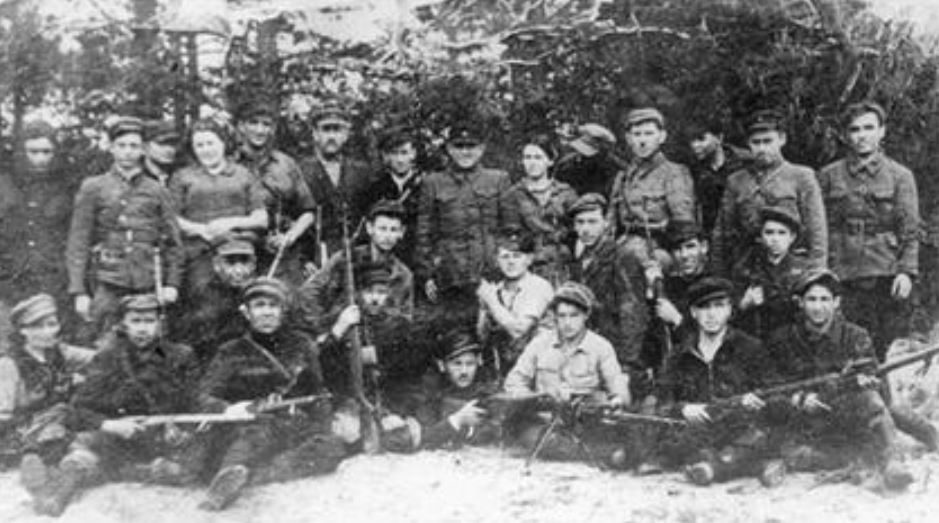
Tuvia Bielski (1906-1987) was born in a small village near what is today Navahrudak, Belarus (then part of the Russian Empire). When the German Army occupied the area during World War I, he was called to work for them as an interpreter, since he knew Polish, Russian and Yiddish. After the war, his hometown reverted to Polish rule, and Bielski was drafted to the Polish Army. He finished his service with the rank of corporal, then returned home to work in the family grain mill. When Nazi Germany invaded in 1939, Bielski was called up to fight. His cousin Yehuda Bielski (1909-1994), who had served as an officer in the Polish Army, was called up, too, and was shot in the leg. When SS troops stormed his hospital, he managed to escape. The Poles surrendered shortly after and the Bielski cousins returned to their village. The Nazis arrived there in the summer of 1941 and forced all the Jews into the Navahrudak ghetto. Tuvia, his sister, and three brothers fled to the Naliboki Forest; their parents, and two other brothers, were killed in the ghetto. The wife and baby daughter of his brother, Alexander “Zus” Bielski (1912-1995), were killed as well. In the forest, the Bielski brothers and 13 friends formed a paramilitary group under the command of Tuvia and brother Asael Bielski (1908-1945), launching a guerrilla war campaign against the Nazis. Through a Christian friend, they got a letter out to cousin Yehuda to join them and share his military expertise, which he did after escaping the ghetto.

The Bielski Partisans quickly grew to a force of about 150 fighters, and freed over 1200 Jews (including Jared Kushner’s grandmother) from the ghetto and surrounding villages. They worked to sabotage Nazi plans, destroying 4 bridges, 23 train cars, 32 telegraph lines, and killing nearly 400 soldiers. Their primarily goal, however, was to save lives. (Tuvia’s motto: “I would rather save one old Jewish woman than kill ten German soldiers.”) The Bielski Partisans built their entire life in the forest, constructing a school and hospital, bathhouse, bakery, tannery, synagogue, and even a courthouse and jail. The place became known as “Forest Jerusalem”. It had 125 full-time workers who also supplied the Soviet Army and other partisan forces in the area. The Nazis soon placed a 100,000 Reichsmark reward for the capture of Tuvia, and in August of 1943 launched a huge operation in the Naliboki Forest. While they were unable to suppress the Bielskis, they damaged most of their infrastructure, and punished many surrounding villages. The Bielskis ultimately joined forces with the Soviets and helped drive the Nazis out. (Throughout this time, they kept the identity of Yehuda secret, since the Soviets considered Polish officers to be enemies, and would have executed him immediately.) After the region was liberated in the summer of 1944, the Soviets turned on the Bielskis and the brothers fled. Unable to escape, Asael was conscripted to the Soviet Army and died in the Battle of Konigsberg in 1945. Tuvia and Zus, along with younger brother Aron Bielski (b. 1927)—who was only 12 when the war started—made their way to Israel and fought in the new state’s Independence War. Yehuda Bielski was there, too, and was injured in battle yet again. He rose to the rank of lieutenant in the IDF. The Bielskis eventually settled in New York, where they built a successful transportation company with a fleet of taxis and trucks. The story of the Bielski brothers was featured in two books, and a Hollywood film, Defiance, starring Daniel Craig as Tuvia.

Words of the Week

It’s the small acts that you do on a daily basis that turn two people from a “you and I” into an “us”.
Rabbi Menachem Mendel Schneerson (1902-1994), the Lubavitcher Rebbe

The Bielski Partisans in the Naliboki Forest