
Chief of America’s Air Force

General David Goldfein
David Goldfein (b. 1959) was born on an American Air Force base in France, where his father served as an Air Force colonel. Goldfein became a fighter pilot, too, and graduated from the US Air Force Academy with a degree in philosophy. He first saw action in the Gulf War, then served as commander of the 555th Fighter Squadron in the Bosnian War, and during NATO’s Operation Allied Force in Yugoslavia. On one mission in 1999, Goldfein’s F-16 was shot down. He ejected on time and parachuted down in a field. Three Serbian soldiers pursued him, but he managed to escape, hiding in a ravine. Goldfein miraculously traversed an area full of mines, before later being rescued from behind enemy lines in a daring operation. All in all, Goldfein logged over 4200 hours of flying time. In 2011, he became a three-star general and was appointed commander of US Air Forces in Southwest Asia. In 2016, now a four-star general, Goldfein was appointed the 21st Chief of Staff of the United States Air Force. That made him the highest-ranking official in the Air Force, overseeing half a million airmen, over 5000 aircraft, and hundreds of intercontinental ballistic missiles. As Chief of Staff, he directly advises the secretary of defense and the president. Goldfein’s primary goal as head of the Air Force was to ensure the US was secure from, and had detailed plans for countering, the “four-plus-one” threat: China, Russia, Iran, North Korea, and violent extremist groups around the world. He also focused heavily on nuclear deterrence and preventing a catastrophic world war. Finally, he expanded the Air Force’s capabilities into the realms of cyberwarfare and space, too. It was during his tenure that ISIS was essentially wiped off the map and finally defeated, thanks in large part to the US Air Force. Goldfein has been decorated with the Distinguished Flying Cross, the Legion of Merit, Humanitarian Service Medal, and countless other awards. His term as Chief of Staff ends next week.
Words of the Week
Experience shows us that many people imagine false ideas to be absolutely true, and they generally remain firm in their beliefs, refusing to see anything wrong with them.
– Rabbi Moshe Chaim Luzzatto (1707-1746), Derekh Tevunot

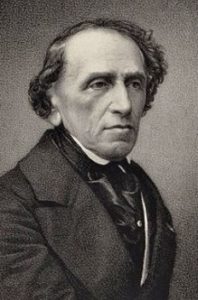 Jacob Liebmann Beer (1791-1864) was born near Berlin, then in the Kingdom of Prussia, to a wealthy, observant Jewish family. His father was the president of Berlin’s Jewish community and ran a large synagogue in his home. His mother received the prestigious Order of Louise from the Prussian queen, and because she was an observant Jew, got a small statue instead of the traditional cross. The Beer children received the best secular education, as well as private tutors in Jewish studies. All three sons became famous: Wilhelm Beer as an astronomer, Michael Beer as writer, and Jacob Beer as a composer. When his beloved grandfather Meyer passed away, Jacob added the name to his own, changing it to Meyerbeer. He also vowed never to abandon the faith of his fathers, while many of his friends “converted” to Christianity to be accepted in society and to take on jobs otherwise barred to them. Meyerbeer was taught music from a young age by some of the best instructors of the time. He performed his first public concert at just age nine. Meyerbeer’s early work involved writing religious music for his father’s synagogue, and his first big production was a ballet-opera called The Fisherman and the Milkman, followed by the musical God and Nature, and the opera Jephtha’s Vow. He wrote beautiful pieces for the piano, clarinet, and full orchestras, and vacillated between composing and playing music himself (which he preferred). Having faced many difficulties in his youth, Meyerbeer founded the Musical Union to support up-and-coming composers. In 1813, he was appointed Court Composer for the Grand Duke of Hesse. Several years later, he felt he had lots more to learn and moved to Italy. There he wrote some of his most renowned operas. By 1824, he had become world-famous, and his 1831 grand opera, Robert le diable, made him the equivalent of a modern-day superstar. The following year, he received the Legion of Honour, the highest award in France. In 1841, he was described as the “German Messiah” who would save the Paris Opera from its death, and shortly after also became director of music for the Prussian royal court. Not surprisingly, his success and wealth drew the ire of his colleagues, and Meyerbeer faced terrible criticism and anti-Semitism (especially from Richard Wagner, once his pupil). Meyerbeer remained graceful nonetheless, and never responded to the attacks on him. He continued to compose popular works until his last day, and has been credited with being “the most frequently performed opera composer” of the 19th century. He inspired the works of later greats like Dvořák, Liszt, and Tchaikovsky. He was also a generous philanthropist, a devoted husband and father to five children, and never broke his vow to die an observant Jew. Meyerbeer remains one of the greatest musicians of all time.