Category Archives: Extraordinary Individuals

Unique Jews In a Category of Their Own

Jew of the Week: Semei Kakungulu

The Jewish Warrior-King of Africa

Semei Kakungulu

Semei Kakungulu, founder of the Jewish Abayudaya tribe of Uganda

Semei Kakungulu (1869-1928) was born into the African tribe of Baganda. As a young man he was converted to Christianity by a missionary. Meanwhile, he grew to become a skilled warrior, as well as an influential politician. The British supported him, essentially turning him into the unofficial king of the Busoga region, which he conquered for the Empire along with other territories. However, the British did not want to confer any titles on him, fearing he would become too powerful. This strained the relationship, and soon Kakungulu also abandoned Protestant Christianity, further driving a wedge between him and the British. Having begun to study the Bible on his own, Kakungulu recognized that Christians had misinterpreted and manipulated it, for example changing the day of the Sabbath to Sunday despite the fact that the text explicitly says it must be Saturday. According to lore, Kakungulu isolated himself in a room with the Bible, and emerged some time later with the book torn in half, concluding that only the first half (the Old Testament) must be true. In 1919, he circumcised himself and his son, urging his followers to do the same. He started a new community focused on following the laws of the Torah. Starting in 1925, the growing community encountered a number of Orthodox Jews from Europe who were working and traveling in the area. One of them, a man named Joseph, taught the community (now known as the Abayudaya) proper Jewish rituals and prayers, the Hebrew language, and even showed them how to slaughter and prepare kosher meat. Soon after, the community dropped any remaining aspects of their former Christian faith, and properly converted to Judaism. Kakangulu wrote a Jewish manual for Africans, and was able to inspire as many as 8000 followers in his time, building a network of some 36 synagogues in the region. His descendants continue to thrive in today’s Uganda. Click here to read more about them.

Words of the Week

In those days it shall come to pass, that ten people, of all the nations of the world, shall grab onto the clothing of a Jew, and say: “We will go with you, for we have heard that God is with you.”
Zechariah 8:23, as quoted by Kakungulu in response to a Christian missionary.
Jew of the Week: Hilik Magnus

“The Godfather of Search & Rescue”

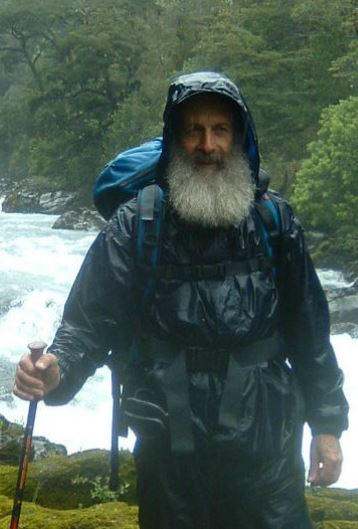
Hilik Magnus (Courtesy of Hilik Magnus and Times of Israel)

Hilik Magnus

Yechiel “Hilik” Magnus (b. 1949) was born in Sweden to a German-Polish-Jewish family that moved to Israel while he was still an infant. Magnus grew up in the Holy Land, and served in the IDF as an elite paratrooper, as well as with the special forces, and later with the Mossad. After his military career, he worked as the director of nature conservation in Israel’s southern regions. During an Israeli-Japanese cultural project, Magnus found a new passion in traveling to the Far East, and toured the region extensively. Due to his intense military and intelligence training, Magnus was soon involved in a number of rescue missions to save Israeli backpackers trapped in Asia. By 1994, he turned this into a full-time job, creating an international search and rescue team that works with insurance companies and worried parents. He has helped bring thousands of families back together, earning the nickname of Israel’s “national rescuer”. These missions have included saving people from natural disasters, accidents, druggings, hostage situations, and even freeing Israelis from prison. Several years ago, he tracked down the body of a young man missing for over a month in Brazil. Most recently, he journeyed to Nepal to help those trapped in the snowstorm that killed dozens. His expertise makes him sought out by various governments and organizations all over the world. He is the first man Israeli parents call when their children abroad are in trouble. Soon, it won’t be just Israeli parents, as Magnus has grown his search and rescue team, and intends on offering these services to any family in need of assistance. Despite being in his mid-60s, Magnus still leads even the most difficult of missions.

Words of the Week

Climb mountains not so the world can see you, but so you can see the world.
– David McCullough Jr.

Jews of the Week: Rayhana and Safiyya

The Jewish Wives of Muhammad

A map of the Arabian Peninsula showing the Jewish-Arab Kingdom of Himyar, together with other notable Jewish villages

A map of the Arabian Peninsula showing the Jewish-Arab Kingdom of Himyar, together with other notable Jewish villages

Rayhana bat Zayd (c. 600-631 CE) was a woman of the Arab-Jewish tribe of Banu Nadir which inhabited the Arabian Peninsula before the advent of Islam. At a young age, she married a man from the neighbouring Arab-Jewish tribe of Banu Qurayza. By 627 CE, Muhammad was taking over the Arabian Peninsula and invaded the Banu Qurayza territory. What followed is known as the “Massacre of Banu Qurayza”, where every Jewish male was slaughtered, and every woman and child enslaved. The beautiful women among the slaves were taken as wives by Muhammad’s men. Rayhana caught the eye of Muhammad himself, who wished to have her as his own wife. However, Rayhana refused time and again to convert to Islam, preferring to remain a slave. At the end, Muhammad married her anyway. Her refusal to wear a hijab brought further tension to their marriage. Some say she reverted to being a slave and died shortly after, while others say Muhammad freed her and she went back to live among the Jewish tribes.

Rayhana’s compatriot, Tsofiya bat Chai (c. 610-670), was born to the rabbi and chief of the Banu Nadir tribe. In 629 CE, Muhammad’s armies defeated the Jewish tribes at Khaybar, once again slaughtering much of the village, including Tsofiya’s husband. Tsofiya was enslaved, then given to a Muslim warrior. After spotting her, Muhammad wanted Tsofiya, too, for himself, and traded seven other woman for her. He freed her from slavery and she converted to Islam under duress. She went on to become among the greatest of Muhammad’s wives, and highly influential in the history of early Islam, where she is known as Safiyya bint Huyayy, and is considered one of the Umm-ul-Mo’mineen, or “Mothers” of Islam. When Muhammad’s other wives teased Safiyya for being Jewish, Muhammad instructed her to remind them that “your father was the prophet Aaron, and your uncle the prophet Moses” and to tell them: “Therefore, I am superior to you.” Safiyya never bore any children for Muhammad, and at her death, she left her estate of 100,000 dirhams to her Jewish nephew. Both Safiyya and Rayhana were buried in the Al-Baqi cemetery in Medina (part of today’s Saudi Arabia), where Muhammad was also buried.

Words of the Week

The Jews are like everybody else, only more so.
– Heinrich Heine