
Category Archives: Science & Technology

Jews in the World of Science and Technology

Jew of the Week: Dr. Malka Schaps

Dr. Schaps

Dr. Schaps

Mary Elizabeth Kramer was born in Ohio and grew up attending church and Christian Sunday school. By high school, she was drawn to atheism and secularism, but ultimately found no solace in those philosophies either. While in university majoring in mathematics, she found herself exploring various religions. Studying in Germany one semester, she had an inexplicable yearning to attend a Passover seder, and there met an Australian rabbi with whom she continued learning, eventually undergoing a proper Orthodox Jewish conversion (and taking the name Malka). Back in college, she met her future husband – David Schaps – and both went on to earn PhDs at Harvard. The new couple then moved to Israel to teach, had two kids and two foster children. Malka Schaps joined Bar-Ilan University’s Department of Exact Sciences, researching advanced quantum spin representations, in addition to founding and running a financial math program. Meanwhile, Schaps has written a handful of popular, best-selling novels under the pen name “Rachel Pomerantz”. Despite being deeply involved in the scientific community, her faith has only strengthened, and she has said, “I always point out that the study of mathematics shares something in common with Judaism. They both seek to discern a greater order of things and the objective truth.” Recently, she was elected to be Dean of the Department of Exact Sciences at Bar-Ilan, making her the first Orthodox woman in the world to hold such a post. Schaps lives with her family in Bnei Brak.


Words of the Week

Why was the Torah given in the desert? For if it were given in the Land of Israel, the residents of the Land of Israel would say, “It is ours”; and if it were given in some other place, the residents of that place would say, “It is ours.” Therefore it was given in the wilderness, so that anyone who wishes to acquire it may acquire it.
– Mechilta D’Rashbi

Jew of the Week: Sigmund Freud

The Father of Psychoanalysis

Sigmund Freud

Sigmund Freud

Sigismund Schlomo Freud (1856-1939) was born in what is today the Czech Republic to Galician-Jewish parents. His father, a once-Hasidic wool merchant, brought the family to Vienna where Freud grew up. A natural academic, he absorbed his studies effortlessly and became proficient in 8 languages. His favourite were the works of Shakespeare, which he read his entire life and are said to have greatly influenced his theories. He became a doctor and worked for several years in hospitals, asylums, and clinics before starting his own practice specializing in nervous disorders. At the same time, he married the daughter of Hamburg’s chief rabbi and they would go on to have 6 kids. After learning hypnosis in Paris, Freud found that a certain patient was able to open up to him while hypnotized and in the process of talking out her problems, brought about her own relief. Freud realized that patients need only be guided to speak freely, with no need for hypnosis. He also found that much of their issues were reflected in their dreams. By 1896, he abandoned hypnosis entirely and created “psychoanalysis”. From his own experiences and that of his patients, he put together a series of new theories about the mind, emotions, consciousness, religion, dreams, and sexuality. He published a range of books and papers, and delivered lectures each Saturday night. On Wednesdays, he led a small discussion group with 5 other physicians, all Jews. The Wednesday Psychological Society would evolve into the Vienna Psychoanalytic Society, and spawn many other such groups across Europe and the world. Freud would go down in history as the founding father of psychoanalysis. His ideas inspired a proliferation of new literature in psychology, philosophy, science, and sociology. Despite the rise of the Nazis and the burning of his books, Freud was determined to stay in Austria until he was finally convinced by colleagues that his life was in danger. After much difficulty, he escaped to London (though 4 of his older sisters could not, and perished in the Holocaust). He continued his work, analyzing patients and writing more of his ground-breaking ideas. After battling an oral cancer for nearly two decades – a direct result of his smoking addiction – he reached a critical state of illness and a decision was made together with doctors and Freud’s daughter to end his life. After several days of high-morphine doses, Freud passed away on Yom Kippur.

Words of the Week

Someone else’s material needs are my spiritual responsibility.
– Rabbi Israel Salanter

Jew of the Week: Judith Resnik

First Jewish Woman in Space

Judith Resnik - First Jewish Woman in Space

Judith Resnik, the First Jewish Woman in Space

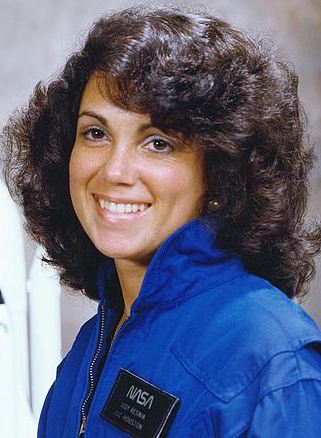
Judith Arlene Resnik (1949-1986) was born in Akron, Ohio to Jewish-Russian immigrants from Ukraine. As a child she went to Hebrew school, then attended a public high school where she was the only female student to achieve a perfect SAT score. She went on to become an electrical engineer, eventually earning a Ph.D in the subject. Resnik first worked as a circuitry designer for tech giant RCA, as well as serving as a biomedical engineer for the National Institutes of Health (at the Laboratory of Neurophysiology) and a systems engineer for Xerox. In 1978 she joined NASA, going on her first space flight in 1984 on the maiden voyage of the space shuttle Discovery. That made her the first American Jew in space and the first Jewish woman in space. She quickly became beloved by the public for her on-board humour and space acrobatics. Resnik went on her second tour in space with the Challenger in January of 1986. Sadly, the mission ended quickly when the space shuttle tragically exploded in Earth’s atmosphere, killing all 7 crew members. It took nearly 6 weeks to find the crew compartment at the bottom of the ocean floor. Resnik’s body was among those that were identifiable. She was laid to rest in Arlington National Cemetery. That same year, the Institute of Electrical and Electronics Engineers (IEEE) established the Judith A. Resnik Award for outstanding contributions to space engineering. The moon’s Resnik Lunar Crater is named in her honour.

Words of the Week

A man without a woman is not a man.
– Rabbi Elazar (Talmud, Yevamot 63a)